On March 27, 2026, Larry Fink, CEO of BlackRock, the world's largest asset manager with $14 trillion USD under management, flew to Istanbul for a private meeting with President Recep Tayyip Erdoğan at the Dolmabahçe Presidential Office.
This was not a courtesy call. Finance Minister Mehmet Şimşek was in the room. Energy Minister Alparslan Bayraktar was in the room. The World Economic Forum's senior executive Alois Zwinggi was in the room. Hours later, 23 international investors from 16 countries, collectively managing $1.2 trillion USD in assets, gathered in Istanbul for a WEF Country Strategy session focused on one subject: Turkey's position in the global economy, and the long-term investment opportunity it represents.
Then, on April 24, 2026, President Erdoğan stood at the same Dolmabahçe office and announced the most sweeping investor tax reform package in Turkey's modern history, declaring 2026 the Year of Reforms. Two events. Four weeks apart. One unmistakable direction. The question is not whether Turkey is the next major destination for global capital. The question is whether you will position yourself before that capital arrives, or after.
- Asset repatriation at 2% to 3% could attract offshore capital back to Turkey.
- The reforms position Turkey against Dubai, Singapore, Italy, Greece, and Portugal.
- PropertyTurkey can support real estate, residency, citizenship, and investment structuring.
When the Desert Shook
To understand why Istanbul's moment has come, you need to understand what happened to Dubai. For over a decade, Dubai wrote one of the most compelling investment stories in modern history. Zero income tax. World-class infrastructure. A government obsessed with attracting global talent and capital. And it worked. The UAE became the default second home for the world's wealthy, the default regional HQ for multinationals serving the Middle East and Africa, and the default property investment for Gulf-based investors seeking yield and lifestyle in equal measure.
Then the region shifted.
The conflict involving Iran changed the calculus for every investor with exposure to Gulf assets. Infrastructure risk became real. Political proximity to a volatile theatre became a liability. Insurance premiums on Gulf real estate moved. Capital began looking for an alternative, one with comparable tax efficiency, comparable lifestyle credentials, and without the geopolitical adjacency that had quietly become the defining risk of Gulf-based investment.
Turkey, protected by NATO air defences and positioned at the western edge of the region rather than its centre, sat ready. Istanbul Chamber of Commerce president Şekib Avdagiç said it directly at the April reform launch: "The announced incentives, in this period when global supply chains are being reshaped by developments in the Middle East, will reinforce our country's position as a financial, logistics, and trade centre, as well as strengthen its mission as an island of regional stability."
That is not marketing. That is a G20 economy reading the geopolitical moment and moving into it deliberately.
The Architecture of a Hub
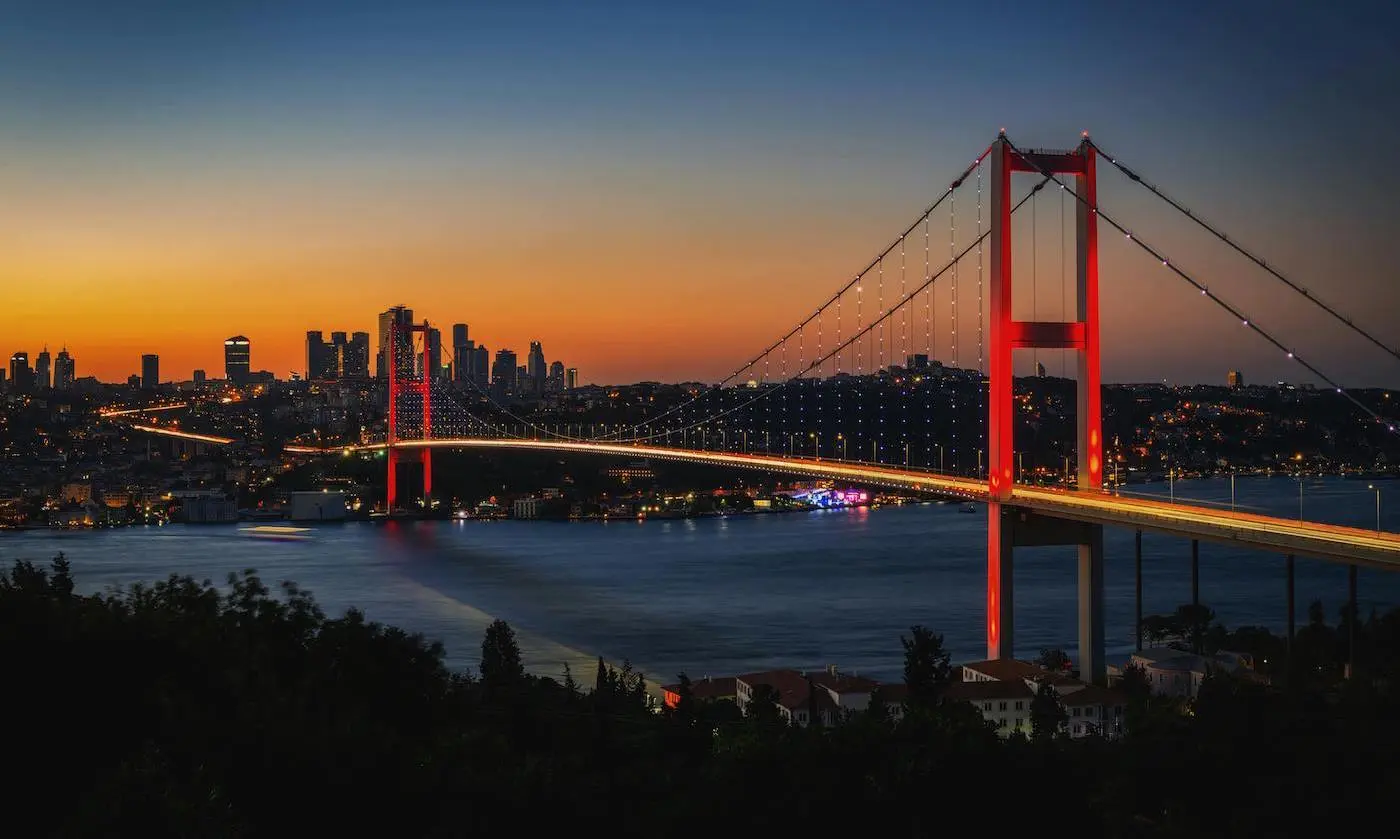
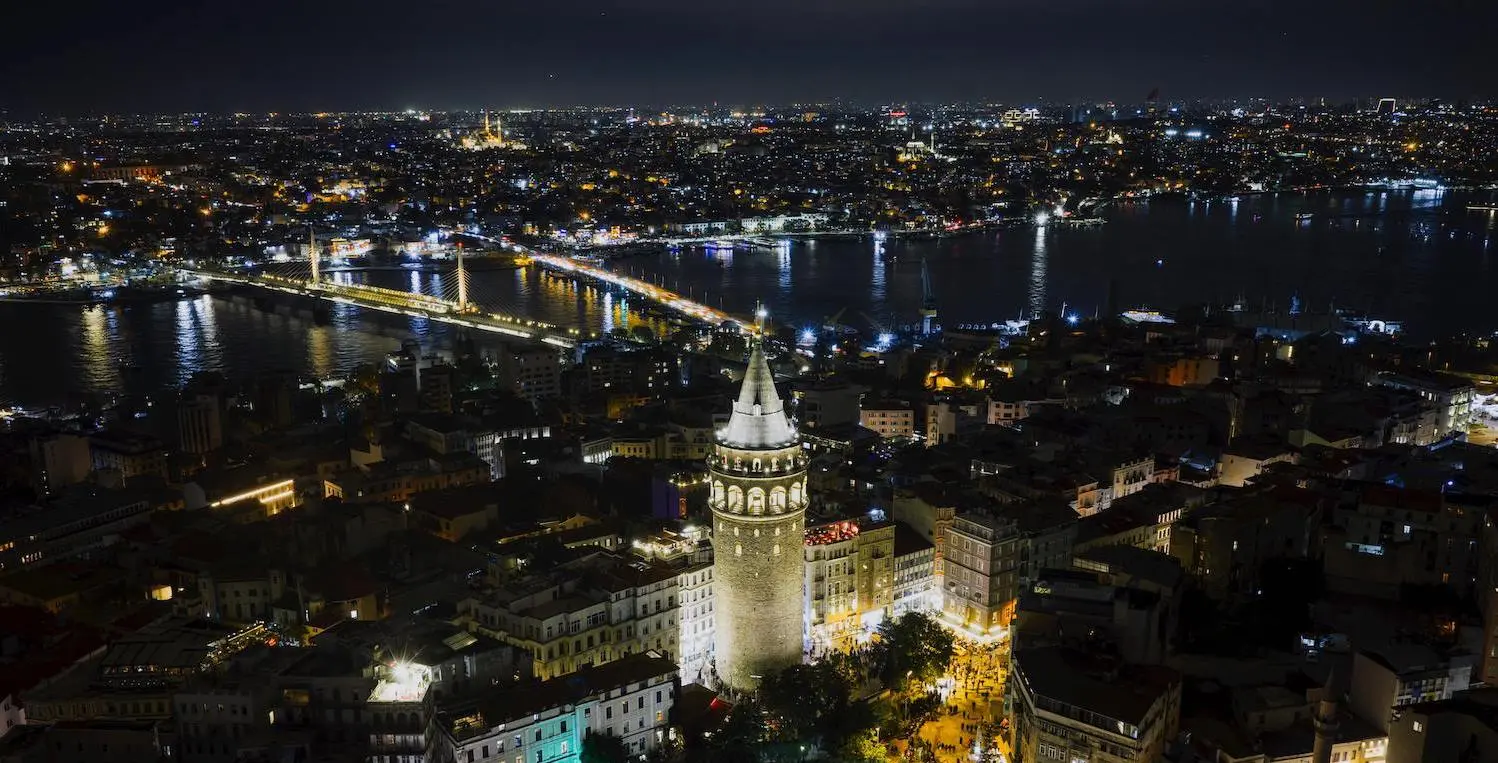
Istanbul is not merely a beneficiary of Gulf instability. It is a city with structural credentials that no amount of marketing can manufacture, and no regional conflict can replicate. It sits at the intersection of Europe, the Middle East, Central Asia, and North Africa, a geographic position that has made it the centre of global trade for three thousand years. Empires were built here. The Silk Road ran through here. The Ottoman economy, at its peak, commanded a third of global GDP. Geography does not change. And geography, in investment terms, is compounding.
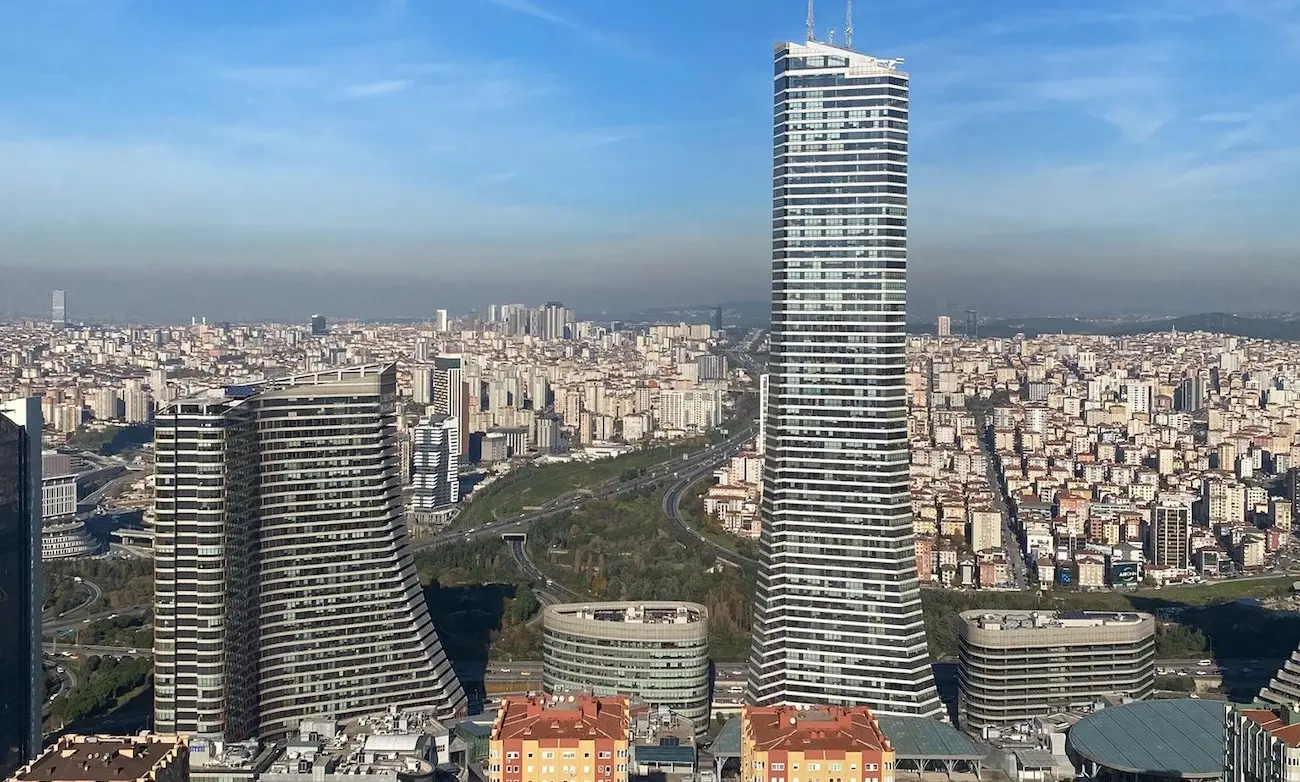
The city's fundamentals reflect this. Turkey's GDP growth is among the strongest in the G20. The population is young, a demographic profile that European economies would pay almost anything to replicate. Urbanisation continues at pace. And critically, a mortgage market that has historically been inaccessible to most Turkish households is now in the early stages of reform. The release of millions of first-time buyers into an undersupplied residential market represents one of the most significant organic demand catalysts in any emerging market globally.
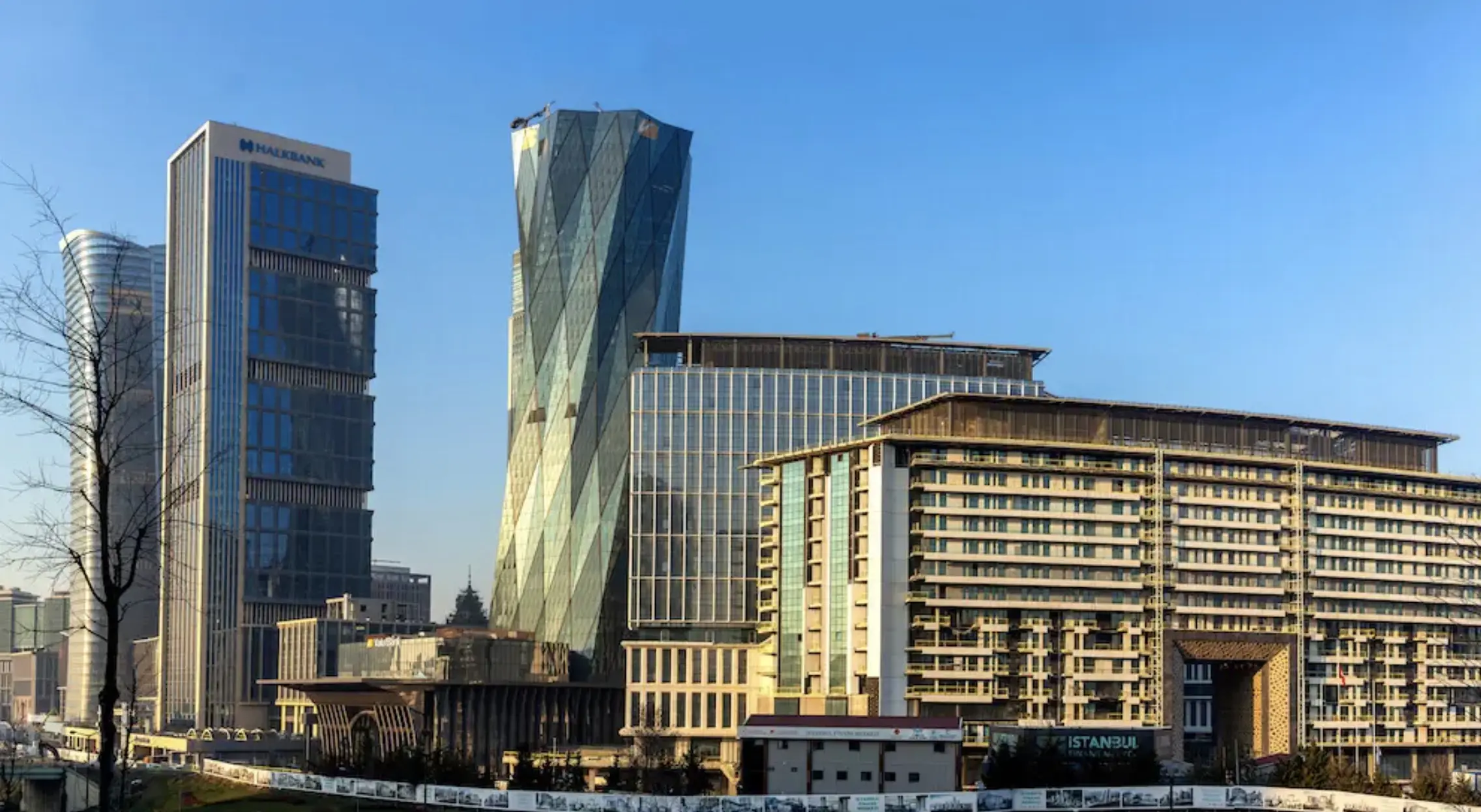
Urban Regeneration is reshaping Istanbul's central districts at a scale and pace that is difficult to overstate. Kağıthane, once an industrial zone, is now home to projects like Sense Levent, affordable, well-connected, centrally positioned developments that are exactly what Turkey's young, urban, economically mobile demographic wants to buy. These are not speculative assets. They are assets with structural demand, in a market where supply cannot keep pace.
This was the investment thesis that brought 23 institutional investors to Istanbul in March 2026. Not a tourism play. Not a lifestyle pitch. A fundamental, long-cycle investment argument built on geography, demographics, and a government that has decided, clearly and publicly, to move.
The 8 Reforms: What Turkey Actually Announced
Four weeks after Fink flew to Istanbul, the Turkish government delivered the policy architecture to match the institutional interest. On April 24, 2026, President Erdoğan announced a package of eight interconnected reforms. Here is what they mean, and how they benchmark against the global competition.
9% Corporate Tax for Manufacturer-Exporters
The standard Turkish corporate rate was 25%. For manufacturers who export, it just dropped to 9%, a 16-point cut in a single move. Finance Minister Şimşek called it explicitly: a radical step, and a permanent one.
Global benchmark: Hungary holds the EU's lowest rate at 9%. Ireland sits at 12.5%. UAE free zones offer 0% to 9% but with heavy economic substance rules and no EU customs union access. Turkey now matches the most competitive rates in the world, while adding a G20 economy's domestic market, NATO membership, and direct EU customs union access that none of those jurisdictions can replicate.
20 Years of Zero Tax on Foreign Income for New Residents
Live in Turkey. Earn abroad. Zero tax. 20 years. New residents who have not been Turkish tax residents for the past three years can move to Turkey and pay zero Turkish tax on foreign-sourced income, for two full decades.
Global benchmark: Italy charges €300,000 Euros per year for a 15-year version of this privilege. Greece charges €100,000 Euros per year for the same duration. Portugal's NHR 2.0 runs 10 years at 20%. Turkey charges nothing, for longer, and uniquely adds a path to full citizenship at $400,000 USD in real estate.
Inheritance Tax Reduced to 1%
Build your wealth, protect it, and pass it on. Inheritance tax in Turkey? As low as 1%. For qualifying new residents in Turkey, inheritance tax drops from 10% to 1% – along with a new passport for your children.
Global benchmark: UAE, Singapore, and Cyprus have 0% inheritance tax, but offer no path to EU-adjacent citizenship, no EU customs union, and in the Gulf's case, now carry meaningful geopolitical risk. The UK abolished non-dom status in April 2025 and taxes estates up to 40%. Turkey's 1% inheritance tax, combined with the 20-year zero-income exemption, creates a complete generational wealth architecture that no single jurisdiction currently matches.
Regional HQ 20 Years of Tax-Free Overseas Income
Multinationals relocating their regional headquarters to Turkey receive a 100% exemption on overseas income inside the Istanbul Finance Center, and 95% outside it, for 20 years, with the IFC incentive structure guaranteed to 2047.
Global benchmark: Dubai DIFC offered 0%, but war risk is now priced into Gulf HQ decisions. Singapore: 17% headline. Amsterdam: 25.8%. Istanbul's structure is now functionally superior to any of them for groups managing operations across EMEA and Central Asia, at a fraction of the operational cost of Singapore and without the exposure of Dubai.
100% Transit Trade Tax Exemption at Istanbul Finance Center
Trade through Turkey and keep 100% of the profit. Transit trade earnings inside the IFC are now 100% exempt from corporate tax, doubled from the previous 50% exemption. Companies outside the IFC receive a 95% exemption.
Global benchmark: Hong Kong taxes only local-source profits at 0% offshore. The Netherlands offers a participation exemption but at 25.8% standard rate. Luxembourg: 17%. Turkey's 0% on transit, combined with its position at the intersection of Europe, the Middle East, and Central Asia's trade corridors, makes it structurally superior for commodity and trade flow structures that previously defaulted to Hong Kong or Amsterdam.
Asset Repatriation at 2% to 3% with Full Amnesty
Cash, gold, securities, and assets held outside Turkey can be repatriated at a tax rate of 2% to 3%, with full and permanent immunity from tax audit and investigation. No source-of-funds questioning. No documentation of acquisition date. Total amnesty.
Global benchmark: Switzerland's banking secrecy is effectively over. CRS data-sharing has made opacity in traditional havens a legal liability. The UAE introduced AML tightening and economic substance rules post-FATF. Turkey's 2% to 3% repatriation with total amnesty is the cleanest, lowest-friction capital normalisation mechanism available globally in 2026, and it is Turkey's eighth such programme since 2008.
One-Stop Office Company Formation in One Day
Turkish company incorporation, tax registration, work permits, incentive applications, and environmental approvals are now centralised into a single digital hub. One office. One day. Your business open.
Global benchmark: Singapore has had this for a decade. UAE free zones are fast but siloed by jurisdiction. Georgia offers near-instant formation but lacks Turkey's market access and tax architecture. The One-Stop Office closes the operational friction gap that has historically made investors choose Dubai or Singapore over Istanbul, even when Istanbul's fundamentals were superior.
Duty-Free Machinery and Zero VAT
Build your factory. Duty-free machinery. Zero VAT. Keep the profit. Under strategic investment incentive certificates, machinery and equipment imports are fully exempt from customs duty, and domestically purchased machinery carries zero VAT.
Global benchmark: Vietnam: 10% corporate tax, no EU access. Poland: EU grants but 19% corporate tax. Mexico: USMCA access but no comparable tax architecture. Turkey now offers duty-free factory build, 9% operating tax, EU customs union access, and NATO-backed security, the most complete industrial investment package available in any emerging market.
Who This Is For and Why Timing Is Important
High-Net-Worth Individuals and Families: The combination of 20-year zero foreign income tax, 1% inheritance, and 2% to 3% asset repatriation is simply unmatched. No comparable jurisdiction offers all three in a single window. The legislative process has begun. The pre-law positioning period, when the competitive advantage of moving early still exists, is measured in months.
Manufacturers and Industrial Investors: A 9% permanent corporate tax, duty-free factory build, zero VAT on equipment, and EU customs union access create a manufacturing economics argument that no OECD country and very few emerging markets can match. For any company evaluating where to build its next production facility serving Europe, the Middle East, and Central Asia, Turkey just became the answer.
Multinationals and Regional HQ Decision-Makers: Dubai has been the default EMEA hub. The combination of Gulf conflict risk and Istanbul's 100% transit exemption and 20-year HQ income exemption running to 2047 changes that. Istanbul sits at the intersection of 1.5 billion consumers. The IFC structure is now competitive with Singapore at a fraction of the operational cost.
Capital Holders with Offshore Assets: Switzerland's secrecy is over. CRS compliance has made offshore opacity a liability, not an asset. Turkey's 2% to 3% amnesty window, with full audit immunity and no source-of-funds questioning, is the most accessible capital normalisation tool in 2026. Real estate investment in Turkey provides a natural, productive, and appreciating home for normalised capital.
The One-Liner That Ties It Together
Every other jurisdiction is either expensive, increasingly restricted, or now geopolitically exposed. Turkey has structured a package that answers all three problems simultaneously, and a government that has declared, publicly and explicitly, its intent to make these reforms permanent.
BlackRock read this before the reforms were announced. Twenty-three institutional investors representing $1.2 trillion USD in assets flew to Istanbul before the tax architecture was revealed. They were not there for the food.
While the world searches for safety, Turkey opened the door. Zero tax. 1% inheritance. 9% corporate rate. See what's inside.
Property Turkey: Your First Call in Turkey
PropertyTurkey.com has operated since 2001, through Turkish currency crises, political transitions, and economic cycles. We are not just a sales office, we are a full-service investment platform with in-house legal, professional, and advisory capabilities. We serve investors across every dimension of the Turkish opportunity. Our team operates with trusted relationships at government, municipal, and institutional levels.
Property Turkey can Help With:
1. Real estate acquisition across all Turkish markets.
4. Tax residency planning and the 20-year foreign income exemption.
5. Asset repatriation structuring, clean, compliant, and optimised for your profile.
6. Property management, lettings, and portfolio oversight.
7. Design, construction, and development project management.
8. UAE Golden Visa coordination for clients building a dual-residency structure.
Turkey's window is open. How you position yourself inside it, in terms of tax structure, asset ownership, residency, and business setup, will determine what this moment is worth to you. Contact us today for a free advisory consultation with our local experts in Istanbul.
FAQ: BlackRock, Istanbul, and Turkey’s 2026 Tax Reforms
Q: Why is BlackRock’s Istanbul visit important for Turkey investors?
A: BlackRock’s Istanbul visit happened weeks before Turkey announced major investor reforms. The timing suggests global institutions were already studying Turkey’s long-term potential across finance, real estate, manufacturing, trade, and capital allocation.
Q: What are Turkey’s 2026 tax reforms designed to achieve?
A: Turkey’s 2026 reforms aim to attract global capital, HNWIs, manufacturers, regional headquarters, and offshore asset holders. The package combines tax incentives, asset repatriation, Atasehir IFC benefits, corporate tax reductions, and strategic investment support.
Q: How could the 20-year foreign income tax exemption help new residents?
A: The proposed exemption could allow qualifying new residents to live in Turkey while paying no Turkish tax on foreign-sourced income for 20 years. This appeals to international entrepreneurs, investors, retirees, and families with overseas earnings.
Q: Why is the Istanbul Finance Center important in this reform package?
A: The Istanbul Finance Center is central to Turkey’s plan to attract regional headquarters, financial firms, trade companies, and cross-border capital. Its tax incentives strengthen Istanbul’s position against Dubai, Singapore, Amsterdam, and other global hubs.
Q: Could Turkey’s 2026 reforms increase demand for Istanbul real estate?
A: Yes, the reforms support demand from investors, executives, HNWIs, entrepreneurs, and families relocating to Turkey. Areas close to business districts, transport, the IFC, regeneration zones, and high-quality lifestyle amenities benefit most.
Q: Why is the 9% corporate tax rate significant for manufacturers?
A: A 9% corporate tax rate for manufacturer-exporters would make Turkey more competitive as a production base. Combined with EU customs union access, duty-free machinery, and zero VAT on strategic equipment, it strengthens Turkey’s industrial investment case.
Q: How does Turkey compare with Dubai after these reforms?
A: Dubai remains a major global hub, but Turkey offers a different proposition: NATO membership, G20 status, a large domestic market, EU customs union access, manufacturing depth, citizenship options, and potentially powerful tax incentives for new residents and companies.
Q: What does the 1% inheritance tax proposal mean for wealthy families?
A: The 1% inheritance tax measure could make Turkey more attractive for succession planning. Combined with citizenship by investment and foreign income tax benefits, it appeals to families seeking long-term wealth protection.
Q: Who should pay closest attention to Turkey’s 2026 reform package?
A: HNWIs, manufacturers, regional HQ decision-makers, investors with offshore assets, family offices, and property buyers should all pay attention. The reforms are designed to influence tax residency, capital movement, business setup, and long-term investment decisions.
Cameron Deggin Founder & CEO, Property Turkey
Cameron Deggin is Founder and CEO of Property Turkey. A former finance professional and FCCA-qualified accountant, he founded the company in 2001 after recognising Turkey’s investment potential. With more than two decades analysing Turkish real estate, Cameron regularly advises international investors and is quoted by media including the Financial Times and BBC.




 By:
By:

 Founder & CEO, Property Turkey
 Bodrum
  2
2  1
1 








 X
X