Buyer Guide
Who Invests in Turkey Citizenship by Investment in 2026?
Who Invests in Turkey Citizenship by Investment in 2026?
Who Invests in Turkey Citizenship by Investment in 2026?
Created : 27 Feb 2026
Turkey's Citizenship by Investment (CBI) program is one of the most accessible, affordable, and strategically valuable second-citizenship pathways in the world today. Launched in its current form in 2017 and significantly expanded in 2018, the program grants full Turkish citizenship, including a Turkish passport, to foreign nationals who meet one of several qualifying investment thresholds.
The main route? Real Estate Investment. The most popular pathway requires a minimum real estate purchase of $400,000 USD, raised from $250,000 USD in 2022. The property must be held for a minimum of three years. This can be a single property or a combination of properties that collectively meet the threshold. The investment must be made through official channels with a bank receipt confirming the currency conversion into Turkish Lira.
Alternative Investment Routes Include:
- A $500,000 USD fixed capital investment in a Turkish company or sector.
- A $500,000 USD deposit in a Turkish bank, held for a minimum of three years.
- Creating employment for a minimum of 50 Turkish citizens.
What Turkish Citizenship Includes
Turkish Citizenship by Investment covers the main applicant, their spouse, and all dependent children under 18. The process typically takes 3 to 6 months from application to passport issuance. Turkey does not require applicants to renounce their existing nationality, making dual or multiple citizenship entirely possible.
The Turkish passport currently provides visa-free or visa-on-arrival access to over 110 countries, including Japan, Singapore, South Korea, and many other high-value destinations. Turkey is also in active EU accession dialogue, and its passport's strategic value continues to grow.
There is no residency requirement, you do not need to live in Turkey before, during, or after receiving citizenship. There is no language test, no wealth declaration requirement beyond the investment itself, and no interview process. It is one of the most streamlined citizenship programs globally.
In Short: Invest $400,000 USD in Turkish real estate, hold it three years, and you, your spouse, and your children will be able to receive one of the most geopolitically flexible passports available today.
Key Takeaways: Who Invests in Turkey Citizenship?
- Turkish citizenship is available through a $400,000 USD real estate investment.
- The application process typically takes 3 to 6 months from purchase to passport.
- There is no residency requirement before or after citizenship approval.
- Spouse and children under 18 are included within one application.
- Palestinians and stateless individuals apply for legal recognition and mobility.
- “Plan B” investors apply to hedge political, economic, or currency risk.
- Western entrepreneurs and digital nomads apply for mobility and diversification.
- The Turkish passport provides visa-free or visa-on-arrival access to 110+ countries.
Why Investors Choose Turkey: The Three Core Motivations
Almost every investor considering Turkish citizenship falls into one, or a combination, of three core motivations. Understanding these motivations helps explain why Turkey attracts such a diverse range of applicants. The program is not designed for one type of investor it serves multiple real‑world needs:
1 - Security and Certainty: Legal status, family protection, and long‑term stability.
2 - Mobility and Opportunity: Travel access, business flexibility, and future relocation options.
3 - Lifestyle and Investment Logic: Owning a tangible asset in a globally connected country.
Who Actually Buys Turkish Citizenship – and Why?
Turkey's CBI program attracts a remarkably diverse range of investors. Unlike Portugal's Golden Visa or Malta's citizenship program, which draw predominantly from one or two investor profiles, Turkey's unique cultural position, its geographic location bridging Europe, the Middle East, and Central Asia, and the relative affordability of its threshold mean the program serves many different human stories.
Profile 1: Palestinians and Stateless Individuals – 10% to 15% of Investors
For many investors around the world, a passport is simply a travel document. For Palestinians and stateless individuals, it can represent legal recognition, freedom of movement, and long‑term family security.
Palestinian nationals, whether carrying Palestinian Authority travel documents, Jordanian passports of limited validity, or travelling on host country documents from Lebanon, Egypt, or the Gulf, face some of the most restrictive mobility constraints of any people globally. A Palestinian Authority travel document is not universally recognised. Entry to dozens of countries requires not just a visa, but an exhausting individual approval process that can take months and be denied without explanation.
Why Turkey Specifically? The cultural and historical ties between Turkey and the Arab world, particularly the special political solidarity between the Turkish state and the Palestinian cause, create an environment of genuine welcome rather than bureaucratic tolerance. Turkish society has significant Arab cultural familiarity. There are functioning Palestinian communities in Istanbul and other major cities. Arabic is widely spoken in commercial real estate districts.
Beyond culture, Turkey offers something precious: a clean, recognised, neutral second citizenship. A Turkish passport issued to a Palestinian investor is not a "workaround" passport, it is a full citizen document from a G20 nation, a NATO member, and a country with growing diplomatic reach. For someone who has spent years navigating the indignity of travel document uncertainty, this is transformative.
A significant portion of this group consists of Gulf‑resident Palestinians — professionals and business owners living in countries such as the UAE, Saudi Arabia, or Kuwait. While they may enjoy strong careers, their residency status is often temporary and non‑inheritable. Turkish citizenship provides a permanent legal anchor for their families.
Typical Behaviour Patterns:
- Preference for completed properties with clear documentation.
- Focus on family‑friendly areas near schools and hospitals.
- Strong emphasis on certainty and clean legal process.
Case Study: Omar Haddad – A Gulf-Resident Palestinian Investor
Omar Haddad, a 42-year-old finance professional based in Dubai, had lived his entire adult life on renewable residency permits. Despite a successful career, he knew his legal status was tied to his employer and not inheritable by his children. Travel on his Palestinian travel document was unpredictable. In 2024, he invested $460,000 USD in a completed family apartment in Istanbul. Within five months, he and his family received Turkish citizenship. Today, he continues working in the Gulf, but with the peace of mind that his children hold full citizenship in a recognised G20 nation.
Profile 2: "Plan B" Investors Securing a Safety Net – 50% of Investors
By far the largest and most diverse category, Plan B investors come from countries where the future is uncertain enough that holding a second citizenship feels less like a luxury and more like basic prudence. This group spans vastly different cultures and geographies but shares a common psychology: they are not necessarily unhappy at home, but they are realistic about the world.
Key Nationalities in This Group Include: Iranians, Pakistanis, Russians, Chinese, South Africans, Venezuelans, Bangladeshis, and increasingly, Indian Muslims and Taiwanese nationals. Motivations vary by country but cluster around a few core themes:
Political and Economic Fragility: Iranian investors have lived under sanctions and currency collapse for decades. A Turkish passport opens banking relationships, business opportunities, and travel doors that an Iranian passport simply cannot. Pakistani investors, particularly the business class, face a rupee that has lost over 60% of its value against the dollar in recent years, alongside political turbulence and occasional capital controls. Russian investors, particularly those who moved assets or businesses after 2022, need citizenship documentation that isn't politically compromised by the war in Ukraine. South African investors increasingly cite crime rates, infrastructure collapse, and the rand's long-term decline.
Travel Access: Chinese passport holders, despite China's growing economic power, face visa scrutiny in much of the Western world. A Turkish passport changes the calculation meaningfully for business travel and personal freedom.
What Makes Turkey the Answer? Turkey is one of the few countries where $400,000 USD buys not just Turkish real estate but full citizenship – in a country with a real, functioning economy, NATO membership, growing international standing, and a passport accepted globally without political baggage. It is the world's 17th largest economy. Its real estate market is liquid. And unlike many CBI programs, Turkish property is a genuine investment, not merely a qualifying fee.
Sub‑Groups Within this Category:
1. Home Country Residents – 70% of “Plan B” Investors: These investors continue living and working in their home countries. They are buying insurance rather than emigrating. They typically prioritise liquid property markets such as Istanbul, where resale and rental potential remain strong.
2. Gulf and Western-Resident Investors – 30% of “Plan B” Investors: These investors already live abroad, often in the Gulf, UK, Canada, or Europe, but hold temporary residency permits. They want a permanent citizenship that their children can inherit, that doesn't expire, and that doesn't depend on an employer's sponsorship.
- What is the realistic timeline from purchase to Turkish passport?
- How are funds transferred to Turkey and documented?
Case Study: Arjun Rahman – An Indian Muslim Business Owner Securing a Plan B
Arjun Rahman, a 48-year-old manufacturing exporter from Mumbai, watched currency volatility and regulatory shifts gradually erode business predictability. He was not looking to leave India, but he wanted a structured contingency plan for his two teenage sons. After researching multiple citizenship programs, he chose Turkey for its affordability and full citizenship status rather than residency. He invested in two centrally located apartments in Istanbul to meet the $400,000 USD threshold. He continues running his business in India, but now holds a permanent second citizenship that provides mobility, asset diversification, and long-term security for his family.
The third major profile is perhaps the most ideologically motivated. These are primarily investors from the United States, United Kingdom, Western Europe, and Australia – countries with strong passports, but increasingly, countries whose tax regimes, surveillance infrastructure, and regulatory environments have become a source of genuine frustration for a growing class of mobile, digitally empowered individuals.
Motivations Often Include:
- Geographic flexibility.
- Jurisdictional diversification.
- Lifestyle choice.
- Long‑term retirement planning.
Sub‑Groups Within this Category:
1. Crypto and Digital Asset Investors: Are attracted to Turkey partly for practical reasons as Turkey has relatively crypto-friendly regulations and no capital gains tax on crypto held over a year, and partly for philosophical ones. For investors who have built significant wealth outside traditional financial systems, Turkey represents a jurisdiction where financial privacy is still treated as a legitimate value rather than a suspicious behaviour.
2. Online Entrepreneurs and Digital Nomads: Are location-independent by design. They don't need to be anywhere, but they do need to be from somewhere that doesn't punish their success with 45% income tax. Many in this group are following the "nomad capitalist" philosophy popularised by Andrew Henderson: Go where you're treated best. Turkey, with its territorial tax system for non-residents, its low cost of living, and its growing expat infrastructure, fits the model well.
3. Western Muslims Returning to Roots: Second or third-generation Muslims from the UK, Germany, France, or the United States, often in their 40s to 60s, who have spent their careers in the West but feel a pull toward a Muslim-majority country with strong institutions, a modern economy, and a familiar cultural register. For this group, Turkish citizenship is not just a passport, it is an identity choice and a life planning decision. Approximately half are locally born Westerners of Muslim heritage; the other half are long-term immigrants who came to the West decades ago and are now thinking about where to spend their later years.
4. Privacy-Conscious Investors: Those with legitimate concerns about financial and personal surveillance in their home jurisdictions, find Turkey's CBI program attractive for its combination of discretion, rule of law, and distance from the OECD's Common Reporting Standard enforcement culture that has made financial privacy nearly impossible in Europe and North America.
Case Study: Michael Hargrove – An American Crypto Entrepreneur
Michael Hargrove, a 35-year-old American crypto investor based between Miami and Lisbon, had already diversified his assets across multiple jurisdictions. What he lacked was a second citizenship outside the Western regulatory sphere. Concerned about increasing tax exposure and financial surveillance, he chose Turkey for its relatively pragmatic crypto environment and clear citizenship framework. He purchased a modern apartment in Istanbul’s central districts and completed the process remotely via Power of Attorney. For Michael, Turkish citizenship was not about relocation, it was about optionality, jurisdictional leverage, and long-term strategic freedom.
Common Traits Across All Investor Groups
Despite their different nationalities, backgrounds, and financial motivations, investors pursuing Turkish citizenship tend to share a consistent set of forward-looking traits, rooted in long-term planning, mobility awareness, risk diversification, and a desire for structured, credible solutions for themselves and families:
- Future‑Focused: Planning for children, travel, and long‑term options.
- Mobility‑Driven: Prioritising visa access and global flexibility.
- Security‑Conscious: Seeking legal and financial stability.
- Value‑Aware: Weighing cost versus long‑term benefit.
- Trust‑Oriented: Responding strongly to transparent, experienced advisors.
Turkey's CBI Program Serves Many Stories
What makes Turkey's Citizenship by Investment program exceptional is not any single feature. It is the combination of speed, affordability, inclusivity, and geopolitical relevance that allows it to serve many different life situations.
For a Palestinian professional in Dubai, it is legal security. For an Iranian business owner in Tehran, it is a Plan B. For a British entrepreneur tired of HMRC's reach into every corner of their financial life, it is freedom. For a second-generation Turkish-British Muslim approaching retirement, it is a homecoming with legal structure.
At PropertyTurkey.com, we have guided investors through Turkey's real estate and citizenship landscape for more than two decades. We understand that behind every application is not just a transaction, but a deeply personal decision about security, identity, and the future.
If you see yourself, even partially, in any of the profiles above, we invite you to take the next step. Our citizenship and investment specialists offer free, confidential consultations to help you understand your eligibility, identify the right property, and navigate the full application process from start to finish.
Turkey's door is open. The question is what you're walking toward.
FAQs About Who Invests in Turkish Citizenship
Q: Is Turkish citizenship mainly for people from unstable countries?
A: No. While many applicants come from politically or economically uncertain regions, a growing percentage are Western entrepreneurs, digital investors, and globally mobile families.
Q: Why do Palestinians and stateless individuals choose Turkey?
A: Turkey offers full, recognised citizenship from a G20 and NATO member state. For individuals with restricted travel documents, this provides legal clarity, global mobility, and long-term family security.
Q: Do most investors move to Turkey after receiving citizenship?
A: No. Most “Plan B” investors continue living in their home countries. Turkish citizenship functions as a legal insurance policy – a permanent second option rather than immediate relocation plan.
Q: Is the $400,000 USD investment a donation?
A: No. The investment is made into qualifying Turkish real estate, which remains a tangible asset that can generate rental income and can even be resold after the mandatory three-year holding period.
Q: How long does Turkish citizenship by investment actually take?
A: Once the property purchase is completed and documentation has been submitted, final approval and Turkish passport obtaining typically takes between three and six months.
Q: Why is Turkey considered a strong “Plan B” jurisdiction?
A: Turkey combines affordability, full citizenship rights, geopolitical relevance, a functioning real estate market, and visa-free access to over 110 countries – a rare combination at this investment level.
Q: Is Turkish citizenship transferable to children?
A: Yes. Dependent children under the age of 18 are included in the application, and future children born after approval can automatically inherit Turkish citizenship.
END
Subscribe To Our Media
Sign up To Save, Explore & Revisit Your Favourite Properties.
Sign up To Save, Explore & Revisit Your Favourite Properties.
Forget Password
Property Enquiry
Apply Now
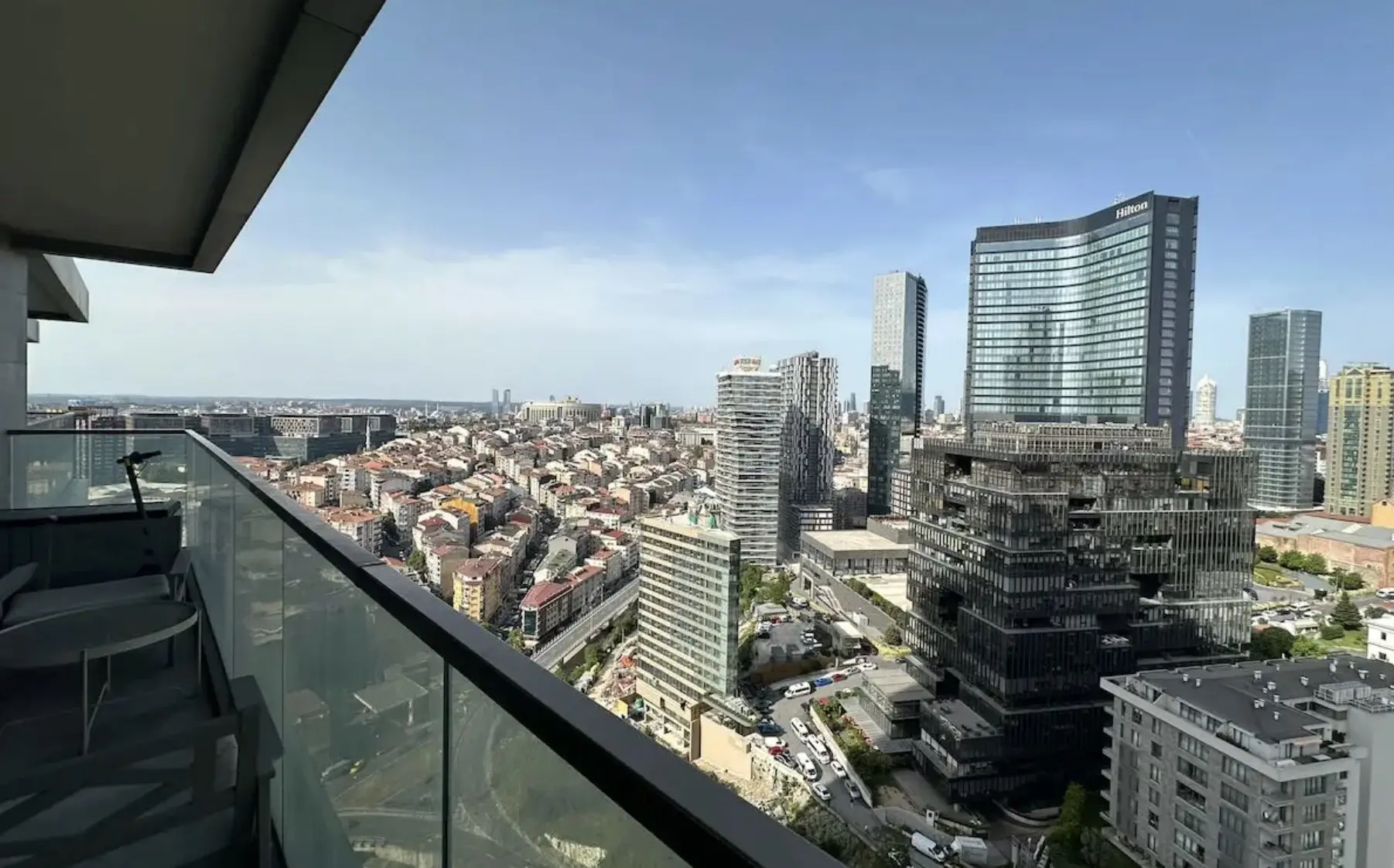
Sense Sisli central Istanbul 10% income properties
















 X
X