President Recep Tayyip Erdoğan has introduced one of Turkey’s most ambitious tax ideas in years: a proposed 20-year exemption from Turkish tax on foreign-source income for eligible new residents.
If approved, Turkey would no longer be only a country selling lifestyle, citizenship, and undervalued property. It would be offering a serious fiscal incentive to globally mobile people who earn abroad, invest abroad, or run international businesses from wherever they choose. At the same time, the state is also moving to widen Istanbul Financial Center business incentives across the country, including a 95% corporate tax exemption on certain transit-trade profits outside the IFC and 100% inside it.
This is not yet law. It still needs to go through parliament, and the final wording will decide who qualifies and how far the benefit really extends. But the direction is now unmistakable: Turkey is trying to make itself far more attractive to international money, global entrepreneurs, HNWIs, and second-passport buyers who want something more than a residence permit in a nice climate.
Quick Summary
Turkey is considering a proposal that could exempt eligible new residents from Turkish tax on foreign-source income for 20 years, provided they have not been Turkish tax residents in the previous three years. This would be one of the most ambitious individual tax incentives near Europe, especially when combined with Turkey’s existing $400,000 USD real estate citizenship route, Istanbul’s Financial Center infrastructure, and a broader reform package aimed at exporters, regional headquarters, and transit trade.
Key Takeaways: Why 0% Foreign Income Tax Is Important
- Erdoğan has proposed a 20-year Turkish tax exemption on foreign-source income for people who have not been Turkish tax residents in the prior three years.
- The package still requires parliamentary approval, so the final scope and wording are not yet locked in.
- The same package includes a 9% tax rate for manufacturing exporters, a reported 14% rate for other exporters, and wider incentives tied to transit trade and regional headquarters.
- The Istanbul Financial Center already offers targeted tax incentives, including exemptions and deductions for qualifying financial and transnational trade activities.
- Reuters reported that the Iran war has prompted more than 40 companies from East Asia and Gulf countries to explore moving some activity to the Istanbul Financial Center.
This Proposal Could Reshape Turkey’s Investor Appeal
A lot of jurisdictions can market themselves as pleasant places to live. Far fewer can offer a credible combination of: strategic geography, a large domestic economy, citizenship through real estate, business incentives, serious air connectivity, and multiple lifestyle bases within one country. That is where Turkey becomes unusually interesting.
This proposal, if approved, would not sit in isolation. It would sit alongside Turkey’s existing Citizenship by Investment Programme, its push to strengthen Istanbul Financial Center, its broader effort to attract multinationals, and a wider state message that Turkey wants to be a regional base, not just a tourism market or a second-home destination.
Based on Erdoğan’s remarks and subsequent reporting, the proposal as described would allow people who have lived abroad and have not been Turkish tax residents for at least three years to relocate to Turkey and avoid Turkish tax on foreign-source income and capital gains for 20 years. Domestic Turkish-source income would still remain taxable.
Foreign-source income refers to income earned outside the country where a person is tax resident. In this context, the proposal is important because eligible new residents could potentially live in Turkey while keeping certain overseas earnings outside the Turkish tax net. This could include people with overseas business profits, dividends from international investments, rental income from property outside Turkey, capital gains on foreign assets, or remote earnings from clients based outside Turkey.
The same reporting also referenced:
- A flat 1% inheritance and gift tax for qualifying individuals.
- Reduced corporate tax for exporters.
- Stronger tax treatment for transit trade.
- Incentives for regional headquarters managed from Turkey.
- Lower-tax repatriation of certain foreign-held assets such as cash, gold, and securities.
Why Global Investors Will Pay Attention
For the past decade, many globally mobile investors and real estate buyers have gravitated towards a familiar shortlist. That shortlist is becoming less stable:
- Dubai for low tax and regional business.
- Southern Europe for residency and climate.
- The UK and Switzerland for prestige and legal comfort.
- Singapore for Asian capital access.
Portugal’s original NHR era is gone. The UK has become less straightforward for internationally structured wealth. Southern Europe often combines attractive weather with more bureaucracy and less strategic relevance. Dubai remains powerful, but recent regional tensions have reminded investors that a city-state hub is still geographically concentrated.
Turkey enters that conversation differently. It is not a city-state. It is not a pure low-tax offshore platform. It is a large sovereign country connecting Europe, Asia, the Middle East, and the Mediterranean, with a population above 85 million and a wide domestic market beneath the tax proposition.
Why Istanbul Sits at the Centre of the Opportunity
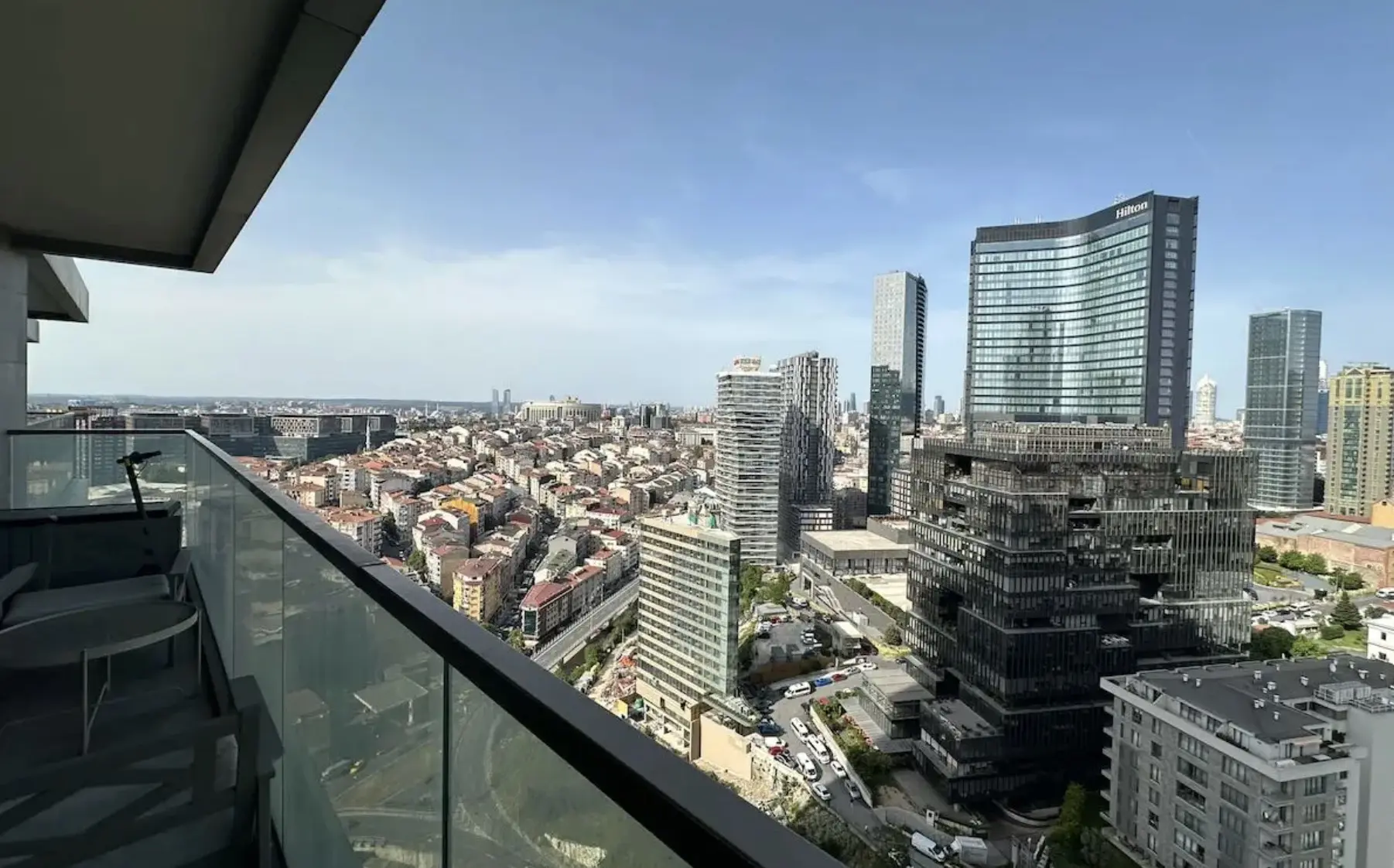
Yes, the 0% tax on foreign income concept is national. But the place where the full proposition becomes concrete is Istanbul, especially around the Istanbul Financial Center and the wider Ataşehir zone. The Financial Center already hosts key state institutions and offers tax incentives for qualifying participants, while Reuters reported that occupancy is expected to rise to 75%, or around 40,000 workers, by year-end.
That is important because tax incentives are more convincing when they sit inside a real ecosystem. International investors want to know:
- Where the office base is.
- Where the banks are.
- Where schools and hospitals are.
- Where the housing stock is.
- How easy it is to travel globally.
- Whether serious institutions are already turning up.
If a 20-year foreign-income tax exemption in Turkey were approved, the benefit would not only apply to corporate structures or abstract wealth planning. It would influence the behaviour of: entrepreneurs, remote earners, Gulf-based professionals, HNWIs, globally mobile families, Citizenship by Investment buyers, and people looking for a serious Plan B outside one city or one region.
This would also sit alongside practical property-market reforms designed to increase confidence and liquidity, including Turkey’s Secure Payment System for real estate transactions – intended to hold buyer funds safely until Title Deed transfer is completed, reducing payment risk for both sides of a sale.
Why This Could Strengthen Turkish Citizenship by Investment
Turkish citizenship is available to international investors who purchase real estate valued at $400,000 USD. It is already one of the most popular citizenship programmes in the world. Now imagine layering a 20-year foreign-income exemption on top of that for qualifying newcomers. Suddenly, citizenship is no longer only about: a second passport, a second country, mobility and family security.
It also becomes part of a broader tax-and-lifestyle strategy.
This would fill a major gap in the current citizenship discussion. Right now, Turkey’s CBI programme is strong on accessibility, speed, and tangible property ownership. The missing piece has been a more compelling fiscal angle for those who actually plan to spend time in the country. If parliament approves the proposal, that could change.
How Turkey Compares to Other Investor Destinations
The most useful way to frame Turkey is not as “the next Dubai” or “another Portugal.” It is a different category. Below are not like-for-like comparisons. But show why investors should take the Turkish proposal seriously.
Jurisdiction
Main incentive
Duration
Main limitation
Turkey comparison
Dubai
Zero personal income tax and business speed
Ongoing
No full citizenship through property, single-city concentration
Turkey offers a sovereign second base, citizenship through property, and a broader lifestyle spread
Italy
Established flat-tax regime
15 years
Annual charge, more expensive entry, older market
Turkey’s proposal would run for 20 years and appears tax-free if approved as described
Greece
Non-dom regime and lifestyle appeal
15 years
Smaller economy, no equivalent CBI property route
Turkey offers larger scale, citizenship through property, and a longer proposed exemption period
Portugal
Lifestyle and residency appeal
10 years under the newer IFICI framework
Original NHR era has changed
Turkey’s proposed 20-year structure would be twice the length of Portugal’s newer incentive period
Important Risks Investors Should Understand
International investors in Turkey should treat the proposal as a serious signal, not a finished rule. The opportunity is significant, but details, implementation and individual tax implications will decide its real value.
1. This is still a proposal: The biggest point is simple. This is not yet law. Erdoğan announced the direction, and the package will be submitted to Turkish parliament, but the detailed legislation still has to appear.
2. Final qualification rules could narrow the benefit: The final law may define “foreign-source income,” residency, eligibility, timing, and anti-abuse provisions in ways that are tighter than today’s headlines imply.
3. Turkey still has macro volatility: Turkey is not becoming Switzerland overnight. Inflation is still high, rates are still elevated, and the lira remains volatile. Reuters reported the Central Bank left its key rate at 37% while monitoring energy-price fallout from the Iran War.
4. Tax advice is not optional: Anyone seriously considering relocation, citizenship, or tax structuring around this proposal should obtain specialist tax advice in both Turkey and their home jurisdiction before acting.
What This Could Mean for Different Buyer Types
The proposal would not affect buyers in the same way. Its value depends on income source, Turkish residency plans, family needs, business exposure, and whether citizenship and a Turkish passport form part of the strategy.
1. Global entrepreneurs and remote earners: They may see Turkey as a place to live well while ring-fencing foreign earnings from Turkish tax, if the final law is approved broadly.
2. HNWIs and family offices: They may see a more serious second-base option combining lifestyle, access, real estate, and citizenship.
3. Gulf-based families: They may see Turkey as a complementary jurisdiction, especially at a time when some regional firms are already exploring Istanbul Financial Center.
4. Citizenship investors: They may see a stronger long-term rationale for actually spending time in Turkey after acquiring the passport.
How the Proposal Fits Turkey’s Wider Investment Push
The strongest interpretation of this proposal is not that Turkey wants to be a tax haven. The stronger reading is that Turkey is trying to become a more complete platform for worldwide capital, global trade, property investment, lifestyle relocation, and international business.
The reported One-Stop Office model would also support this direction by centralising company formation, work and residence permits, tax and social security processes, investment incentives, and environmental approvals under the Presidency Investment Office. That is consistent with:
- The broader tax-and-investment package.
- The widening of Financial Center incentives beyond the center itself.
- The state-backed build-out of Istanbul Financial Center.
- And Turkey’s larger push to draw business and capital in a more unsettled world.
Speak to Property Turkey Before the Market Fully Adjusts
Turkey is still at the proposal stage, not the finish line. But this is exactly how bigger shifts often begin. First the signal. Then the legislation. Then the early movers. Then the repricing. If parliament passes a version of this plan with real breadth, the conversation around Istanbul, Bodrum, citizenship, and investor relocation could become much more serious very quickly.
At Property Turkey, we help international buyers think through those moves in practical terms, from property selection and citizenship structure to long-term positioning in the parts of Turkey that global capital understands first. For a free consultation with our advisory team in Istanbul, please contact us today.
FAQs: Turkey’s Proposed 20-Year Foreign Income Tax Break
Q: Is Turkey really offering 0% tax on foreign income for 20 years?
A: Erdoğan has proposed a 20-year exemption for eligible newcomers who have not been Turkish tax residents in the previous three years, but parliament still needs to pass the package.
Q: Who would qualify under the proposal as currently described?
A: People who have lived abroad and have not been Turkish tax residents for at least three years appear to be the target group. Final legislative wording will decide exact qualification rules.
Q: Would Turkish-source income still be taxed?
A: Based on the reporting so far, yes. The proposal refers to foreign-source income, while domestic income would remain within the Turkish tax system.
Q: What counts as foreign-source income in Turkey?
A: The final law will need to define this, but foreign-source income may include overseas business profits, dividends, foreign rental income, capital gains on foreign assets, or remote earnings.
Q: Why is Istanbul so important to this story?
A: Because Istanbul Financial Center is already the focal point for Turkey’s push to attract global finance, and the wider reform package is tied closely to that ecosystem.
Q: Does this connect to Turkish Citizenship by Investment?
A: Potentially yes. Turkey’s property-based citizenship route from $400,000 USD already exists, and a long foreign-income exemption could make that package more attractive for global investors.
Q: Is this just for companies, or for individuals too?
A: The package includes personal and corporate incentives, including the 20-year foreign-income exemption for individuals and tax breaks for exporters, transit trade, and regional headquarters.
Q: Could this increase demand for Istanbul and Bodrum property?
A: If approved, it could strengthen demand for real estate from globally mobile investors, entrepreneurs, and families who want a tax-efficient second base in Turkey.
Q: Is Turkey becoming a financial rival to Dubai?
A: Not on the same terms yet. Dubai remains ahead as a financial centre, but Turkey is trying to become a stronger regional platform through Istanbul Financial Center and broader tax incentives.
Q: What is the biggest risk in acting on this too early?
A: Assuming the final law will be identical to the announcement. Investors should wait for legislative detail and get proper tax advice before structuring any relocation decision.
Sources Supporting This Article
- Reuters and Hürriyet Daily News (April 2026) – Erdoğan announced a legislative package including a 20-year exemption from Turkish tax on foreign-source income for eligible newcomers, plus a 9% tax rate for manufacturing exporters and other investor-focused measures.
- Bloomberg and Invest in Turkey (April 2026) – Turkey is working to expand Istanbul Financial Center incentives, including 95% tax exemption on certain transit-trade profits outside the center and 100% inside it, as part of a push to attract multinationals and regional headquarters.
- Reuters (April 2026) – The chief executive of Istanbul Financial Center said the Iran war had prompted 40 companies from East Asia and Gulf countries to explore moving some operations to Istanbul, with occupancy expected to reach 75% or 40,000 workers by year-end.
Cameron Deggin Founder & CEO, Property Turkey
Cameron Deggin is Founder and CEO of Property Turkey. A former finance professional and FCCA-qualified accountant, he founded the company in 2001 after recognising Turkey’s investment potential. With more than two decades analysing Turkish real estate, Cameron regularly advises international investors and is quoted by media including the Financial Times and BBC.




 By:
By:







 Founder & CEO, Property Turkey

 Kalkan
  2
2  2
2 
















 X
X