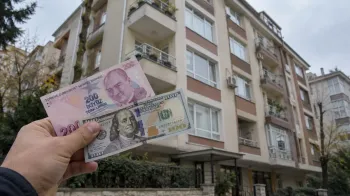
Deploying $4 million USD into Istanbul real estate does not necessarily mean buying one Bosphorus mansion. For a high-net-worth investor seeking income, capital growth, and a practical exit, the stronger strategy may be far less glamorous: modern apartments in central Istanbul, generally priced between $175,000 USD and $250,000 USD per unit.
Turkey’s 2026 tax reforms combine a 20-year Turkish income tax exemption for qualifying foreign-source income with a time-limited asset declaration regime offering rates from 0% to 5%. For internationally mobile high-net-worth individuals, entrepreneurs, family offices, and business owners, this creates a major planning opportunity.
Turkey’s 2026 tax reforms have introduced an opportunity for investors, family offices, companies, and Turkish-connected wealth structures. Turkey has introduced a temporary Asset Declaration Regime that allows certain assets to be declared, transferred into the Turkish economy, and protected from future tax audits.
Turkey’s 2026 tax reforms introduced a major tax opportunity for investors, entrepreneurs, retirees, high-net-worth individuals, and families considering a move to Turkey. Eligible individuals who become resident in Turkey from 1 January 2026 onwards may benefit from a 20-year exemption from Turkish income tax on foreign-source income.
Turkey’s 2026 tax reform has created one of the most important new incentives for international trading companies, commodity businesses, supply chain groups, and family-owned merchanting structures looking at Turkey as a commercial base. The key question is simple: do the goods have to physically enter Turkey?
Canal Istanbul has been promoted for years as a second Bosphorus, a global shipping route, and a future waterfront investment area. This article examines why that case does not stand up to serious scrutiny. The shipping revenue looks too weak, the construction cost too high, and the ecological, social, and legal risks too significant.
If you are considering buying property in Turkey, applying for citizenship, relocating capital, or assessing Turkey as a long-term emerging-market opportunity, the June 2026 Economic Outlook from BBVA Research and Garanti BBVA provides an important starting point on where things stand and where they're heading.
For buyers looking at Istanbul, average figures can mislead. A low price may signal opportunity, but it may also reflect weak resale liquidity, poor building quality, title risk, maintenance problems, or limited tenant demand. The real question is not simply where the property is. The better question is what type of Istanbul asset you are buying.
One airline now flies to 131 countries. It is not Emirates, Qatar Airways, United, Delta, or Lufthansa. It is Turkish Airlines, the national carrier that has turned Istanbul into one of the most connected cities on Earth. In 2025, Turkish Airlines served 352 destinations in 131 countries, carried 92.6 million passengers, and recorded $24.1 billion USD in revenue.
Renting your property in Turkey is a fantastic way to generate a steady income or cover your running costs. But to do so and ensure you are protected from legal liability and to maximise your return, you should understand how to navigate the rental market successfully.
A pure Turkish citizenship investor is a buyer whose main objective is Turkish citizenship by investment, not personal use of the property. They may never live in Turkey. They may never use the home. They may simply want a Plan B, wider mobility, long-term family optionality, or a second citizenship connected to a real estate asset.
In April 2026, Turkey enacted the most comprehensive wealth-friendly tax reform package in its modern history. This is not a marginal adjustment to tax rates. This is not a tweak to residency thresholds. This is a fundamental repositioning of Turkey as a sovereign jurisdiction for global capital.
Law No. 7582 has been published in Turkey’s Official Gazette, confirming several 2026 investor reforms. Accepted on May 21, 2026, and published on June 4, 2026, the law makes the 20-year foreign income tax exemption official for qualifying new residents. It also introduces a 1% inheritance and transfer tax rate for eligible individuals.
The right Turkish real estate strategy depends on your real motive – citizenship, investment, lifestyle, or business. Most foreign buyers begin their Turkey property journey with the wrong question: Which property should I buy? The smarter question is: Why am I buying?
Turkey’s 2026 reform package could be important for HNWIs and crypto investors because it speaks to the exact problems they face in 2026: high-tax legacy jurisdictions, Gulf concentration risk, rising scrutiny of offshore structures, volatile digital wealth, and the need for a second base that is more than a residency card.
Istanbul’s Urban Regeneration Zones are becoming one of Turkey’s most important property investment themes. With 2026 investor reforms, proposed mortgage changes, Turkish residency and citizenship thresholds, and the Istanbul Finance Center, districts such as Kagithane and Eyup Sultan could sit at the centre of Turkey’s next investment window.
On March 27, 2026, Larry Fink, CEO of BlackRock, the world's largest asset manager with $14 trillion USD under management, flew to Istanbul for a private meeting with President Recep Tayyip Erdoğan at the Dolmabahçe Presidential Office. How does this link to Turkey's new Tax Reform Package?
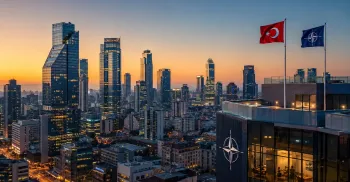
The Istanbul Financial Center is Turkey’s flagship attempt to create a genuine regional financial hub in Istanbul’s Ataşehir district. The project includes 1.3 million square metres of office space, a 100,000 square metre mall, a congress centre, hotel, and major parking capacity, while also offering tax advantages.
Turkey’s stronger-than-Europe R&D growth is a useful long-term signal for international investors because it points to a country still building productive capacity while parts of Europe slow. OECD data shows Turkey among the faster-growing R&D spenders in the developed world.
Turkey’s proposed investor incentive package combines a 20-year foreign-income tax exemption for new residents, lower corporate tax rates for exporters, expanded Istanbul Financial Center incentives, a regional headquarters regime, a one-stop investment office, service export support, asset-repatriation rules, and start-up-focused reforms.