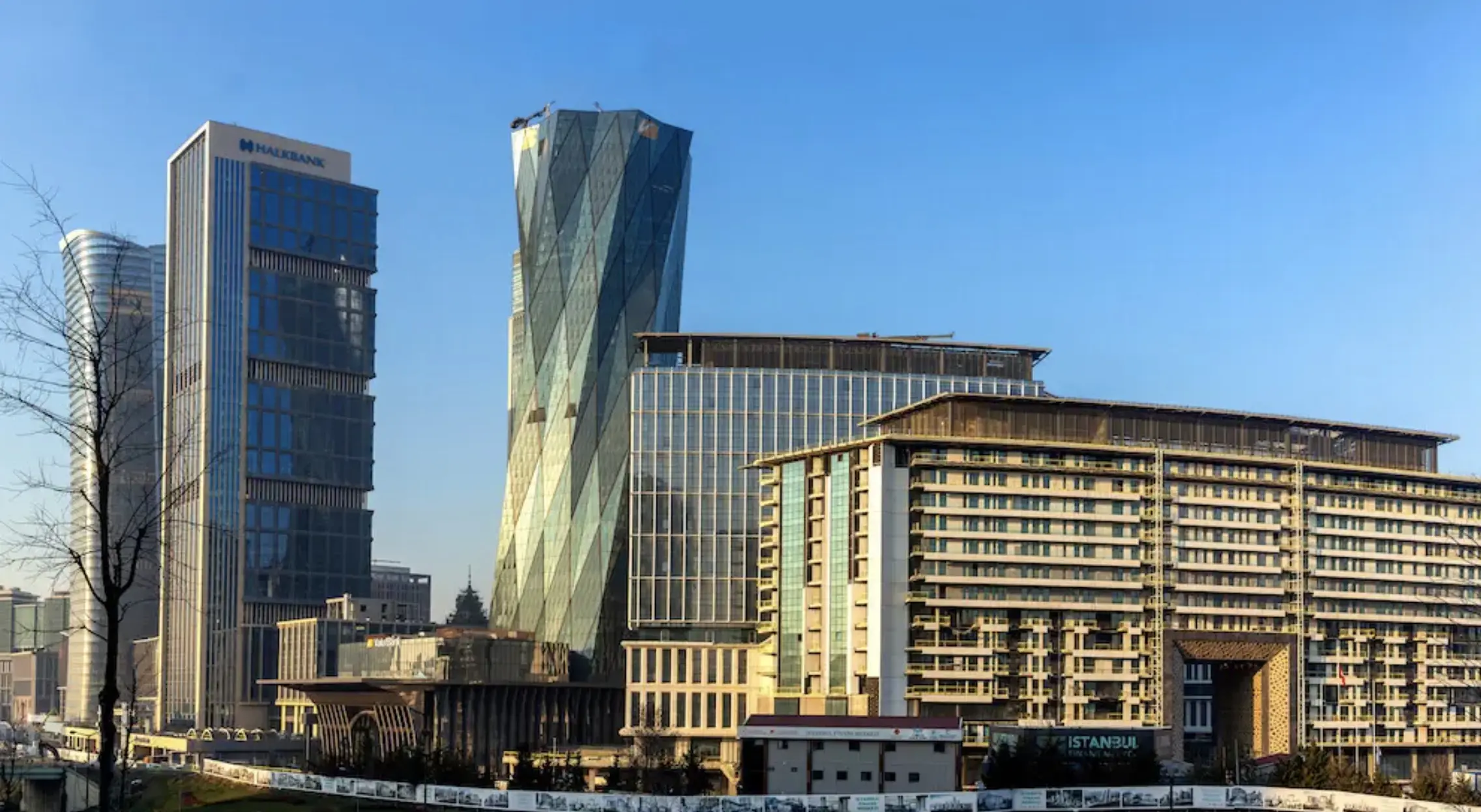
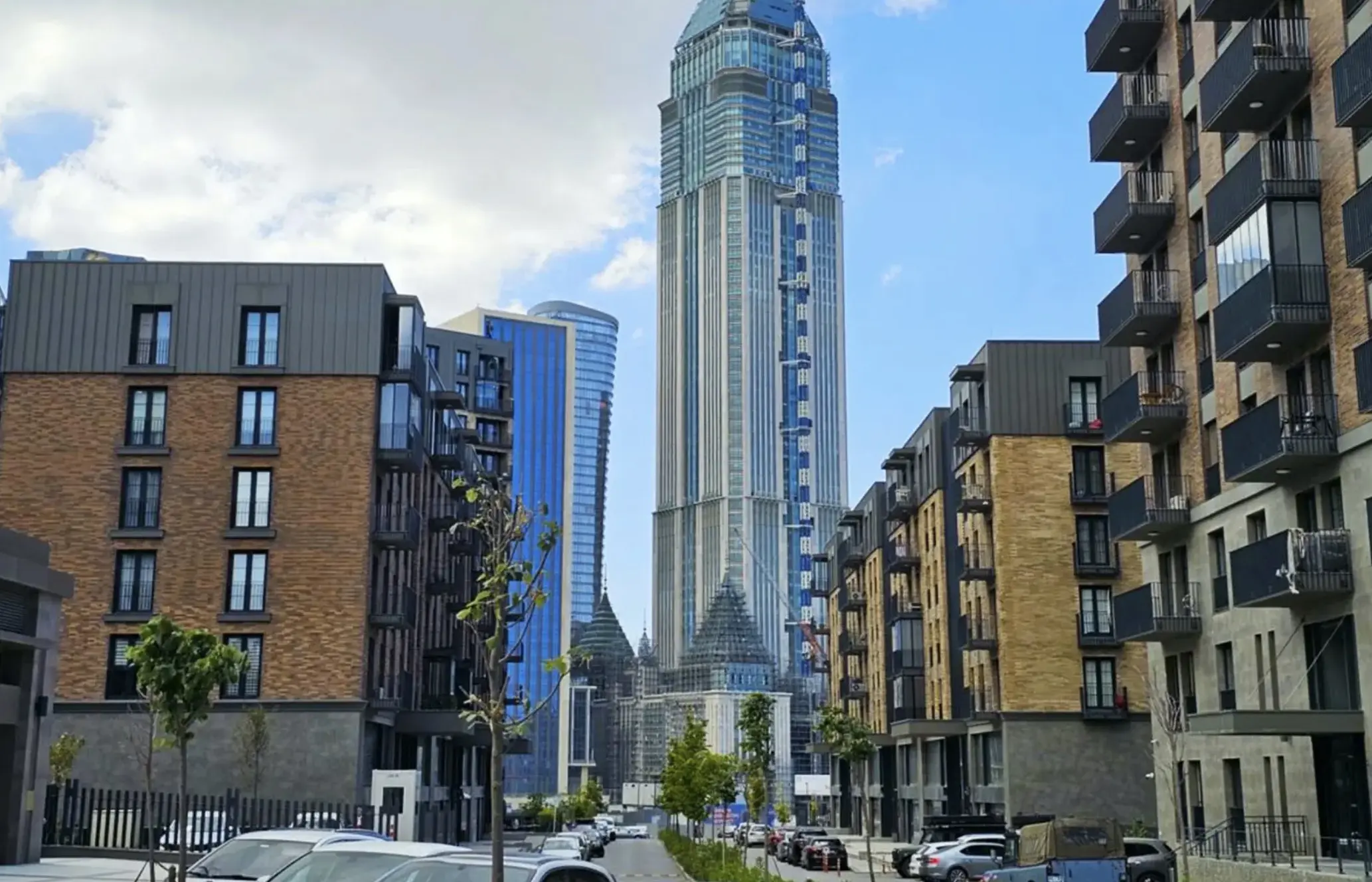
The Istanbul Financial Center is becoming one of the clearest expressions of what Turkey is trying to build in the next phase of its economic development: a more credible regional base for finance, trade, corporate relocation, and internationally mobile capital. The official IFC site describes it as a global hub for financial services with direct access to world markets.
Reuters says the new incentive package includes a 9% tax rate for manufacturing exporters, 100% tax exemption on services exports in selected high-value sectors, and zero corporate tax on transit trade inside the IFC, compared with 95% outside it.
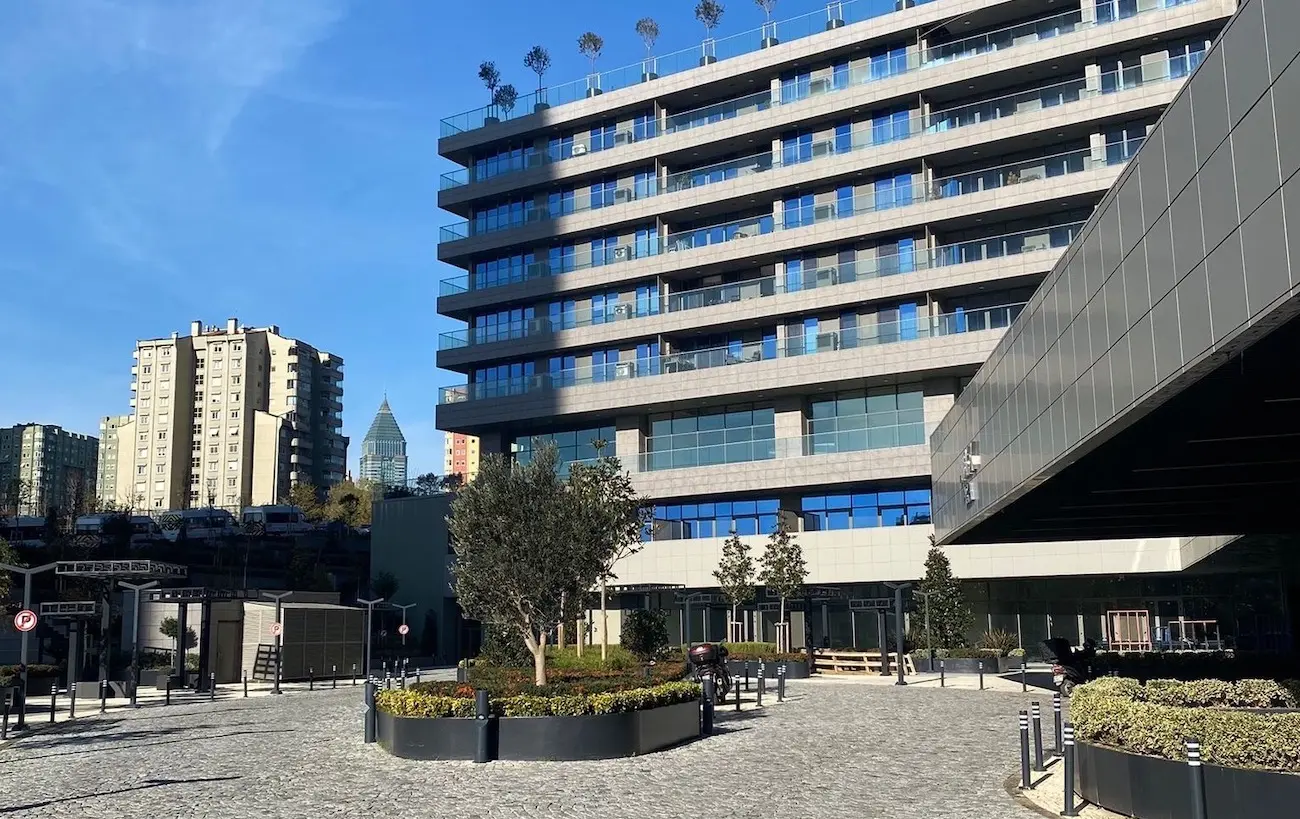
For property investors, the IFC changes how Ataşehir should be viewed. This district is one of the clearest places where policy, finance, transport, and urban demand are starting to reinforce one another. Property in Ataşehir and the surrounding districts now deserve to be viewed through a much more serious long-term lens.
Quick Summary
The Istanbul Financial Center is Turkey’s flagship attempt to create a genuine regional financial hub in Istanbul’s Ataşehir district. The project includes 1.3 million square metres of office space, a 100,000 square metre mall, a congress centre, hotel, and major parking capacity, while also offering tax advantages for financial services exports, personnel with overseas experience, lease documentation, and certain transnational trade activities. In 2026, Turkey is now widening some of those incentive ideas across the country, proposing a 20-year foreign-income tax exemption for new residents, and receiving more enquiries from Asian and Gulf firms seeking alternatives from a more volatile regional backdrop.
Key Takeaways: Istanbul Financial Center in 2026
- The IFC is designed as a large mixed-use financial district with 1.3 million sq m of office space and 100,000 sq m of retail.
- The official IFC site says 1.6 billion people, $30 trillion USD of regional economic size, and $8 trillion USD of trading volume sit within a four-hour flight radius of Istanbul.
- Tax incentives at the IFC include 100% deduction for financial service export income until 2031, 100% BSMV exemption for qualifying transactions, and personnel income-tax relief of 60% or 80% depending on overseas experience.
- Reuters reported that the IFC expects occupancy to rise to 75% and around 40,000 workers by year-end 2026, with more than 40 companies discussing moves or expansion there.
- Turkey’s latest reform package links the IFC to a wider national push, including a 9% tax rate for manufacturing exporters and 100% tax exemption on transit trade inside the IFC.
- Turkey is also planning a Secure Payment System for real estate transactions from 1 July 2026, which improves transaction security for buyers and sellers.
The IFC is a purpose-built financial district on the Asian side of Istanbul, centred in Ataşehir. Official project information says it is intended to become a regional centre in the short term and a global centre in the medium term. The site includes not only office stock but also a mall, congress centre, five-star hotel, and a very large parking capacity, all within a smart-city model.
The IFC is not simply a cluster of random towers carrying a finance label. It is an ecosystem project. The logic is to gather institutions, service providers, trade-related activity, and financial functions in one place, while giving them a framework of legal and tax advantages that make the district more internationally competitive.
Who Is Already Based at the Istanbul Financial Center?
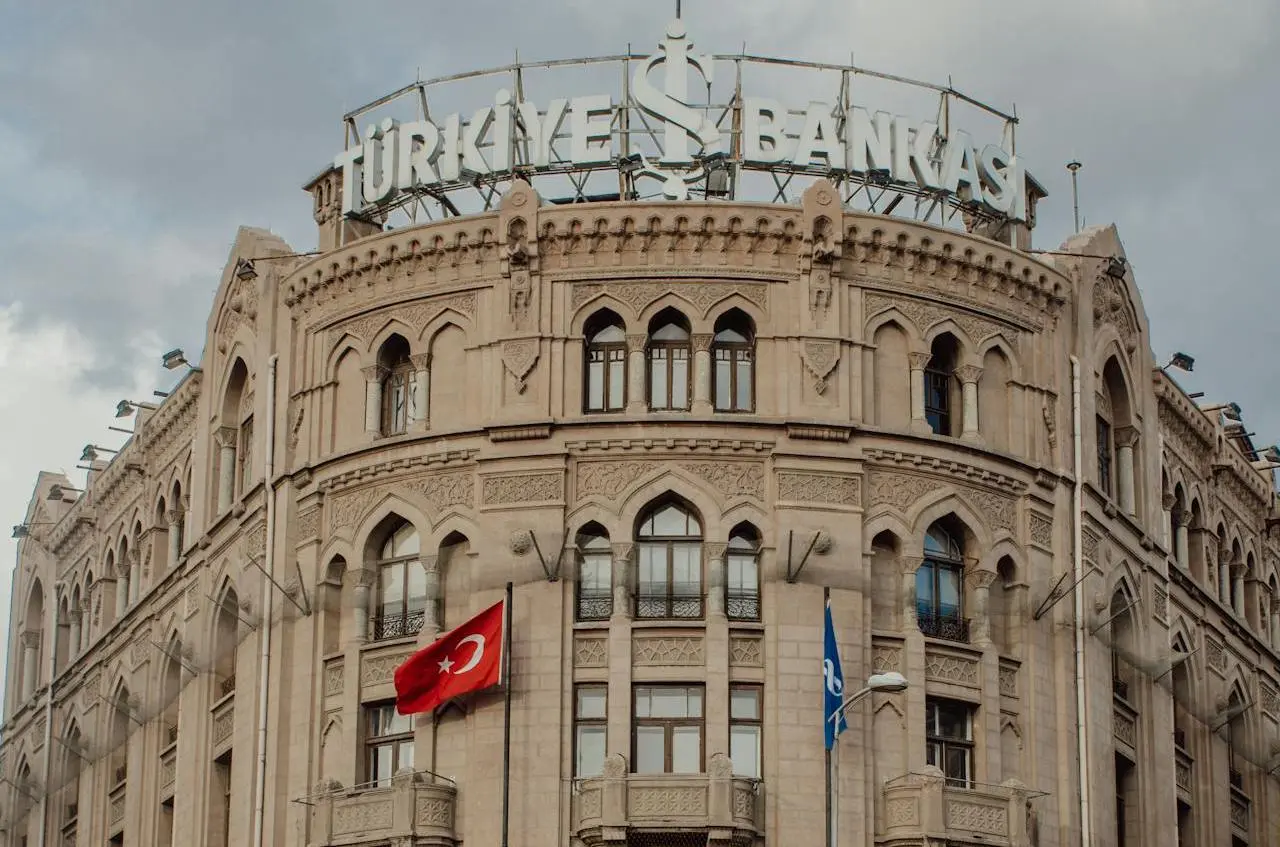
The IFC is not an empty future concept. It already brings together major public financial institutions, state lenders, regulators, and market-facing organisations. It houses the Turkish Central Bank, state-owned lenders, and financial regulators. A stronger institutional base can support office demand, worker footfall, executive housing, serviced apartments, restaurants, retail, and rental demand in Ataşehir and nearby Asian-side districts.
1. Central Bank of the Republic of Turkey: The Central Bank is one of the IFC’s anchor institutions, giving the district symbolic weight and strengthening its role as Turkey’s official finance-policy centre.
2. Ziraat Bank: Turkey’s largest state-owned lender is based in the IFC, adding daily workforce density, institutional credibility, and long-term office gravity to the wider Ataşehir finance district.
3. VakıfBank: VakıfBank is another major state lender located within the IFC, strengthening the its role as a consolidated banking base rather than a speculative office project.
4. Halkbank: Halkbank’s presence helps complete the state-bank cluster inside the IFC, supporting the idea that Turkey wants core financial institutions grouped in one strategic district.
5. Banking Regulation and Supervision Agency: The BRSA’s presence provides authority, oversight capacity, and credibility for banks, investors, and international finance-sector tenants.
6. Capital Markets Board of Türkiye: The Capital Markets Board adds capital-market supervision to the IFC ecosystem, strengthening the district’s relevance for brokerage, investment, and securities.
Turkey’s Strategy Behind the Istanbul Financial Center
Turkey has long wanted Istanbul to operate more credibly as a finance and capital hub rather than merely as a giant consumer city and transport gateway. The IFC is the physical and policy expression of that ambition.
This ambition is now being reinforced by policy rather than architecture alone. Bloomberg reported in April that Ankara was working on plans to expand some business incentives offered at the Istanbul Financial Center to foreign companies across the country. Reuters then reported that the broader package had moved forward, adding steep tax cuts and explicit measures aimed at improving competitiveness, attracting FDI, and positioning Istanbul as a leading regional financial hub.
That progression is important. It suggests the IFC is no longer being treated as a standalone flagship. It is becoming the centrepiece of a broader attempt to make Turkey more attractive to mobile capital and business operations.
The Tax Incentives Already Available at the IFC
The IFC tax incentives page gives one of the clearest reasons why the district is relevant. These incentives are not small. They directly reduce friction for financial institutions, regional headquarters, and internationally experienced staff. They also make the IFC more than a domestic office park. It is designed to appeal to firms that think in cross-border terms. Incentives include:
- Income from financial services export activities is 100% deductible from the corporate income tax base until 2031, then 75% afterwards.
- Qualifying financial-services export transactions are exempt from BSMV.
- Documents and charges related to those transactions are exempt from stamp duty and associated fees.
- Real estate leasing transactions for properties located within the IFC are exempt from charges and stamp duty.
- Personnel with at least five years of professional experience abroad can receive 60% income-tax exemption on net monthly wages, rising to 80% for those with ten years, subject to conditions.
- Transnational trade activities benefit from a 50% corporate tax deduction under the published IFC framework. The 2026 reform package would increase that to 100% corporate tax exemption inside the IFC and a 95% exemption outside it.
How the 2026 Reforms Strengthen the IFC’s Role
The newest 2026 tax package takes that logic much further, changing the IFC from a niche tax-incentive district into the anchor point of a wider investment strategy. Reuters reported that Turkey’s package includes:
- A reduced 9% corporate tax rate for manufacturing exporters.
- 100% tax exemption on services exports in sectors such as software, gaming, and medical tourism.
- Zero corporate tax on transit trade inside the IFC.
- 95% tax exemption on transit trade outside the IFC.
- And a broader effort to attract talent, capital, and entrepreneurship.
The Proposed 20-Year Foreign Income Tax Relief
Erdoğan’s proposed package would allow individuals who have not been Turkish tax residents for the prior three years to relocate to Turkey and potentially benefit from a 20-year exemption from Turkish tax on foreign-source income. At this stage, this remains a proposal and still requires parliamentary approval.
If approved, the implication is obvious. The IFC would become far more attractive not just to institutions, but to the kind of internationally mobile individuals who ask:
- Where can I base myself?
- Where can I earn abroad without punitive local treatment?
- Where can I combine tax efficiency, air connectivity, and a large domestic economy?
The war involving Iran has prompted numerous companies in East Asia and the Gulf to explore moving or expanding some operations into the Istanbul Financial Center. The IFC chief executive said talks had taken place with more than 40 companies, with interest coming from sectors including fintech, finance, Islamic finance, and insurance. Countries named included Japan, Singapore, South Korea, Hong Kong, and Gulf markets.
This does not mean Istanbul is replacing Dubai. That would be simplistic. But it does show how the regional conversation is changing. A city-state hub with strong regulation and low tax can still sit close to geopolitical fault lines. Turkey, by contrast, is being pitched as a large sovereign alternative with real depth, multiple lifestyle bases, and stronger geographic diversification. The IFC becomes the most obvious place where that shift can land in physical form.
Ataşehir’s Role in Istanbul’s Finance-Led Growth
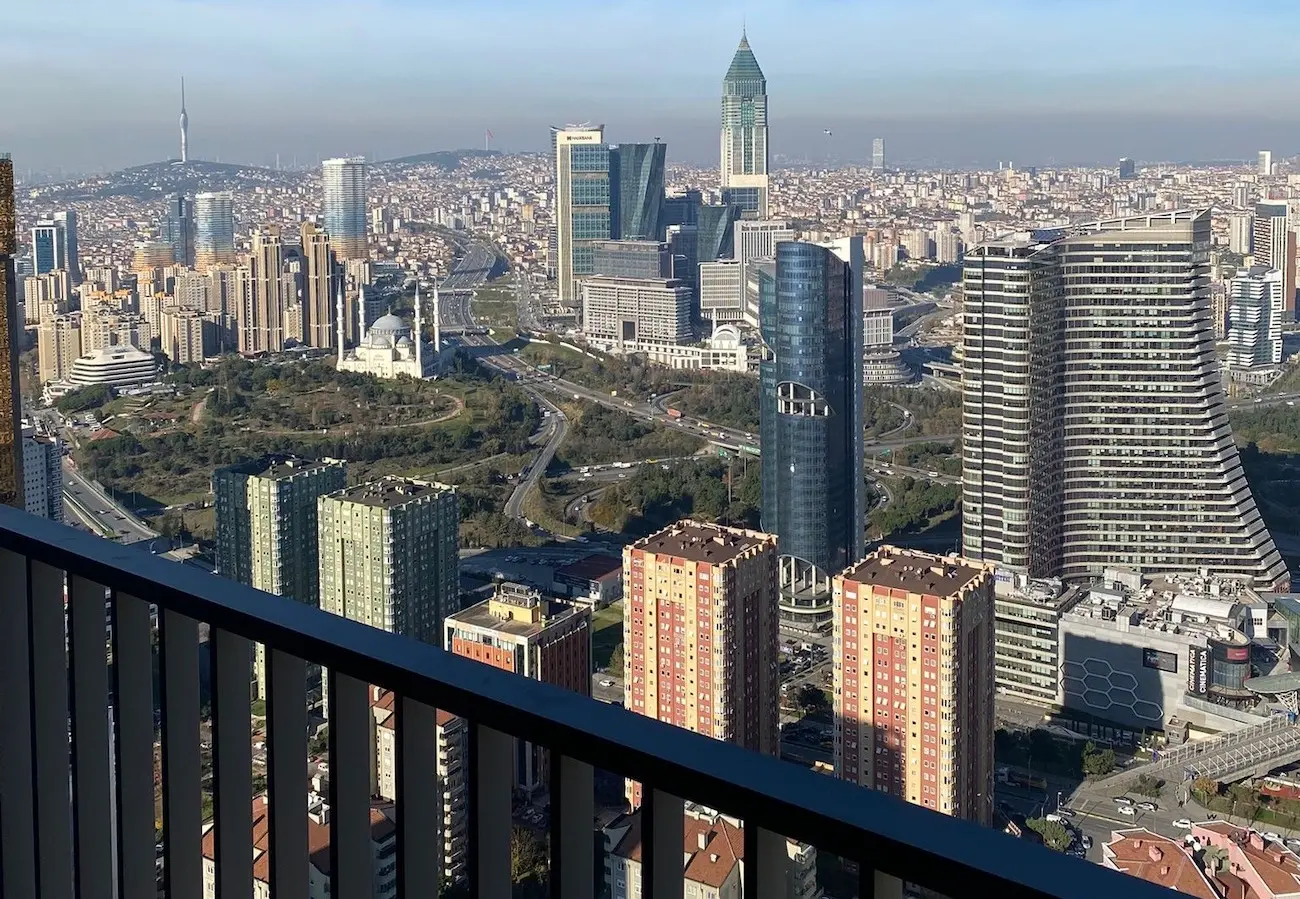
Ataşehir is no longer just another office district on Istanbul’s Asian side. It is the physical home of Turkey’s most important finance-led urban project. That changes how the district should be viewed by investors. Ataşehir now sits close to:
- The IFC itself.
- A growing finance and services ecosystem.
- Strong road access via the O-2 and O-4 motorway network.
- Improving public transport via the M12 line and its wider network connections.
The 13km M12 metro line will provide direct access through four entry points and connect the centre to Marmaray, the M4 and M5 lines, while IFC also has direct access towards the Eurasia Tunnel via Acıbadem Ünalan junction.
For real estate, that kind of connectivity changes the district’s utility. Finance hubs do not only create office demand. They usually create demand for: executive and mid-market rentals, serviced apartments, mixed-use developments, nearby owner-occupier housing, hospitality and retail, and eventually stronger district identity.
What This Could Mean for Ataşehir Real Estate
Ataşehir property now has a more durable demand engine than many people still assume. If the IFC continues filling, if related services and regional headquarters grow, and if tax incentives pull in internationally experienced professionals, then housing demand near the district should benefit in several ways:
1. Rental depth improves: A finance and services workforce creates demand for nearby, modern, professionally managed housing. This tends to support newer property stock, branded projects, and well-connected residential complexes.
2. Mixed-use schemes become more credible: Districts anchored by office gravity often reward mixed-use projects better than pure residential sprawl because residents and workers both need daily-life infrastructure.
3. Owner-occupier demand can strengthen: Professionals working in or around the IFC may prefer to buy nearby rather than commute across the city. That usually supports better-quality mid to upper-middle housing first.
4. Demand can reach neighbouring districts: The best opportunities are not always inside the core district itself. Nearby parts of Ümraniye, Kadıköy, and well-connected Asian-side neighbourhoods can benefit from the same employment pull if pricing is more accessible.
Real Estate Near the IFC: What Buyers Should Prioritise
For Turkish real estate investors looking at buying property in Ataşehir and districts close to the IFC, the best framework is not “closest tower wins”. The better framework that buyers should prioritise, is:
- Proximity to the IFC without sacrificing wider liveability.
- Transport connections, especially road and future metro access.
- Modern building stock with strong management.
- Layouts suited to professionals, couples, and smaller households.
- Mixed-use convenience rather than isolated towers.
- Liquidity to domestic buyers later, not only today’s foreign marketing angle.
That usually points investors towards well-located one and two-bedroom apartments, selected family apartments in stronger complexes with social facilities, and modern projects with credible daily-life infrastructure.
How the Secure Payment System Helps
From 1 July 2026, payments for real estate sales in Turkey must go through a registered secure payment system under rules published in the Official Gazette. Part or all of the payment in real estate purchases and sales will move through a system established by banks and financial institutions, and a service fee will be deducted from the amount transferred to the seller.
For IFC-related buyers, especially foreigners, this improves the transaction environment. One of the biggest frictions in cross-border property buying is payment timing and trust. A more formalised, secure settlement structure supports the overall perception that Turkey is upgrading the practical side of investing in real estate.
Why the IFC Fits the Bigger Turkey Direction
The IFC becomes far more convincing when it is viewed alongside the wider changes already under way in Turkey. Put together, the IFC starts to look less like an isolated district and more like the operational centre of a much larger repositioning:
- Broader tax incentives for exporters and international activity.
- Proposed long-duration foreign-income relief for new residents.
Makes Istanbul more attractive to international firms and talent
Proposed foreign-income relief
Could strengthen relocation appeal for global earners
Supports premium and lifestyle-led residential demand
Secure payment system
Improves property settlement security
Helps foreign buyers feel more comfortable transacting
Post-Iran war enquiries
Increases IFC visibility with Asian and Gulf firms
Strengthens confidence in Ataşehir and linked districts
Ready to Explore Property Near the Istanbul Financial Center?
For buyers who want more than a generic Istanbul apartment, the IFC and Ataşehir open a very different conversation. This is where finance, infrastructure, transport, tax policy, and urban demand increasingly overlap. At Property Turkey, we help investors understand not only which property to buy, but why certain districts may benefit more than others as Turkey’s wider repositioning gathers pace. Contact us today to speak with our local advisors in Istanbul.
FAQs: Istanbul Financial Center in 2026
Q: What is the Istanbul Financial Center?
A: It is Turkey’s flagship financial district in Ataşehir, designed as a mixed-use hub for financial services, institutions, offices, retail, hospitality, and related business activity.
Q: How large is the IFC project?
A: Official project information says it includes 1.3 million sq m of office space, a 100,000 sq m shopping mall, a congress centre, hotel, and major parking capacity.
Q: What tax incentives already apply inside the IFC?
A: 100% deduction for qualifying financial service export income until 2031, 100% BSMV exemption for eligible transactions, lease-related exemptions, and income-tax relief for certain staff.
Q: What changed in 2026?
A: Turkey’s incentive package added 9% tax rate for manufacturing exporters, 100% tax exemption on selected services exports, and zero corporate tax on transit trade inside the IFC.
Q: Is the proposed 20-year foreign-income tax relief already law?
A: No. It has been proposed by Erdoğan and reported by Reuters, but it still requires parliamentary approval and final legislative wording.
Q: Why is Ataşehir important to property investors?
A: Ataşehir is the district hosting the IFC, so it sits closest to the finance-led employment, transport links, and mixed-use development likely to benefit first from IFC growth.
Q: Does the IFC have good transport links?
A: Yes. The official IFC FAQ references the 13km M12 metro line and direct links to Marmaray, M4, M5, and the Eurasia Tunnel.
Q: Are companies really moving there?
A: More than 40 companies from East Asia and the Gulf had recently discussed moving or expanding there, with the IFC expecting 75% occupancy and around 40,000 workers by year-end 2026.
Q: How does the secure payment system connect to the IFC?
A: It helps improve the broader real estate transaction environment in Turkey, which is useful for international buyers considering Ataşehir and IFC-adjacent property.
Q: What is the simplest way to understand the IFC?
A: It is the physical centre of Turkey’s attempt to make Istanbul more competitive as a regional finance, trade, and capital hub.
Cameron Deggin Founder & CEO, Property Turkey
Cameron Deggin is Founder and CEO of Property Turkey. A former finance professional and FCCA-qualified accountant, he founded the company in 2001 after recognising Turkey’s investment potential. With more than two decades analysing Turkish real estate, Cameron regularly advises international investors and is quoted by media including the Financial Times and BBC.




 By:
By:




 Founder & CEO, Property Turkey

 Bodrum
  2
2  1
1 











 X
X