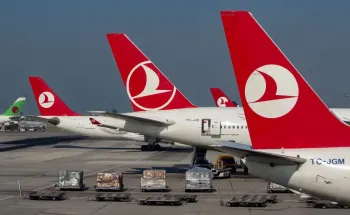
One airline now flies to 131 countries. It is not Emirates, Qatar Airways, United, Delta, or Lufthansa. It is Turkish Airlines, the national carrier that has turned Istanbul into one of the most connected cities on Earth. In 2025, Turkish Airlines served 352 destinations in 131 countries, carried 92.6 million passengers, and recorded $24.1 billion USD in revenue.
Renting your property in Turkey is a fantastic way to generate a steady income or cover your running costs. But to do so and ensure you are protected from legal liability and to maximise your return, you should understand how to navigate the rental market successfully.
A pure Turkish citizenship investor is a buyer whose main objective is Turkish citizenship by investment, not personal use of the property. They may never live in Turkey. They may never use the home. They may simply want a Plan B, wider mobility, long-term family optionality, or a second citizenship connected to a real estate asset.
In April 2026, Turkey enacted the most comprehensive wealth-friendly tax reform package in its modern history. This is not a marginal adjustment to tax rates. This is not a tweak to residency thresholds. This is a fundamental repositioning of Turkey as a sovereign jurisdiction for global capital.
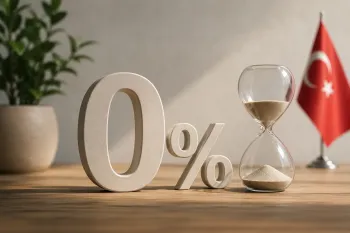
Law No. 7582 has been published in Turkey’s Official Gazette, confirming several 2026 investor reforms. Accepted on May 21, 2026, and published on June 4, 2026, the law makes the 20-year foreign income tax exemption official for qualifying new residents. It also introduces a 1% inheritance and transfer tax rate for eligible individuals.
The right Turkish real estate strategy depends on your real motive – citizenship, investment, lifestyle, or business. Most foreign buyers begin their Turkey property journey with the wrong question: Which property should I buy? The smarter question is: Why am I buying?
Turkey’s 2026 reform package could be important for HNWIs and crypto investors because it speaks to the exact problems they face in 2026: high-tax legacy jurisdictions, Gulf concentration risk, rising scrutiny of offshore structures, volatile digital wealth, and the need for a second base that is more than a residency card.
Istanbul’s Urban Regeneration Zones are becoming one of Turkey’s most important property investment themes. With 2026 investor reforms, proposed mortgage changes, Turkish residency and citizenship thresholds, and the Istanbul Finance Center, districts such as Kagithane and Eyup Sultan could sit at the centre of Turkey’s next investment window.
On March 27, 2026, Larry Fink, CEO of BlackRock, the world's largest asset manager with $14 trillion USD under management, flew to Istanbul for a private meeting with President Recep Tayyip Erdoğan at the Dolmabahçe Presidential Office. How does this link to Turkey's new Tax Reform Package?
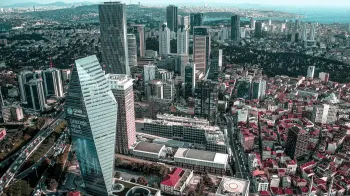
The Istanbul Financial Center is Turkey’s flagship attempt to create a genuine regional financial hub in Istanbul’s Ataşehir district. The project includes 1.3 million square metres of office space, a 100,000 square metre mall, a congress centre, hotel, and major parking capacity, while also offering tax advantages.
Turkey’s stronger-than-Europe R&D growth is a useful long-term signal for international investors because it points to a country still building productive capacity while parts of Europe slow. OECD data shows Turkey among the faster-growing R&D spenders in the developed world.
Turkey’s proposed investor incentive package combines a 20-year foreign-income tax exemption for new residents, lower corporate tax rates for exporters, expanded Istanbul Financial Center incentives, a regional headquarters regime, a one-stop investment office, service export support, asset-repatriation rules, and start-up-focused reforms.
Turkey is considering a proposal that could exempt eligible new residents from Turkish tax on foreign-source income for 20 years, provided they have not been Turkish tax residents in the previous three years. This would be one of the most ambitious individual tax incentives near Europe.
Tapu Güvenilir Hesap is Turkey’s Secure Property Payment System, designed to protect buyers and sellers during Title Deed transfers. It blocks the purchase funds through participating Turkish banks and releases payment to the seller only when ownership is officially transferred.
S&P’s decision to affirm Turkey at BB- with a stable outlook in April 2026 is a signal for investors. It shows that, despite high inflation, energy-price pressure, and reserve strain, the agency still believes Turkey can weather the shock if policymakers maintain a prudent policy mix.
The Bosphorus rail project, tax incentive proposals, the rise of the Middle Route, expanding corridor relevance between Europe and Asia, and Turkey’s role in gas, oil, electricity, and logistics networks all point in the same direction: Ankara is trying to convert geography into durable economic leverage.
Dubai-based crypto investors can move capital into Turkish property, but not by paying for real estate directly in crypto. Turkey banned the use of crypto for payments in 2021, so the real route is crypto to fiat, fiat to bank, bank to property. For investors in Dubai, the strategy is not about leaving the UAE. It is about Turkey as a Plan B.
Turkey’s Ministry of Trade is preparing to make a secure payment system mandatory for real estate transactions from 1 July 2026. The system is designed to stop money moving directly from buyer to seller before Title transfer is completed. Instead, funds will be blocked in a secure mechanism and only released once the transfer is done.
Turkey makes sense for a HNWI in 2026 because it combines: strategic geography, a large domestic economy, multiple lifestyle bases, internationally relevant real estate markets, and a real citizenship route through property investment. Turkey is a functioning G20-scale market with a population of more than 86 million.
In March 2026, BlackRock CEO Larry Fink met privately with President Erdoğan in Istanbul, alongside senior government officials responsible for finance and energy policy. Around the same time, global investors gathered in the city for high-level economic discussions focused on Turkey’s future positioning.