Turkey’s 2026 tax reforms have introduced an opportunity for international investors, high-net-worth individuals, family offices, companies, and Turkish-connected wealth structures. Alongside the 20-year foreign income tax exemption for new residents, Turkey has introduced a temporary Asset Declaration Regime that allows certain assets to be declared, transferred into the Turkish economy, and protected from future tax audits if legal conditions are met.
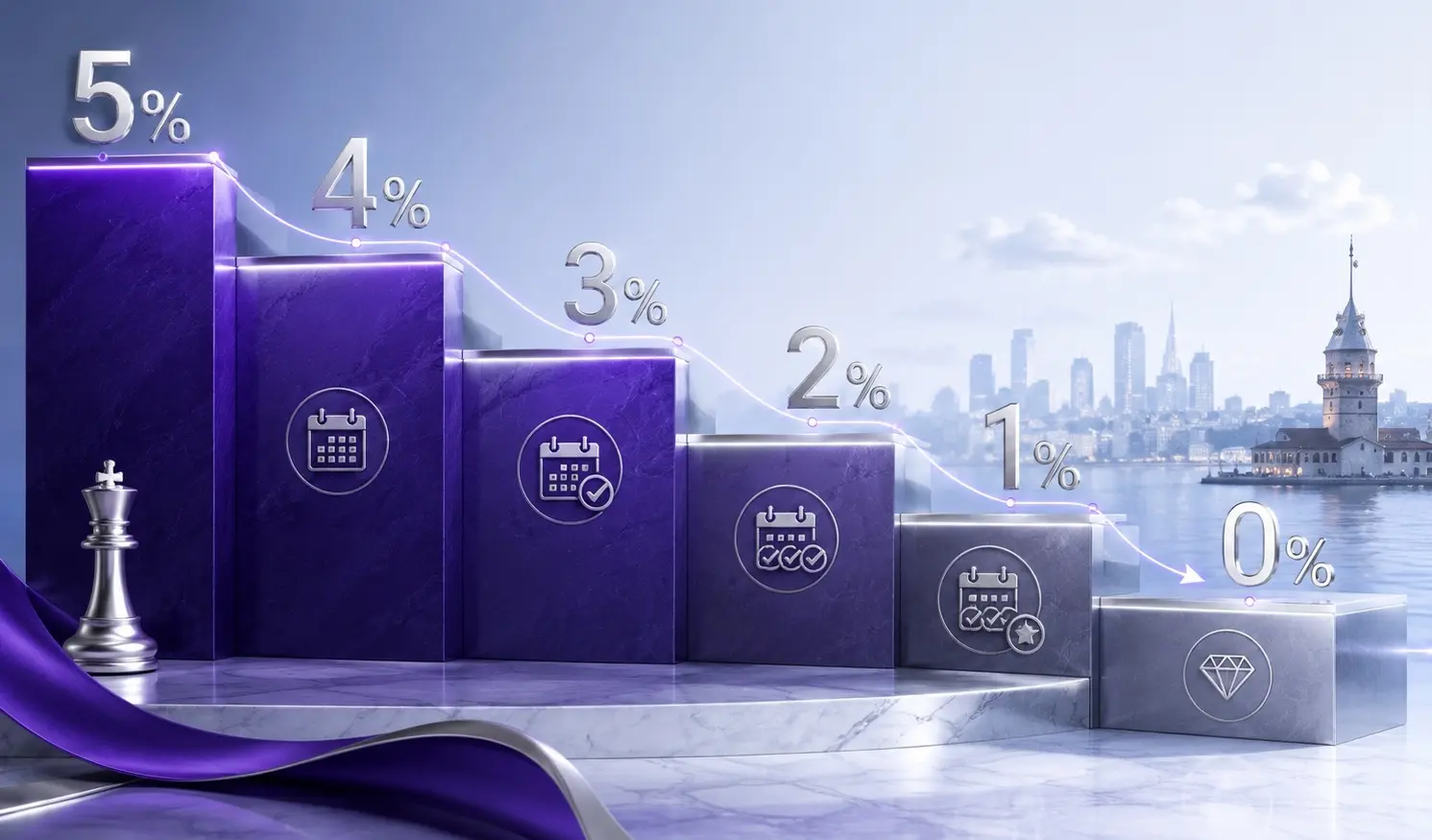
This is one of the most important parts of the reform package for investors. It is not only about moving money into a Turkish bank account. The regime creates a formal route for individuals and companies to declare qualifying financial assets, bring overseas assets into Turkey within the required period, pay a reduced tax rate, and in some cases reduce the tax rate to 0% through a long-term investment commitment.
The rules are set out under Temporary Article 19 of the Corporate Tax Law and the Official Implementation Guidelines Serial No. 1. The declaration period runs from 4 June 2026 until 31 July 2027, giving investors a defined window to review assets held abroad, undeclared financial assets already in Turkey, and potential investment routes through Turkish banks or Capital Markets Board licensed institutions.
What Is Turkey’s New Asset Declaration Regime?
Turkey’s Asset Declaration Regime allows individuals, companies, other legal entities, and authorised representatives to voluntarily declare certain financial assets and bring them into the Turkish economy. The regime applies to assets held outside Turkey and certain undeclared financial assets already located inside Turkey.
In return, taxpayers benefit from reduced tax rates and protection against future tax audits relating to the declared assets, provided all legal requirements are satisfied. This makes the regime far more than a simple asset transfer facility. It is a tax compliance, wealth planning, and investment structuring opportunity. The regime is important for:
- Families with international assets that need formalisation.
- Investors considering Turkey as a long-term capital base.
- Turkish-connected taxpayers with undeclared financial assets.
- Foreign investors looking at regulated Turkish fund structures.
- Clients exploring REIFs, venture capital funds, and CMB-licensed investment routes.
Turkey Asset Declaration Regime at a Glance
Question
Answer
What is the regime?
A temporary Asset Declaration Regime for certain financial assets held inside or outside Turkey
Legal basis
Temporary Article 19 of the Corporate Tax Law
Implementation guidance
Official Implementation Guidelines Serial No. 1
Declaration period
4 June 2026 to 31 July 2027
Who can benefit?
Individuals, companies, other legal entities, and authorised representatives
What assets qualify?
Cash, foreign currency, gold, securities, and other capital market instruments
How is the declaration made?
Through a Turkish bank or CMB-licensed brokerage firm
Standard tax rate
5% of the declared asset value
Reduced tax rate
From 4% down to 0%, depending on the investment commitment period
Key benefit
Protection against future tax audits and additional assessments relating to declared assets
Main risk
Protection is lost if deadlines, tax payments, accounting rules, or investment commitments are breached
Who Can Use the Asset Declaration Regime?
The regime is available to a wide range of taxpayers and asset owners. Unlike Turkey’s 20-year foreign income tax exemption, which applies only to individuals, this Asset Declaration Regime applies to both individuals and companies. Eligible participants include:
- Individuals.
- Companies.
- Other legal entities.
- Authorised representatives acting on behalf of the owner.
This broader eligibility makes the regime suitable for family offices, corporate groups, holding companies, investment entities, and international business owners with assets outside Turkey. For high-net-worth individuals, it can also support a relocation or investment plan, including Turkish residence, Turkish Citizenship by Investment, regulated funds, real estate strategy, and long-term wealth planning.
What Assets Can Be Declared?
The regime applies to certain financial assets rather than every type of asset. The eligible categories include cash, foreign currency, gold, securities, and other capital market instruments.
Asset Type
Can It Be Declared?
Planning Point
Cash
Yes
Must be properly declared and transferred where held abroad
Foreign currency
Yes
Relevant for USD, EUR, GBP, and other currency holdings
Gold
Yes
Physical transfer may require customs procedures
Securities
Yes
May include listed financial instruments
Other capital market instruments
Yes
Important for investors holding financial portfolios
How the Tax Rates Work
The standard tax rate is 5% of the declared asset value. However, the regime offers lower tax rates where the taxpayer commits to keeping the declared assets invested in certain qualifying Turkish financial products.
Investment Commitment
Applicable Tax Rate
5 years
0%
4 years
1%
3 years
2%
2 years
3%
1 year
4%
No qualifying commitment
5%
The longer the investor commits the declared assets to qualifying Turkish financial products, the lower the tax rate becomes. At five years, the rate falls to 0%. That is a major incentive for investors who want long-term exposure to Turkey.
Example: Five-Year Commitment and 0% Tax: A company declares 32 million TL of overseas financial assets and commits to keep the funds in a qualifying Turkish investment product for five years. The applicable tax rate becomes 0%. No tax is payable on the declaration, but the declaration must still be processed and reported through the relevant institution to the Turkish Tax Office.
Example: Four-Year Commitment and 1% Tax: A family investment company declares 55 million TL of overseas assets and commits to a four-year qualifying investment period. The applicable tax rate becomes 1%. The reduced tax rate depends on the investment commitment being maintained. If the assets are withdrawn early, the client may lose the reduced-rate benefit and the audit protection attached to the declaration.
Which Turkish Investments Can Reduce the Tax Rate?
Qualifying Investment
Why It Is Important
Turkish time deposit accounts
A simple bank-based route for clients seeking a deposit structure
Government bonds
A sovereign debt route for investors looking at Turkish government instruments
Lease certificates
Sukuk-style instruments for clients seeking lease certificate exposure
Venture Capital Funds
A fund-based route that may be especially relevant for growth-focused investors
The regime is not limited to leaving money in a bank deposit. It creates an investment planning route through Turkish financial products, including regulated fund structures. For high-net-worth clients, the fund route can be more strategic than a passive bank account. It allows a client to align asset declaration with Turkish investment exposure, professional management, regulated oversight, and a longer-term Turkey strategy.
Why CMB-Licensed Funds Are Important
Declarations can be submitted through a Turkish bank or a Capital Markets Board licensed brokerage firm. Overseas assets can also be transferred through a CMB-licensed intermediary institution. This brings regulated Turkish capital markets directly into the reform. For HNWIs, the question becomes whether declared assets should sit in a bank account or whether they should be invested through a regulated fund.
Turkish Real Estate Investment Funds, known as REIFs, pool investor capital into professionally managed Turkish real estate portfolios. Investors own units in the fund rather than directly owning the underlying real estate, while professional fund managers handle acquisition, management, leasing, and exit decisions. REIFs are licensed and monitored by the Capital Markets Board, providing a regulated framework for investors.
Venture Capital Funds are also a qualifying investment product under the Asset Declaration Regime. These funds can provide exposure to businesses, development activity, technology, energy, Istanbul Urban Regeneration, and other investment sectors depending on the fund mandate.
The Asset Declaration Regime creates a direct need for advice on where declared assets should be placed after being brought into Turkey. For clients considering the fund route, Funding Turkey can assist with:
- Explaining Turkish REIF and Venture Capital Fund structures.
- Reviewing whether a fund-based strategy is suitable.
- Coordinating with tax, legal, banking, and investment advisors.
- Helping investors understand fund entry, holding periods, and exit planning.
- Structuring a long-term investment plan around Turkish capital markets.
Overseas Assets Must Be Transferred to Turkey
Submitting a declaration is not enough. Overseas assets must be transferred to Turkey within two months from the declaration date to benefit from the regime. Assets may be transferred:
- To an existing Turkish bank account.
- To a newly opened Turkish bank account.
- Through a CMB-licensed brokerage firm or intermediary institution.
If cash or gold is physically brought into Turkey, customs procedures must be completed before the assets are deposited into a Turkish financial institution. An investor should not physically bring gold or cash into Turkey without coordinating the customs and banking steps properly.
Example: Overseas Cash Transfer: An investor declares 4.2 million Euros held in a European bank account. The declaration is made through a Turkish bank on 1 October 2026. The investor must transfer the overseas assets into Turkey within two months from the declaration date. If the transfer is completed properly and the applicable tax or investment commitment is satisfied, the investor can benefit from the regime.
Example: Declaration Without Transfer: A company declares 8 million USD of overseas assets but does not transfer the funds into Turkey within the required two-month period. The declaration alone is not enough. The company risks losing the benefits of the regime because the overseas asset transfer requirement has not been met.
Can a Declaration Be Changed?
A declaration can be changed, but only within certain limits. If the declared amount needs to be increased or reduced during the same calendar month, the original declaration can be amended. If additional assets are declared in a later month, a new declaration must be submitted. This is a simple rule, but it can create practical issues for clients who discover additional assets after making the first declaration.
Example: Additional Assets in a Later Month: A taxpayer declares 22 million TL in August 2026. In September 2026, they decide to declare an additional 9 million TL. The September amount cannot be added by amending the August declaration. A new declaration must be submitted for the additional assets.
Protection Against Future Tax Audits
One of the biggest benefits of the regime is protection against future tax audits and additional tax assessments relating to the declared assets. Provided all legal requirements are met, the Turkish Tax Administration will not carry out a tax audit or issue additional tax assessments in relation to the declared assets.
The audit protection is not unlimited. It only applies to declared assets and only where the taxpayer satisfies the statutory conditions. To benefit from this protection, taxpayers must:
- Transfer overseas assets within the two-month period.
- Pay the applicable tax on time.
- Comply with the investment commitment.
- Record the assets correctly in accounting records where required.
- Maintain the required reserve account where applicable.
Example: Declared Assets Protect Against an Assessment: A Turkish company declares 14 million TL of previously unrecorded financial assets. Later, during a tax audit, the Tax Administration identifies an additional taxable amount of 6 million TL. The company demonstrates that the 6 million TL originated from the assets declared under the regime. In this situation, no additional income tax, corporate tax, or VAT assessment is issued because the difference is covered by the valid declaration.
What Happens if a Tax Audit Finds a Larger Difference?
The protection applies only up to the amount that can be connected to the declared assets. If a later tax audit identifies a larger difference, and only part of that difference can be linked to the declared assets, the remaining amount remains subject to normal tax assessment procedures.
Example: Only Part of the Difference is Protected: A company declares overseas assets worth 80 million TL. A later audit identifies an additional taxable amount of 120 million TL. After reviewing the records, the tax inspector accepts that 72 million TL is connected to the declared assets. The remaining 48 million TL relates to unrelated accounting and tax issues. In this situation, only 72 million TL benefits from the protection. The remaining 48 million TL remains subject to the normal tax assessment process.
When Can the Protection Be Lost?
The protection is conditional. Taxpayers may lose the benefits if they fail to comply with the legal requirements. Common risk points include:
- Failing to transfer overseas assets to Turkey within two months.
- Failing to pay the applicable tax on time.
- Failing to meet accounting requirements.
- Failing to maintain a required reserve account.
- Breaching an investment commitment used to obtain a lower tax rate.
Example: Early Withdrawal from a Four-Year Commitment: A company declares 45 million TL and qualifies for the 1% tax rate by committing to keep the funds invested for four years. After two years, the company withdraws the funds. The company loses the protection against future tax audits and the benefits attached to the reduced tax rate. The unpaid tax and late payment interest become payable.
Important Dates for Investors
Item
Deadline
Declaration period
4 June 2026 to 31 July 2027
Transfer of overseas assets
Within two months of the declaration
Reduced tax investment period
1 to 5 years, depending on the selected tax rate
0% tax route
5-year qualifying investment commitment
The declaration window is generous, but it is not open-ended. Investors should use the time to prepare properly rather than wait until the final weeks. Bank onboarding, brokerage account opening, source-of-funds documentation, legal advice, tax review, and fund suitability analysis can all take time.
Planning Checklist Before Making a Declaration
Before making a declaration, international investors should complete a full review of their assets, ownership structure, tax position, and investment plan in Turkey. A good review should cover:
- Which assets are held outside Turkey.
- Which undeclared assets are already inside Turkey.
- Whether the assets are cash, foreign currency, gold, securities, or capital market instruments.
- Whether the owner is an individual, company, legal entity, or represented owner.
- Which Turkish bank or CMB-licensed intermediary will handle the declaration.
- Whether the assets can be transferred into Turkey within two months.
- Whether customs procedures apply to physical cash or gold.
- Whether the client wants the standard 5% rate or a reduced rate.
- Which qualifying investment product is suitable.
- Whether the client can maintain the investment commitment.
- Whether the asset can be linked clearly to future audit protection.
- Whether accounting records and reserve accounts are required.
- How the declaration fits with residence, citizenship, property, and fund planning.
How This Connects with Turkish Citizenship and Property
An investor may bring assets into Turkey under the declaration regime, invest part of their wealth through regulated funds, purchase property, apply for residence, or apply for Turkish Citizenship by Investment. These steps must be planned separately, but they can work together if structured correctly. For example, a client could:
- Review overseas assets and tax exposure.
- Declare qualifying assets under the Asset Declaration Regime.
- Transfer the assets into Turkey within the two-month deadline.
- Commit funds to a qualifying investment product to reduce the tax rate.
- Consider a CMB-regulated fund structure through Funding Turkey.
- Coordinate long-term residence, property, banking, and investment planning.
The key is not to mix rules incorrectly. Asset declaration, fund investment, property acquisition, residence, and citizenship each have separate conditions. A successful strategy needs one joined-up advisory process.
Property Turkey and Funding Turkey: Asset Declaration Support
The Asset Declaration Regime creates a specific planning opportunity: declare qualifying financial assets, transfer them into Turkey within the legal deadline, and decide where those assets should sit for the required investment period.
Through Funding Turkey and Property Turkey, our team can help suitable investors understand how CMB-regulated fund structures fit into an asset declaration strategy, including real estate fund exposure, venture capital fund opportunities, holding periods, fund suitability, and long-term Turkish investment planning.
This is not simply about opening a bank account and transferring money. The asset type, ownership structure, declaration route, two-month transfer deadline, tax-rate commitment, qualifying investment product, audit protection, and future liquidity plan all need to be reviewed together. contact us today for a confidential consultation with our local experts.
Cameron Deggin Founder & CEO, Property Turkey
Cameron Deggin is Founder and CEO of Property Turkey. A former finance professional and FCCA-qualified accountant, he founded the company in 2001 after recognising Turkey’s investment potential. With more than two decades analysing Turkish real estate, Cameron regularly advises international investors and is quoted by media including the Financial Times and BBC.




 By:
By:













 Founder & CEO, Property Turkey

 Bodrum
  2
2  1
1 














 X
X