Turkey entered July 2026 with two developments capable of changing how international investors assess the country. The first was Law No. 7582, published on 4 June 2026, introducing a 20-year Turkish income tax exemption for qualifying foreign-source income earned by certain new tax residents. The second was the NATO Leaders’ Summit held in Ankara on 7 and 8 July, where Turkey’s military strength, defence industry, and strategic importance were placed before the world’s most powerful defence alliance.
What the Ankara NATO Summit Actually Established
The summit produced highly favourable language towards Turkey from US President Donald Trump. During his meeting with President Recep Tayyip Erdogan, Trump said the US would begin removing sanctions imposed after Turkey acquired the Russian S-400 air defence system. He said Washington did not want to sanction friends and described the bilateral relationship as possibly stronger than it had ever been.
Trump also stated that Turkey had been “much more loyal” than some countries expected to be loyal. When asked about the F-35, he said a potential sale was something the US would consider. The public warmth between Trump and Erdogan was notable after several difficult years in US-Turkey relations.
It did not resolve every outstanding dispute, but it demonstrated that Turkey was no longer being treated as a difficult partner operating at the edge of the alliance. Turkey was being courted because Washington and NATO increasingly recognise the value of its army, defence manufacturing, regional access, and political influence.
Summit Development
Verified Position
What It Means
US sanctions
Trump announced his intention to remove them, with US departments working on the process
A potentially important diplomatic reset, but formal implementation must still be confirmed
F-35 aircraft
Trump said a sale would be considered
No completed sale or confirmed return to the programme
S-400 dispute
Still unresolved at the summit
US law currently prevents Turkey from possessing the S-400 while joining the F-35 programme
Trump’s loyalty remarks
Trump said Turkey had been more loyal than some expected allies
Strong political recognition, although the unnamed countries should not be assumed
Turkey’s NATO role
Turkey hosted the summit and remains NATO’s second-largest army
Turkey’s defence and regional importance are increasingly difficult for Western partners to overlook
NATO’s European commitment
Article 5 was reaffirmed, alongside greater European defence responsibility
Turkey is becoming more important within NATO, rather than simply replacing Europe
Turkey’s Strategic Importance Is Becoming Harder to Ignore
Turkey’s importance to NATO does not rest on ceremony or presidential compliments. NATO Secretary General Mark Rutte described Turkey as possessing the alliance’s second-largest army. Turkey also sits beside the Black Sea, the Caucasus, the Middle East, the Eastern Mediterranean, and Europe, while maintaining influence across Central Asia and the Turkic world.
This gives Turkey a strategic reach that few NATO members can match. Its defence industry has moved from heavy foreign dependence towards domestic production of drones, aircraft, missiles, naval vessels, armoured vehicles, and electronic systems. Turkey’s armed drones have become one of its most visible exports, while Turkish defence companies are involved in European and NATO procurement.
The Ankara summit itself placed defence production at the centre of the agenda. NATO announced more than €50 billion Euros in new procurement commitments and a major programme for counter-drone capabilities. Allies also reaffirmed Article 5 and pledged at least €70 billion Euros in military equipment, training, and assistance for Ukraine during 2026.
Turkey is not a substitute for every European ally. NATO’s formal position is that European members and Canada must accept greater responsibility while continuing to work with the United States. Within that rebalancing, however, Turkey has several advantages:
- Military Scale: Turkey can provide personnel, equipment, manufacturing capacity, and operational experience.
- Defence Production: Its domestic industry gives NATO another source of aircraft, drones, naval equipment, ammunition, and advanced systems.
- Regional Access: Turkey can engage with Europe, the Middle East, the Black Sea, the Caucasus, and Central Asia from one national base.
- Political Access: Ankara maintains relationships with countries that do not always communicate easily with one another.
- Infrastructure: Turkey has major airports, ports, manufacturing centres, energy infrastructure, and extensive domestic transport networks.
- Operational Experience: Turkish forces and defence companies have experience in several demanding regional environments.
- Geographic Reach: Turkey sits at the meeting point of important trade, energy, defence, and diplomatic routes.
Law No. 7582 Adds Tax Incentives for Global Wealth
Broadly, eligibility is aimed at individuals who establish Turkish tax residence after having no Turkish domicile or general Turkish tax liability during the preceding three calendar years. Certain limited Turkish-source rental, investment, or capital gains income during that earlier period may not automatically prevent eligibility.
For those who qualify, eligible foreign income is exempt from Turkish income tax for 20 years, is not included in the Turkish taxable base, does not generally need to be included in the annual Turkish income tax return, and can remain exempt even when the individual files a Turkish return for separate Turkish-source income.
The regime applies to individuals considered resident from 1 January 2026 onwards, subject to the statutory conditions and any additional procedures introduced by the Ministry of Treasury and Finance.
Turkey’s Main 2026 Tax Incentives
Reform
Potential Benefit
Important Conditions
Foreign-source personal income
20-year Turkish income tax exemption
Available to qualifying new Turkish tax residents satisfying the pre-arrival conditions
Inheritance transfers
Reduced 1% inheritance tax rate during the exemption period
Applies to qualifying transfers through inheritance, not automatically to every gift
Asset declaration regime
Standard 5% rate, potentially reduced to 0%
Lower rates require assets to remain in specified Turkish instruments for defined periods
Transit trade
95% corporate income deduction nationally
Goods must be bought and sold abroad without entering Turkey, with further commercial conditions
Transit trade within the Istanbul Finance Center
100% deduction on qualifying income
Participant status, income transfer, and transaction conditions apply
Qualified service centres
95% deduction, rising to 100% in qualifying locations
Centre must satisfy international activity and foreign-revenue requirements
Exported financial services from the IFC
100% deduction until 22 June 2047
Limited to qualifying financial services supplied to non-residents and used abroad
The duration immediately distinguishes Turkey from several competing regimes. The United Kingdom abolished its former remittance-basis non-dom system from 6 April 2025 and replaced it with a four-year foreign income and gains regime for qualifying new arrivals who had been non-resident for the previous ten tax years. Turkey’s new exemption can potentially continue for 20 years and requires a shorter three-calendar-year pre-arrival period.
The Asset Declaration Regime Creates a Window
Law No. 7582 introduced a time-limited asset declaration and repatriation regime covering assets such as cash, gold, foreign currency, securities, and other capital market instruments. The general deadline is 31 July 2027. The standard charge is 5% of the declared value, but lower rates are available where the assets are committed to specified Turkish investments for longer periods:
- One-year commitment: 4%
- Two-year commitment: 3%
- Three-year commitment: 2%
- Four-year commitment: 1%
- Five-year commitment: 0%
Rates increase for declarations made during 2027, so timing and the chosen holding period can affect the cost. The qualifying instruments can include certain deposits, government debt instruments, lease certificates, and venture capital investment funds.
This is not permission to move undeclared wealth without scrutiny. Banks will continue to apply anti-money laundering, source-of-funds, and beneficial ownership checks. Applicants should also consider reporting obligations in the country from which assets are transferred. Used correctly, the regime can help an individual or company formalise capital before establishing a longer-term Turkish investment structure.
Is Turkey Becoming a Tax Haven?
Turkey retains personal income tax, corporate tax, VAT, property taxes, withholding taxes, and extensive reporting requirements. Turkish-source salaries, business profits, rental income, and many investment returns remain taxable under the normal rules.
The 20-year measure is a targeted exemption intended to attract individuals with foreign income. The corporate reforms focus on activities including: transit trade, exported services, manufacturing, financial services, and qualified international service centres. A more accurate description would be: Turkey is becoming a full-scale international residence and business jurisdiction with targeted low-tax structures.
A specialised low-tax centre may offer efficient administration and a favourable tax bill, but its domestic economy, land area, industrial base, or long-term family lifestyle can be limited. Turkey offers a national market of more than 85 million people and an economy valued at approximately $1.6 trillion USD in 2025, making it one of the world’s largest economies. In simple terms, Turkey is a proper country.
Why Turkey Offers More Than Compact Financial Centres
Compact international centres such as Singapore and Hong Kong offer exceptional business environments, but Turkey presents a fundamentally different proposition. It has major cities, industrial regions, agricultural production, extensive coastlines, mountains, ski destinations, historic towns, and several distinct climates.
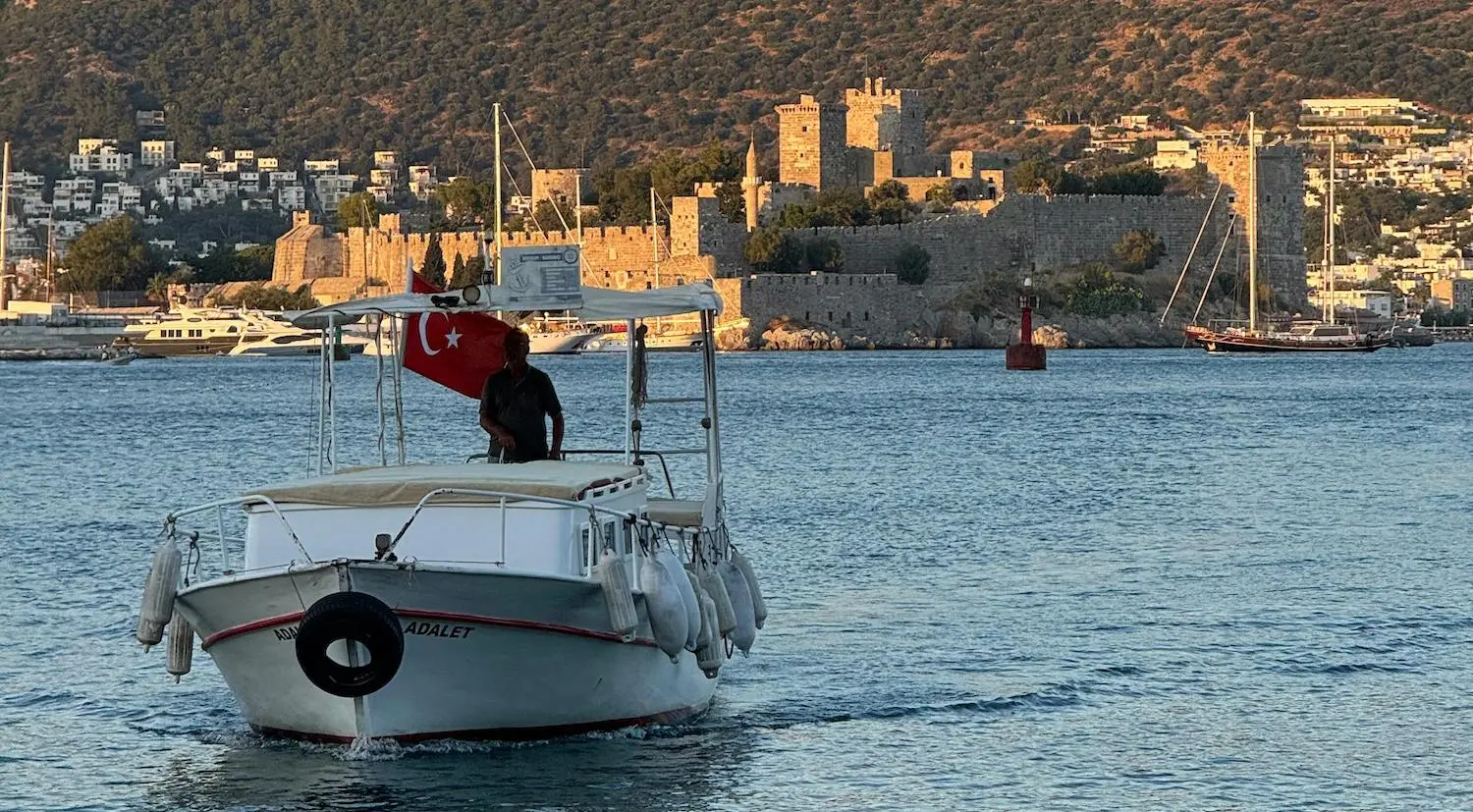
Bodrum, Fethiye, and Antalya offer established coastal lifestyles. Istanbul provides a major international business and cultural centre. Ankara is the country’s political capital, while Izmir combines commercial activity with access to the Aegean coast. Turkey also offers:
1. Four Distinct Seasons: Families are not limited to one climate throughout the year.
2. Coastal Living: The Aegean and Mediterranean regions provide beaches, marinas, resorts, and residential communities.
3. Major Urban Centres: Istanbul, Ankara, Izmir, Bursa, and Antalya each support different business and lifestyle requirements.
4. Healthcare: Turkey has a large public and private healthcare network serving domestic and international patients.
6. Cuisine and Culture: Turkey offers regional food, historic sites, festivals, and traditions developed across thousands of years.
7. Domestic Travel: Major airports and road networks make it possible to move between business centres and lifestyle destinations.
A family does not need to accept a limited lifestyle simply to access a favourable tax regime. The tax advantage sits alongside the country’s culture, geography, economy, and quality of life. That makes Turkey more than somewhere to register residence or hold assets. It can become a permanent family base.
Turkey also retains an investment citizenship route. Qualifying foreign nationals can apply through a real estate purchase worth at least $400,000 USD, subject to the three-year holding requirement and all applicable legal procedures.
Regional Instability Is Encouraging Diversification
Capital tends to move when political or economic conditions become less certain. The Iran conflict and wider regional tensions have reminded companies and family offices that dependence on a single Gulf or Asian base can create concentration risk.
In April 2026, the chief executive of the Istanbul Finance Center said that more than 40 companies, primarily headquartered in East Asia and Gulf countries, had made contact during the preceding month. Rising regional tensions had intensified discussions about moving or expanding some operations in Istanbul.
The enquiries included companies involved in banking, fintech, insurance, finance, and Islamic finance, demonstrating that companies were actively examining Turkey as a diversification option. The tax reforms improve that proposition.
Qualifying financial services exported from the Istanbul Finance Center can receive a 100% corporate income deduction until 22 June 2047. Qualifying transit trade income can receive a 100% deduction inside the IFC, while qualified international service centres can receive a 100% deduction for 20 accounting periods. This creates potential structures for:
- Regional treasury and financial management.
- International trading companies.
- Family office functions.
- Insurance and Islamic finance.
- Shared service operations.
- Technology and professional services.
- International holding and investment activity.
- Regional management and administrative functions.
Turkey’s value is not based on being isolated from regional events. Its advantage comes from having greater economic, geographic, and strategic depth than many smaller alternatives. Each structure still requires commercial substance. Management, employees, contracts, banking, decision-making, and income sourcing must support the treatment being claimed.
Why Real Estate Becomes Part of the Wider Strategy
Real estate is often the first physical commitment an internationally mobile family makes when choosing a new base. For some buyers, property provides a permanent home. For others, it supports residence, establishes a family base, creates exposure to Turkish assets, or contributes towards a citizenship application. The strongest property decisions will follow the wider plan rather than lead it. An investor should first establish:
- Where family members will become tax resident.
- Which income remains foreign-source.
- Whether an overseas company could acquire a Turkish taxable presence.
- Which property supports the family’s lifestyle and financial objectives.
Turkey’s scale also allows buyers to choose between city apartments, family villas, coastal homes, countryside estates, and citizenship-qualifying investments. Prime Istanbul property could benefit if financial companies, executives, and international families expand their presence. Bodrum, Fethiye, and Antalya could receive additional demand from families seeking a long-term Mediterranean base rather than a purely financial address.
A Five-Year Case for Turkey
The Ankara summit did not transform Turkey overnight. Law No. 7582 did not remove every tax, and political warmth between two presidents does not guarantee permanent alignment. Together, however, the developments point in the same direction.
Turkey is being treated as an increasingly important military, diplomatic, and industrial partner. At the same time, the government is offering internationally mobile individuals and companies more reasons to establish residence, move selected operations, and bring capital into the country.
Foreign direct investment had already accelerated before the latest reform. Inflows rose by 45.5% during 2025 to approximately $11.4 billion USD, with investment arriving from Europe, Central Asia, the United States, the UAE and other major markets. The next five years could therefore bring greater demand from:
- International entrepreneurs relocating their families.
- HNWIs seeking longer-term foreign income treatment.
- Companies conducting transit trade.
- Regional headquarters and service centres.
- Financial institutions entering the Istanbul Finance Center.
- Gulf and Asian companies seeking operational diversification.
- Families combining residence planning with Turkish real estate.
- Investors seeking exposure to Turkey’s defence and manufacturing growth.
The summit gave Turkey greater political visibility. The tax reforms provide the financial structure. The country’s scale, lifestyle, and economy give international families reasons to remain for the long term. That combination is difficult to reproduce.
Turkey Offers More Than Tax Efficiency
Turkey’s greatest advantage is not that it can imitate a small low-tax jurisdiction. It is that it does not need to. It is a NATO member with significant military capacity, a G20 and OECD economy, a major domestic market, established industrial production, international cities, and some of the Mediterranean’s most desirable coastal destinations.
Law No. 7582 adds a powerful tax component to those existing advantages. The Ankara NATO Summit added renewed diplomatic momentum, public recognition from the United States, and the possibility of a deeper US-Turkey defence relationship. The result is not a risk-free haven. It is something potentially more valuable: a substantial country where an international family can live, invest, operate a business, and plan across decades.
Property Turkey can assist with identifying suitable real estate, citizenship-qualifying opportunities, and long-term locations. Through PT Oracle, investors can also coordinate tax, legal, corporate, succession, and residency planning. The next step should be to build one coordinated Turkey strategy, confirm the legal position, and then select the assets and structures that support it.
NOTE: This article provides general information and commentary only. It does not constitute tax, legal, investment or financial advice. Eligibility under Law No. 7582 and repeated Article 20/D depends on individual circumstances, income sourcing, tax residence and future administrative guidance.
Cameron Deggin Founder & CEO, Property Turkey
Cameron Deggin is Founder and CEO of Property Turkey. A former finance professional and FCCA-qualified accountant, he founded the company in 2001 after recognising Turkey’s investment potential. With more than two decades analysing Turkish real estate, Cameron regularly advises international investors and is quoted by media including the Financial Times and BBC.




 By:
By:






 Founder & CEO, Property Turkey

 Bodrum
  2
2  1
1 














 X
X