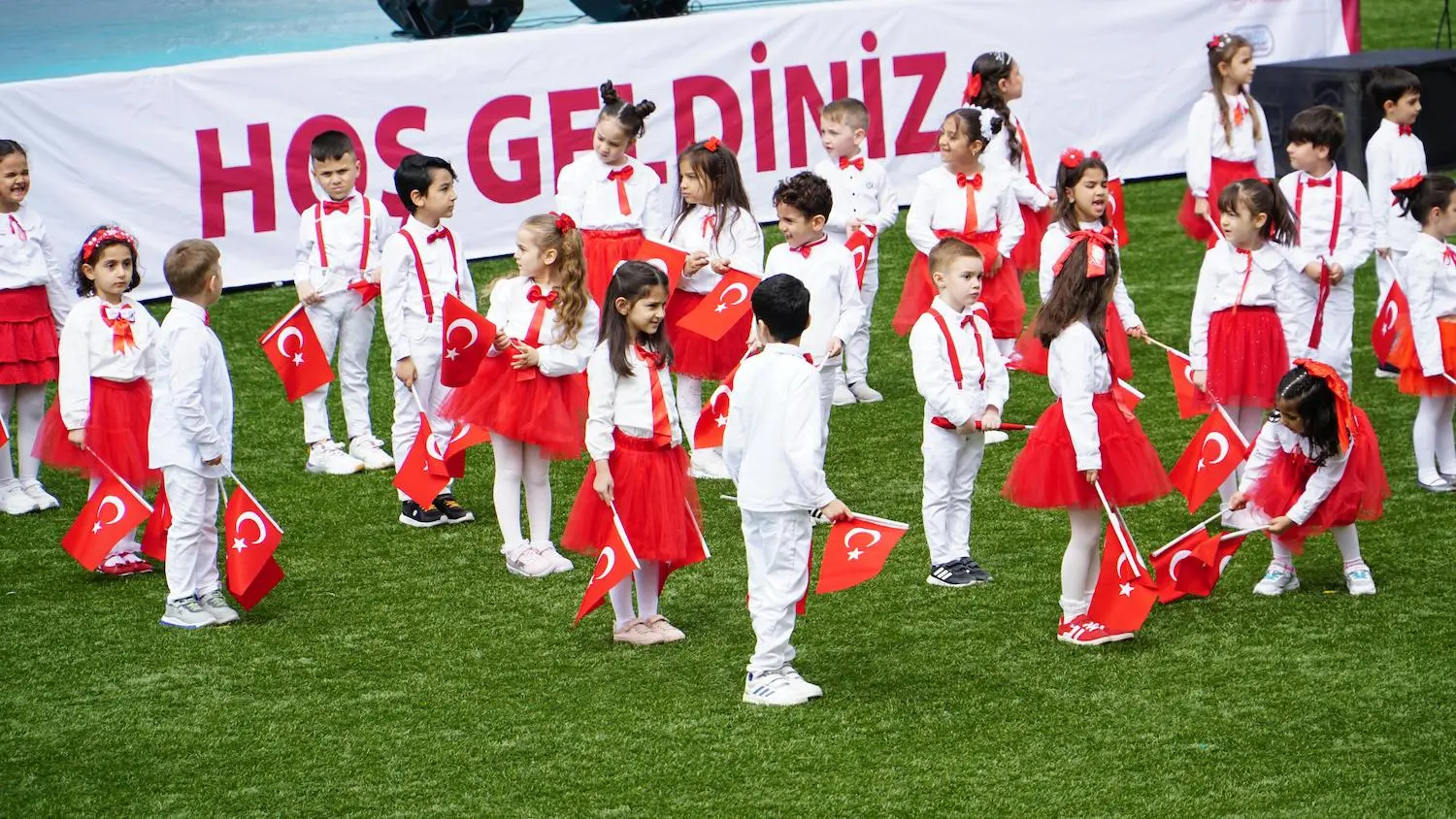
Nearly 18 million students across Turkey received their report cards as the 2025-2026 academic year came to an end. The closure marks the start of the summer holiday after 10 months of education in schools affiliated with the Ministry of National Education.
Academic Year Ends After 10 Months
The school year began on September 8, 2025, for students in preschool, primary, and secondary education. After scheduled breaks in November and March, the second term, which started on February 2, officially ended on June 26.
To mark the final week, the ministry prepared nationwide cultural, artistic, and sports activities. These were designed to support students’ intellectual, social, emotional, and physical development while encouraging participation through games without adding financial pressure on families.
The year also saw the continued rollout of the Century of Turkey Education Model. The curriculum was gradually introduced across kindergarten, selected primary and middle school grades, and preparatory, ninth, and tenth grade high school levels.
Free Textbooks and Uniform Changes Support Families
The Ministry of National Education distributed around 184 million textbooks free of charge to schools nationwide during the year. New school uniform rules were also introduced to reduce costs by removing restrictive requirements such as special logos, patterns, and prints.
Environmental education remained a major theme through the “Green Homeland-My School is a Solution for the Future” initiative. Schools held monthly activities covering forests, climate change, water efficiency, disaster preparedness, zero waste, and wider environmental protection.
Students also participated in cultural and social programmes during the year. These included Ramadan events, National Sovereignty and Children’s Day activities, vocational education month programmes, and projects promoting national unity, shared values, and respect for the Turkish flag.
Digital Education and Exams Mark the Year
The ministry expanded digital education initiatives with the launch of “Let Us Know,” a student-led news bulletin broadcast through EBA, EBA YouTube, and TRT EBA. A new out-of-school learning platform was also introduced for museum, library, and science centre visits.
An AI-supported foreign language platform called DİLİM was launched to help students learn languages through content reflecting Turkish culture and values. The platform is also expected to support Turkish language learning among foreigners and children of Turkish citizens abroad.
Aleksandra Cihanoğlu  Senior Advisor
Aleksandra Cihanoğlu is a Senior Advisor at Property Turkey and a regular contributor on topics including Citizenship by Investment, relocation, travel, and lifestyle opportunities in Turkey. Her writing focuses on helping international readers understand the practical realities of living, investing, and building a long-term future in the country.
View full author profile →




 By:
By:

 Bodrum
  2
2  1
1 







 X
X