Short Answer:Turkish property investment looks unusually well placed for the next five years. Turkey is not risk-free, but almost every alternative is struggling at once. Washington faces gridlock and US house prices are falling. Dubai and China are in retreat, and Europe is flat and restless. In my view, an AI bubble is heading for a bust around the middle of 2027. Meanwhile, Turkey has started cutting interest rates. When large amounts of money go looking for a new home, we think a meaningful share of it will find its way here.
Look at the past few weeks of headlines and ask a simple question: if you had serious money in US tech stocks, a Dubai apartment, or a London flat, would you feel more or less comfortable than you did a year ago? The answer, we think, is important.
What Do the US Midterms Mean for Global Investors?
As of 4 November 2026, Democrats have won majorities in both the Senate and the House, setting up a divided government when the new Congress takes office in January 2027. In Florida, Byron Donalds defeated Democrat David Jolly, becoming the first Black Republican elected governor in US history.
For investors, the headline is a divided government. A president who wants to act now faces a Congress that can block him. This is close to the worst outcome any economy could ask for, with experts predicting two years of legislative paralysis, with little room for a growth agenda and plenty of room for uncertainty.
There is a twist. On paper, the president keeps a much freer hand on foreign policy. Some experts expect Trump to use that freedom to the full, because it is the only free hand he has. In our view, that makes an early end to the Iran war less likely, and new fronts are possible.
That is unwelcome news for the Gulf. Confidence in Dubai and the wider GCC has already taken a hit, and a more assertive US foreign policy is unlikely to restore it.
Are US Home Prices Really Falling?
They are, for the first time in three years. Demand is weakening, sales volumes are down, and borrowing costs are rising.
This reaches beyond America. US housing has long been one of the world's default stores of value. When prices, demand, and volume fall together while rates rise, the message to anyone thinking of buying there is clear: wait. Money that waits tends to go looking for somewhere else to work.
Is AI a Bubble and Where Does the Money Go When It Bursts?
I believe AI will eventually be one of the most transformative technologies that humanity has ever produced. My concern is the gap between what is being built and what is being sold. Companies such as Nvidia keep scaling up energy and processing power. More scale makes AI faster, but in my opinion, AI is not becoming more intelligent.
What the public is being sold is the mystery of superintelligence and human-like artificial general intelligence. Most investors do not understand the technology well enough to judge that promise. The bigger the information gap, the easier it is to sell a story, and tech stock valuations have climbed to unprecedented levels.
In my view, the turning point comes when the market accepts a simple distinction: the huge investment will make AI faster, but it will not produce the all-seeing intelligence that was promised. People are already starting to say this out loud. Some experts project a bust that could wipe 70% to 75% off prices quickly, and some expect it around the middle of 2027.
Nobody can time a bubble precisely, and we are not suggesting you sell your shares on our say-so. Our point is narrower. If even part of that money leaves technology in 2027, it needs somewhere to go. It is unlikely to go into US housing, where prices are falling, or into a gridlocked Washington, or a Gulf under a war cloud. So where will it go?
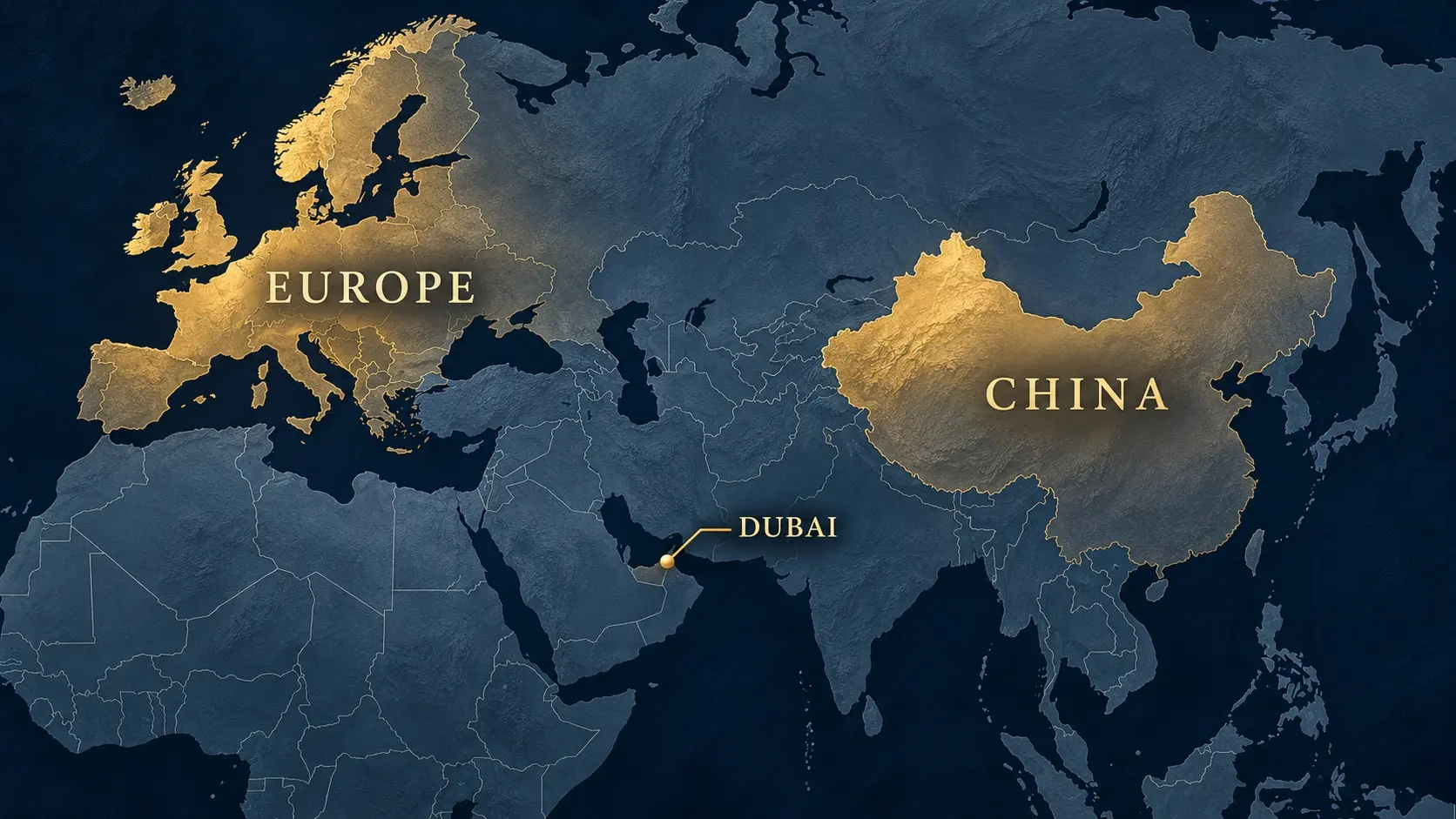
Why Are China, Dubai, and Europe Losing Their Shine?
The traditional alternatives each have their own problem.
China: Over the past three years, Chinese buyers have watched sales collapse and prices fall, with no recovery in sight. Restrictions on daily life and capital keep tightening, and more Chinese families are looking for a foothold abroad. We are already meeting them in Turkey.
Dubai: Officially, prices are down 15% to 20%. My view is that the official figures flatter the reality. Without the restrictions on exit, I believe the true fall would be closer to 50%. Sophisticated investors understand this. With the war unresolved, I expect at least two to three more difficult years, and probably longer.
Europe and the UK: Property prices are flat, but it is not about prices. There is a growing exodus from the UK and other EU countries. It is driven by more than the economy: people feel growing regulation, surveillance, and a broader social unhappiness. These people are not chasing a yield. They are looking for a better place to live.
What Is Happening in the Turkish Economy Right Now?
Turkey has had its share of bad days, and we have never pretended otherwise. Prices fell, and our cash buyer analysis recorded real prices down 6.5% year-on-year. In my view, that decline has now flattened. Prices have stopped falling.
Inflation is easing, although it remains high. On 22 October 2026, the Central Bank cut its policy rate by one percentage point. It also signalled another cut in December. For once, the policy is doing what it said it would: interest rates are coming down.
Borrowing is still expensive, but direction is more important than level. For the past three years, Turkish savers have kept their money in high-yielding deposit accounts. As deposit rates fall, we expect that money to move gradually into the real economy, and a share of it into property.
Why Do You Need to Think Like a Turk?
The Turkish property market is overwhelmingly local. In September 2026, there were 142,390 housing sales. Foreign buyers accounted for just 2,167 of them, or 1.5% of the total, and 85.5% of all sales were cash purchases. Across the first nine months of 2026, foreigners bought 15,308 homes.
In other words, more than 97% of the market is Turkish buyers. Foreign headlines do not drive prices here, and Western sentiment does not either. Turkish households do. So, you must think like a Turk and act like a Turk.
When Turks start spending and buying again, the market comes back. Falling rates and deposits gradually unlocking are the conditions for that to happen. A foreign buyer who enters before then is buying ahead of the local crowd, not behind it. The Lira was also steady at about 50.02 TL to the Dollar on 4 November 2026, which makes budgeting simpler.
Is Turkey Really Where the Money Will Be Made?
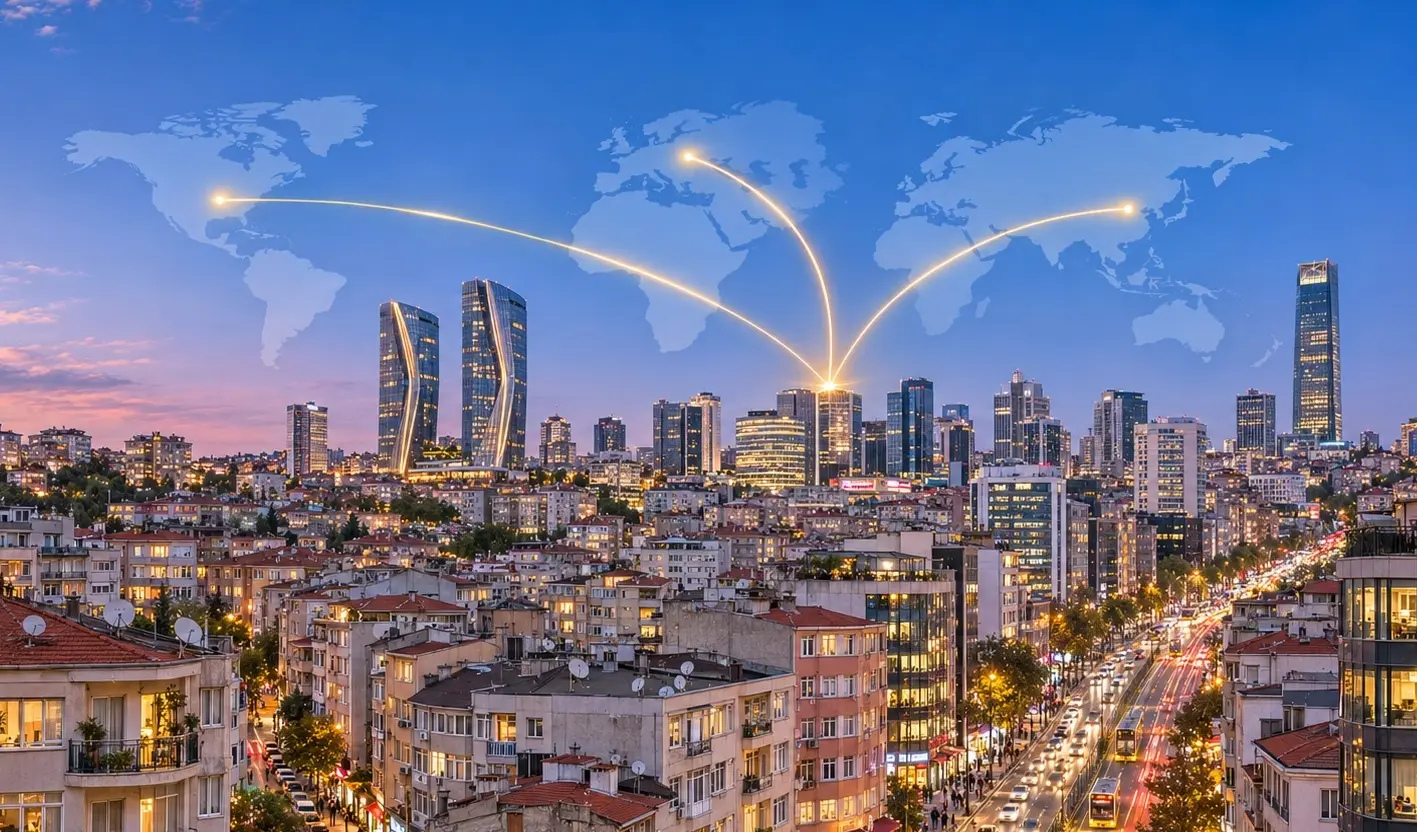
“East meets West” is a cliché because it is geographically true. Istanbul sits across Europe and Asia, between the markets that are struggling and the capital that is looking to move. Our case for Turkey has three practical parts:
1. A Citizenship Route That Returns Your Capital:Turkish Citizenship by Investment (CBI) requires real estate with an appraised value of at least $400,000 USD, held for three years. You can rent the property out during that period. After three years you can sell it, take your capital and any gain, and keep the passport for yourself, your spouse, and your children under 18.
Compare that with the alternatives. Caribbean programmes require donations that you never see again. Spain abolished its golden visa in April 2025, and Malta ended its citizenship route in the same month. Portugal has closed its real estate route. In Turkey, we recommend a property budget of $420,000 USD to $430,000 USD, because valuations can come in below the purchase price.
2. A Tax Position That Compares Well: Our October 2025 Mr Americano case study modelled a $1 million USD property held for five years through a company, with a total pre-tax profit of $700,000 USD. The effective tax rate was 32.5% in Turkey, against 35.4% in Texas, 41% in Spain, 52.4% in the UK, and 60% in Germany. These are modelled outcomes, not guarantees.
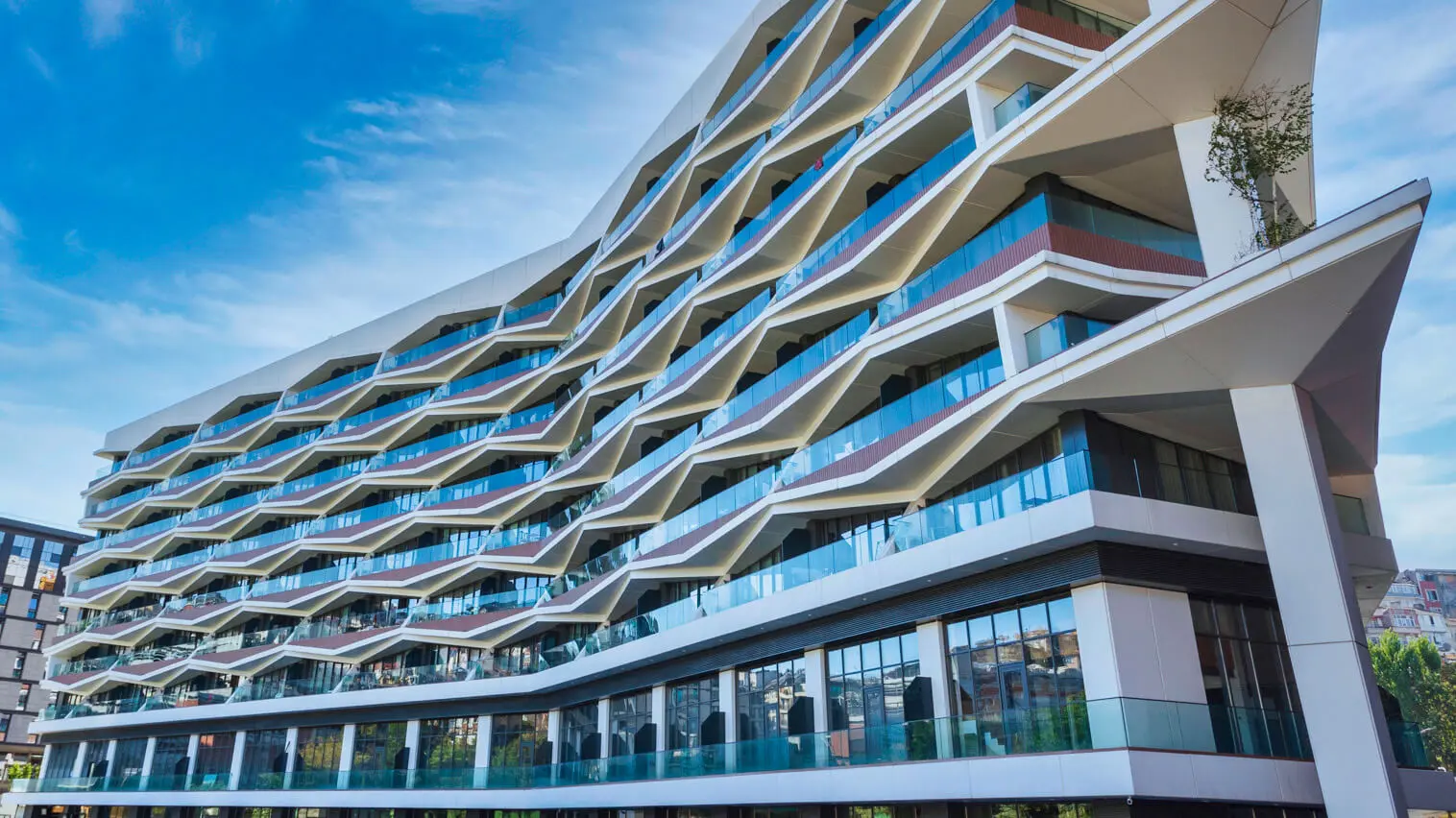
3. Central Istanbul at a Reasonable Entry Price: The median asking price across Istanbul listings is $3,142 USD per m2 of net area. The middle half of listings sits between $2,142 USD and $4,465 USD per m2, based on 844 of 928 listings, after outliers were removed. These are asking prices, not sale prices, but they leave real room to choose well.
Then there is the human side. For the Chinese family, the restless Briton, or the American looking for a Plan B, Turkey still offers something rare: it is a country that welcomes people from both East and West.
What Could Go Wrong?
We would not be doing our job if we left this out:
- Inflation Risk: Inflation is falling but still high, and a pause in rate cuts would slow the recovery.
- Valuation Risk: For CBI, a purchase price above $400,000 USD does not guarantee a valuation above it.
- Rule Risk: Turkish regulations change often. Take independent legal advice and check every requirement against the latest official position.
- Our Own Calls: Our forecasts may prove wrong. The AI bust may come later or be smaller than expected, Dubai may recover sooner, and US gridlock may prove milder.
Our view is that the balance of risks has shifted in Turkey's favour, but you should always buy the asset rather than the headline.
If you are weighing up where to move capital before 2027, talk to us before the crowd does. Property Turkey has guided international buyers since 2001, with offices in London, Istanbul, Bodrum, Fethiye, Kalkan, and Antalya. Contact us for a free consultation with our local experts. We can help you compare central Istanbul options, plan your citizenship route, and structure your purchase for tax efficiency.
FAQs: Investing in Turkish Property in 2027
Q: Why might global investors move money into Turkish property in 2027?
A: Several traditional safe havens are weakening at once. They include gridlock in Washington, falling US home prices, an expected tech correction, slumps in China and Dubai, and a flat Europe. Turkey is cutting rates, prices have flattened, and local savings are expected to return to the market. These are views, not guarantees.
Q: Is there really an AI bubble?
A: In my view, scaling energy and computing power makes AI faster but not more intelligent, while valuations price in promises of superintelligence. I project a sharp correction around mid-2027, possibly 70% to 75%. This is a personal opinion, and the timing of any bubble is uncertain.
Q: Are Turkish property prices still falling?
A: Our analysis recorded real prices down 6.5% year-on-year, but in our view the decline has now flattened. The Central Bank cut rates on 22 October 2026 and signalled a further cut in December. We expect gradual recovery as local buyers return, though inflation remains a risk.
Q: Can I get Turkish citizenship by buying property?
A: Yes. You need real estate appraised at $400,000 USD or more, held for three years. You can rent it during that time, then sell and keep citizenship for yourself, your spouse, and children under 18. We recommend budgeting $420,000 USD to $430,000 USD to allow for valuation differences.
Q: What are the main risks of buying in Turkey?
A: The main risks are Lira weakness, still-high inflation, valuation shortfalls on citizenship purchases, and frequent rule changes. Any of our market calls could also prove wrong. Use independent legal advice, test your plan against a weaker Lira, and buy in liquid, central locations where demand from local buyers is deepest.
NOTE: This article is for information only and is not legal, tax, or investment advice. Figures are as of November 2026.
Cameron Deggin Founder & CEO, Property Turkey
Cameron Deggin is Founder and CEO of Property Turkey. A former finance professional and FCCA-qualified accountant, he founded the company in 2001 after recognising Turkey’s investment potential. With more than two decades analysing Turkish real estate, Cameron regularly advises international investors and is quoted by media including the Financial Times and BBC.




 By:






 Founder & CEO, Property Turkey

 Bodrum
 4
 4







 X