For investors considering Turkish citizenship, the question is therefore no longer simply whether a $400,000 USD property purchase is worth a second passport. The better question is what that citizenship, property and long-term connection with Turkey could collectively achieve.
Official figures provide substantial evidence of the programme's scale. Since the first citizenship acquisitions began in 2018, 51,762 principal investors and 122,805 family members have obtained Turkish citizenship through investment, taking the total number of new citizens to 174,567.
Those applications have brought approximately $16.074 billion USD of investment into Turkey. Property Turkey has participated in around 2,000 citizenship applications during the same period, equivalent to 3.86% of principal investor cases and approaching 5% when family applications are considered.
Is Turkish Citizenship Still Worth It in 2027?
For the right investor, yes. However, the reason for applying in 2027 should be stronger than simply wanting another passport. Turkish citizenship works best when the property, family objectives, mobility requirements, and long-term strategy all make sense.
The programme has matured considerably since 2018. The property threshold has increased from $250,000 USD to $400,000 USD, compliance has tightened, valuation procedures have evolved, and the authorities have accumulated years of experience processing foreign investors and qualifying family members.
That maturity is a positive development for serious investors. Turkish citizenship is no longer an experimental programme with limited history. More than 51,000 principal investors have completed the process, providing a much deeper record against which potential applicants can assess the route.
than $16 billion USD has entered Turkey through citizenship-related investments, making CBI a significant source of foreign capital rather than a small immigration programme operating on the edge of the property market.
Why Turkish CBI Can Still Make Sense
- A Real Asset: The property route places capital into real estate rather than requiring a non-refundable donation.
- Full Citizenship: Successful applicants receive Turkish citizenship rather than a temporary Turkish Residence Permit or renewable visa.
- Family Inclusion: A qualifying application can include the main investor, spouse, and eligible dependent children.
- No Long Residency Requirement: Investors do not need years of physical residence before becoming eligible for citizenship.
- Property Income Potential: The qualifying asset can potentially be rented during the compulsory holding period.
- Exit Opportunity: The property can be sold once the required three-year no-sale restriction has expired.
- Tax Planning Potential: Qualifying tax residents can potentially access Turkey's new 20-year foreign-income exemption.
Turkish Citizenship by Investment in Numbers
The scale of the programme gives 2027 applicants useful historical context. More than 174,000 people have already obtained Turkish citizenship through investment, including both principal applicants and qualifying family members.
Turkish Citizenship Figure
Number
Principal investors granted citizenship
51,762
Family members granted citizenship
122,805
Total people granted citizenship
174,567
Investment brought into Turkey
$16.074 billion USD
Property Turkey applications since 2018
Around 2,000
Property Turkey share of principal cases
Approximately 3.86%
Property Turkey citizens at four people per case
Around 8,000
Property Turkey share at four people per case
Approximately 4.58%
Why Property Remains the Main Citizenship Route
For most Property Turkey clients, real estate remains the most logical route because the qualifying investment can serve several purposes. Capital goes into an asset that may produce rental income, provide personal use, and potentially appreciate before being sold after the compulsory holding period.
The current real estate threshold is $400,000 USD. Qualifying property must meet citizenship requirements and carry a restriction preventing its sale for at least three years, meaning buyers need to think beyond immediate passport eligibility and consider what the asset may look like when that restriction expires.
This is where poor citizenship investments can become expensive. A property purchased at an inflated price can qualify perfectly for citizenship while producing weak rental returns and limited resale demand.
We have always believed a citizenship property should be capable of standing on its own as an investment. If an investor would never consider buying the property without the passport attached, that should raise questions about its quality.
What Should a Good Citizenship Property Offer?
- Correct Eligibility: The purchased property must satisfy the rules governing Turkish citizenship applications.
- Fair Market Pricing: Avoid paying a citizenship premium simply because a property reaches $400,000 USD.
- Real Rental Demand: Focus on strategic locations where local and international tenants genuinely want to live.
- Broad Resale Market: The future buyer should not need to be another foreign buyer. Buy what locals will want to buy later.
- Good Liquidity: Investors need a realistic property exit route once the three-year no-sale restriction expires.
- Sustainable Location: Infrastructure, employment, education, and lifestyle demand should support long-term value.
Lifestyle buyers can approach the decision differently. Someone planning to make Turkey a permanent or future home may place greater importance on space, schools, healthcare, sea access, or family living in areas such as Istanbul, Bodrum, Antalya, and Fethiye.
Why 2027 Is Different After Turkey's Tax Reforms
The biggest change to citizenship is not a change to the CBI programme itself. It is Turkey's new tax regime, introduced through Law No. 7582 in 2026. Eligible individuals who become Turkish tax residents can potentially receive a 20-year exemption from Turkish income tax on qualifying foreign-source income and gains. For entrepreneurs, investors, and wealthy families, the financial value can be considerably greater than the original citizenship investment.
This does not mean buying a $400,000 USD property or obtaining Turkish citizenship automatically creates a tax exemption. Citizenship, residency, and tax residency are separate issues, while eligibility depends on previous Turkish domicile, previous tax history, income sources, and correct application procedures.
However, it changes the strategic value of Turkey. An investor who previously viewed the country primarily as a second passport and real estate option, might now consider whether Turkey could become a genuine long-term home and tax base.
Foreign-Income That Could Become Exempt
- Dividends received from qualifying companies located outside Turkey.
- Rental income arising from property portfolios located overseas.
- Returns generated by qualifying foreign investment portfolios.
- Certain foreign capital gains and investment disposals.
- Other qualifying income arising outside the Turkish tax system.
Turkish-source income remains subject to normal Turkish taxation. Rental income from an Istanbul apartment, for example, does not become exempt simply because the owner qualifies for the foreign-income regime.
The wider reforms also introduced a 1% inheritance tax rate for qualifying inheritances during the exemption period. An asset repatriation regime also runs until 31 July 2027, making the coming year particularly important for people reviewing international wealth and relocation structures.
2027 Citizenship: More Valuable Than the $400,000 USD Investment
For a conventional citizenship investor, the financial calculation begins with property. A buyer spends at least $400,000 USD, holds the asset for three years, potentially receives rental income, and eventually has the option of selling while retaining citizenship permanently.
For a high-income international investor, the calculation can look completely different. The potential tax value of becoming a qualifying Turkish resident could eventually exceed the citizenship property's purchase price several times over, although every situation depends on personal circumstances.
An investor must still correctly cease tax residence where appropriate in the previous country, establish Turkish tax residence, meet Article 20/D requirements, apply within the relevant deadlines, and ensure the income qualifies as foreign-source income.
Investor Example: Consider an investor receiving $1 million USD annually in qualifying foreign-source income. If that person lawfully leaves a jurisdiction imposing an effective 30% tax charge, the theoretical difference could amount to $300,000 USD each year.Over 20 years, that simple calculation reaches $6 million USD.
Do You Need to Spend 183 Days in Turkey?
One of the most important points for people considering Turkey is that Turkish tax residence is not based exclusively on the commonly quoted 183-day concept. Turkish domestic rules recognise both physical presence and domicile when determining whether somebody is regarded as settled.
A person can be considered settled where their domicile is in Turkey or when they remain continuously in Turkey for more than six months during a calendar year, subject to relevant exceptions.
Domicile broadly concerns where someone lives with the intention of remaining permanently. This means an individual can potentially establish Turkish tax residency through genuine domicile without first spending more than six months in Turkey, although each situation requires individual professional analysis.
There is no automatic rule allowing somebody to spend 30 days in Turkey and become tax resident. The more important point is that somebody genuinely making Turkey their permanent home may not need to rely exclusively on the six-month physical-presence route.
What Can Support a Genuine Connection with Turkey?
- Owning or maintaining a permanent home suitable for genuine personal use.
- Obtaining Turkish citizenship or another appropriate long-term legal status.
- Relocating meaningful family and personal arrangements to Turkey.
- Establishing banking, administrative, and practical connections with the country.
- Demonstrating a genuine intention to make Turkey a permanent home.
- Ensuring the position is consistent with tax rules in other jurisdictions.
Citizenship does not automatically establish domicile. However, voluntarily becoming a Turkish citizen can form part of a wider factual picture showing that an individual has established a lasting relationship with Turkey rather than creating a temporary connection purely for tax purposes.
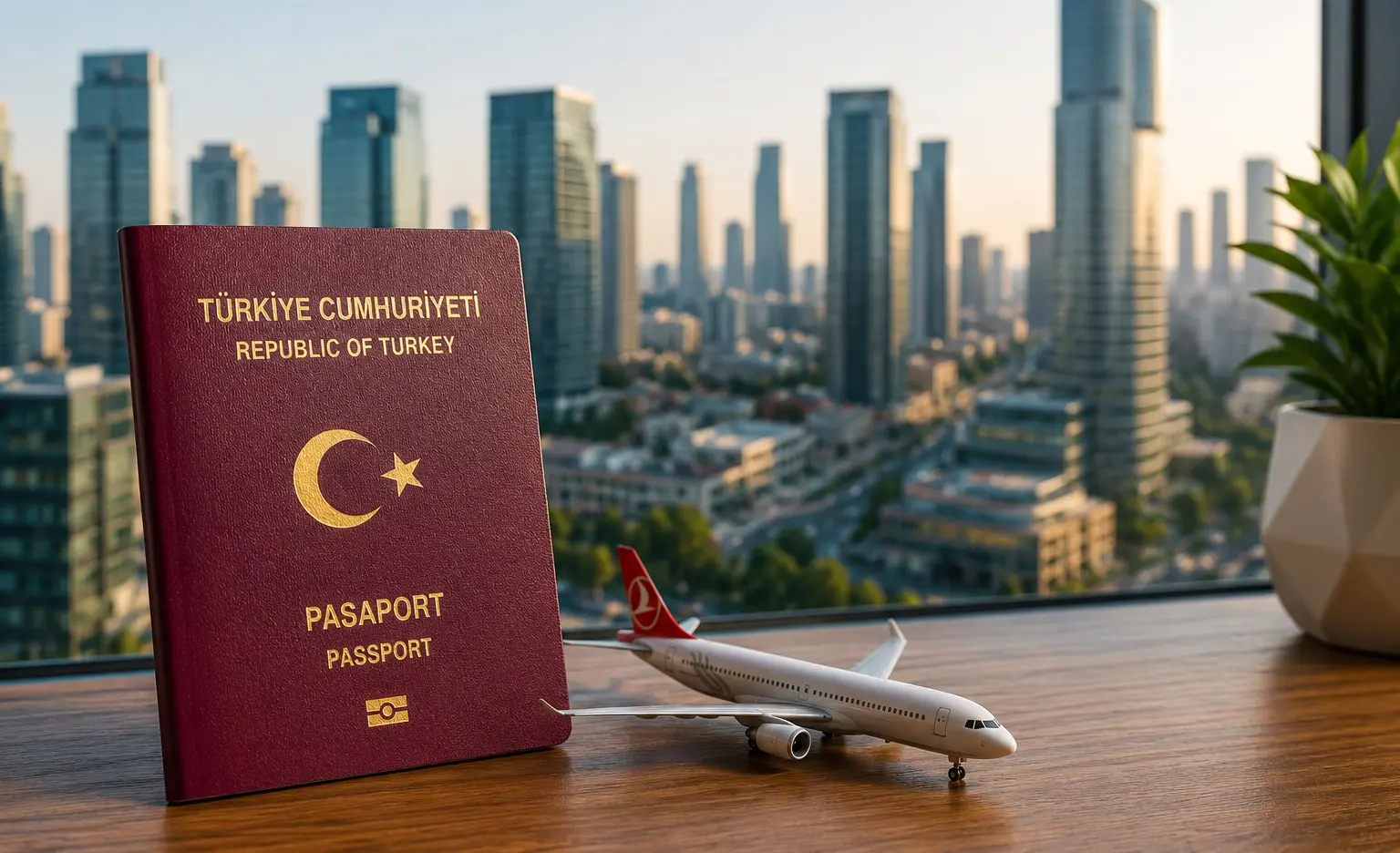
The Turkish Passport Still Has Value
The Turkish passport provides visa-free or visa-on-arrival access to more than 110 destinations. For business owners and internationally mobile families, the value can come from combining another nationality with permanent access to Turkey and broader travel flexibility.
Turkey also permits dual citizenship, meaning many successful applicants can retain their existing nationality where their home country's rules allow it. This makes the programme less disruptive for families that want an additional citizenship without replacing their existing identity or passport.
Children included within a qualifying application receive citizenship rather than temporary dependant status. That permanent family element is one of the strongest differences between direct citizenship and investment migration programmes that provide residency first and require a later naturalisation process.
Property Turkey's Experience: 2,000 Applications Since 2018
Property Turkey has assisted 2,000 Turkish citizenship by investment applications since 2018. Compared with the official figure of 51,762 principal investors, that represents approximately 3.86% of all principal investor cases completed nationally.
Using a household of an investor, spouse, and two children produces an estimated 8,000 people becoming citizens through Property Turkey-supported cases. Against the national total of 174,567 people, that represents approximately 4.58%, giving Property Turkey a market share approaching 5%.
Property Turkey's CBI Share Explained
- Around one in every 26 principal investors corresponds with a Property Turkey application.
- 2,000 investor applications have been supported since the programme expanded in 2018.
- Four people per application would represent approximately 8,000 successful citizens.
- That produces an estimated family-adjusted share of approximately 4.58%.
Heading into 2027, that experience becomes increasingly important because citizenship enquiries are becoming more interconnected. Property, citizenship, residency, and international tax planning can influence each other, even though each remains a separate legal and financial decision.
Who Should Consider Turkish Citizenship in 2027?
1. Citizenship-Only Investors: These investors want permanent Turkish citizenship and a second passport. Their property strategy should focus heavily on liquidity, rental demand, pricing, and resale rather than emotion, because they may have little intention of personally occupying the property.
2. Families Considering Turkey as a Future Home: Some applicants want citizenship immediately but may relocate several years later. Permanent citizenship removes future immigration uncertainty, while the initial property can be selected for investment before the family eventually chooses a long-term home based on their circumstances.
3. International Entrepreneurs and Business Owners: Entrepreneurs with companies, investments, or income outside Turkey may find the new tax environment appealing. Citizenship can provide permanent personal status while specialist advisers assess whether Turkish tax residency and the 20-year foreign-income exemption fit their wider structure.
4. HNWIs Planning International Wealth and Succession: Wealthy families may obtain citizenship when planning foreign income, inheritance, property ownership, and long-term family security. Turkey's new tax rules make this much broader than the traditional calculation of spending $400,000 USD purely to obtain a passport.
5. Investors Wanting a Tangible Citizenship Route: Some citizenship programmes require donations or capital contributions that cannot be recovered. Turkey's property route allows qualifying capital to remain invested in a real asset that can produce income and later be sold.
How Should You Approach Turkish Citizenship?
The starting point should be your objective, not the first property advertised as citizenship eligible. Decide whether the priority is passport mobility, investment returns, future relocation, tax residency, family security, or several of these objectives working together.
The second step is determining the correct property strategy. A citizenship-only buyer should usually prioritise liquidity and exit potential. Someone planning to live in Turkey may need a completely different property in a location suited to family life and permanent residence.
Tax planning should begin before establishing Turkish tax residency. Anyone interested in the 20-year foreign-income exemption should review previous Turkish tax history, existing tax residence, foreign income, companies, investment assets, and application timing with qualified advisers.
Finally, investors should treat $400,000 USD as the minimum citizenship threshold, not as a target that overrides investment fundamentals. The right property is one that qualifies for citizenship and would still make financial sense if the passport benefit were removed from the transaction.
More than 174,000 people have already obtained a Turkish passport through the citizenship programme, while more than $16 billion USD has entered Turkey. Property Turkey's 2,000 cases give us an estimated market share approaching 5% under a typical four-person family calculation. For a free advisory consultation, contact us today to speak with our specialists.
FAQs: Turkish CBI in 2027
Q: What is the minimum property investment for Turkish citizenship?
A: The current qualifying real estate investment is at least $400,000 USD, with the property subject to a three-year restriction on sale. Applicants should confirm the applicable requirements before proceeding.
Q: How many people have obtained a Turkish passport through investment?
A: Official figures show 51,762 principal investors and 122,805 family members have acquired citizenship through the programme, producing a combined total of 174,567 people.
Q: How much investment has Turkish CBI attracted?
A: Approximately $16.074 billion USD has been brought into Turkey through qualifying investments, demonstrating the substantial scale the programme has reached since the first successful applications.
Q: What share of the Turkish CBI market has Property Turkey handled?
A: Property Turkey has assisted with around 2,000 principal applications since 2018, equal to approximately 3.86% of principal investor cases and around 4.58% when four-person households are assumed.
Q: Does Turkish citizenship make foreign income tax-free?
A: No. Citizenship does not automatically create Turkish tax residency or the foreign-income exemption. Eligible individuals must independently satisfy the Article 20/D requirements and obtain the relevant exemption certificate.
Q: Do I need to live in Turkey for 183 days?
A: Not necessarily. Turkish domestic rules also recognise domicile when determining whether an individual is settled in Turkey. There is no automatic short-stay route, and every tax residence position must be considered individually.
Important: This article provides general information and does not constitute individual tax, legal, financial, or investment advice. Tax residence, citizenship eligibility, and Article 20/D treatment depend on personal circumstances, documentation, timing, and the laws of every relevant jurisdiction.
Cameron Deggin Founder & CEO, Property Turkey
Cameron Deggin is Founder and CEO of Property Turkey. A former finance professional and FCCA-qualified accountant, he founded the company in 2001 after recognising Turkey’s investment potential. With more than two decades analysing Turkish real estate, Cameron regularly advises international investors and is quoted by media including the Financial Times and BBC.




 By:
By:









 Founder & CEO, Property Turkey
 Istanbul
  1
1  1
1 











 X
X