When S&P Global Ratings affirmed Turkey at BB-/B with a stable outlook on 17 April 2026, it did not do so in a calm global backdrop. It did so during an energy shock linked to the Middle East conflict, with oil near $100 USD per barrel, inflation still high, and foreign capital having pulled back from markets in the weeks after 28 February.
The headline is not that Turkey has suddenly become risk-free. It has not. The real signal is that one of the world’s most influential credit agencies looked at the combination of energy-price pressure, FX reserve strain, inflation, politics, and external financing needs and still concluded that the country’s sovereign rating should be affirmed, not cut.
For investors, that is important because it points to something bigger than one rating action. Ratings, infrastructure, macro policy, trade routes, and capital flows all form part of the same picture. If global capital is looking for the next place that combines scale, location, population, strategic relevance, and still-unpriced upside, then Turkey increasingly belongs in that conversation.
Quick Summary
S&P’s decision to affirm Turkey at BB-/B with a stable outlook in April 2026 is a signal for investors. It shows that, despite high inflation, energy-price pressure, and reserve strain, the agency still believes Turkey can weather the shock if policymakers maintain a prudent policy mix. For property and long-term capital allocators, that does not mean the country is problem-free. It means the macro story is holding together at a time when many investors expected deterioration. Combined with Turkey’s role in Eurasian trade, energy transit, infrastructure expansion, and a still-large domestic market, this strengthens the case that Turkey is trying to position itself for a larger share of the next wave of global capital.
Key Takeaways: What the S&P Decision Really Means
- S&P affirmed Turkey at BB-/B with a stable outlook on 17 April 2026.
- S&P said the stable outlook reflects its view that the economy can weather the energy shock if authorities maintain tight policies and avoid further reserve depletion.
- S&P expects 3.4% GDP growth in 2026 after 3.6% in 2025, despite higher energy prices and tighter conditions.
- Reuters reported that the IMF also forecasts Turkey’s 2026 growth at 3.4%.
- Turkey’s nominal GDP is projected by S&P at about $1.66 trillion USD in 2026 and above $2.2 trillion USD by 2029.
A sovereign rating is not just a badge. It affects how global capital thinks about a country. Large institutions, lenders, funds, insurers, and multinational firms do not all invest because a rating is upgraded by one notch. But they do pay close attention to whether a country is holding up or slipping when conditions are difficult. S&P’s report acknowledged the pressures. It highlighted:
- Higher global energy prices.
- Rising inflation expectations.
- Weaker FX reserve cover.
- Current account pressure.
- High external financing needs.
- Continuing political uncertainty.
Yet it still kept the rating unchanged and the outlook stable. S&P had upgraded Turkey to BB- from B+ in late 2024 and then chose to defend that improved rating level in April 2026 rather than cut it after a fresh external shock. That tells investors something important: Turkey is under stress, but not yet viewed as breaking under it.
Why This Was a Meaningful Test for Turkey
If S&P had affirmed Turkey during a period of cheap energy, falling inflation, strong reserves, and easy global liquidity, the conclusion would be less interesting. What makes this useful is the opposite, Turkey is being judged while absorbing a real external shock.
Reuters reported that S&P increased its Turkish inflation view because of the war-related energy fallout and yet, still projected 3.4% growth this year. That is not an all-clear signal. It is a resilience signal.
For international investors, that distinction is crucial. Capital rarely moves into a country because everything is perfect. It usually moves when the market starts to believe the country can withstand pressure better than previously assumed.
S&P’s Message in Plain English: If you strip away the ratings language, S&P is effectively saying: the energy shock is painful, inflation will stay higher for longer, reserves have taken a hit, the current account will worsen, but Turkey can still hold its footing if policy discipline remains in place.
Turkey’s Size Is Part of the Investment Case
One reason ratings on Turkey matter more than ratings on many smaller emerging markets is scale. S&P’s own forecast puts Turkey’s nominal GDP at about $1.66 trillion USD in 2026, rising to around $2.23 trillion USD by 2029. That is a large sovereign economy with a broad private sector, diversified exports, a major industrial base, and a population S&P describes as favourable in demographic terms, with a median age of 33 versus 44 in the EU.
That demographic point matters more than it may seem. It means Turkey is not trying to grow rich inside the same ageing, low-energy population structure that is now weighing on much of Western Europe. S&P also notes annual population growth of 1.3%, versus the EU’s 0.1% average.
For property investors in Turkey, that is highly relevant. Population structure is not a side issue. It is one of the core drivers of household formation, rental demand, labour mobility, and long-term housing need.
The Western World Is Slower and Global Capital Knows It
Global capital is not just looking for “safe” anymore. It is also looking for where future relevance may sit. Large parts of Western Europe still offer legal certainty and deep capital markets, but they increasingly suffer from:
- Ageing populations.
- Slower growth.
- Weaker productivity.
- Higher welfare burdens.
- Lower appetite for industrial and geopolitical ambition.
That makes them harder to sell as the place where the next 20 years of upside will be generated. Turkey, by contrast, sits at the intersection of Europe, the Middle East, Central Asia, the Caucasus, the Mediterranean, and the Black Sea. Geography aligned with infrastructure, trade routes, energy transit, and a large domestic market creates a very different kind of opportunity.
The Rating Story Links to the Infrastructure Story
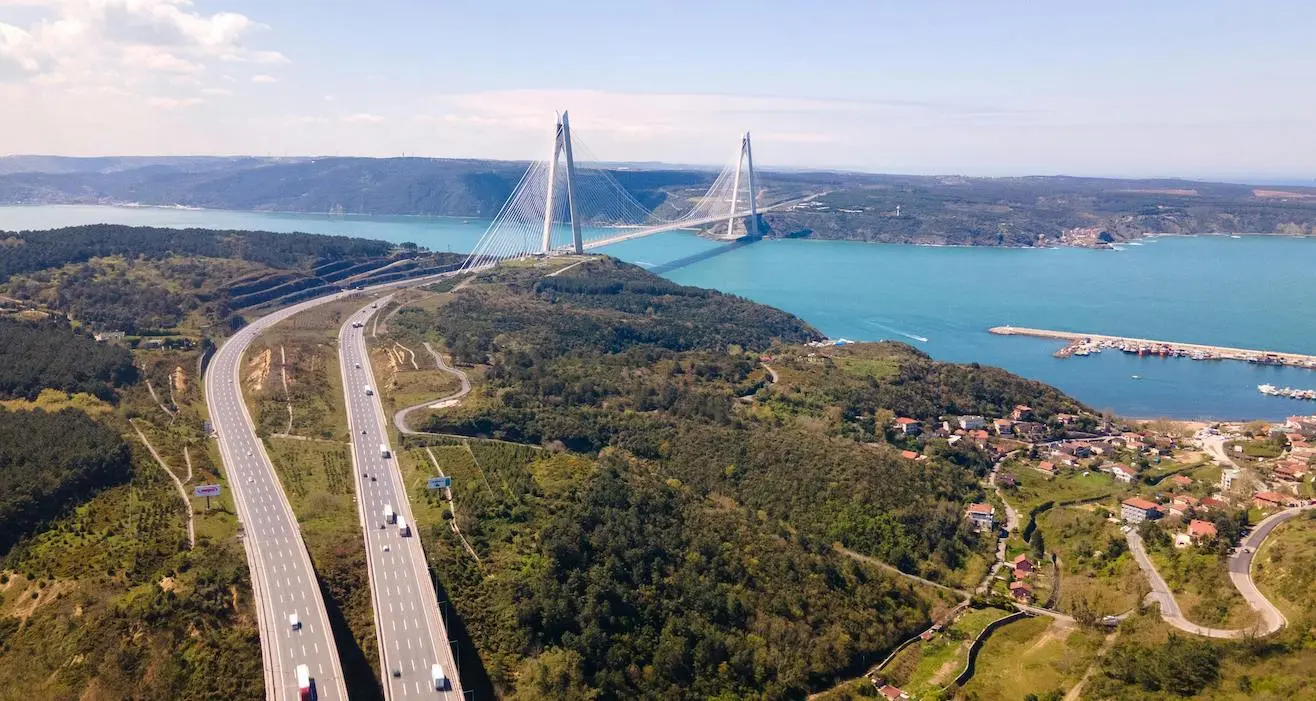
Turkey’s macro story in 2026 is not only about inflation, reserves, or interest rates. It also sits within a broader national push to strengthen the country’s role in trade, transport, energy, and international business. That wider direction is already visible through several developments happening at the same time:
- Turkey’s rising relevance within the Middle Route between Europe and Asia.
- Turkey continuing to leverage as an energy transit country.
Taken together, these developments point to something more significant than short-term macro stabilisation. Turkey is trying to convert its geography into long-term economic advantage. Sovereign resilience becomes far more impactful when it is supported by infrastructure expansion, stronger trade positioning, business incentives, and strategic relevance across multiple regions.
What S&P Says About the Economy Under the Surface?
The S&P report is more constructive than the headline may first suggest. Yes, inflation is still high. S&P says CPI inflation averaged 34.9% in 2025 and forecasts 29.3% in 2026, then 18.6% in 2027. That is still uncomfortable, but it is also a disinflation path.
Yes, external pressures remain. S&P projects the current account deficit widening to 3.1% of GDP in 2026 from 1.9% in 2025. But S&P also forecasts:
- Unemployment around 8.6% in 2026.
- Investment at 31.8% of GDP.
- Government debt at just 25.4% of GDP in 2026.
That last number is important. Turkey may have inflation and FX pressure, but on S&P’s numbers it does not have the kind of sovereign debt burden many advanced economies carry.
Why This Is Relevant for Turkish Property Buyers
This is the practical international investor question: what does a stable BB-/B actually mean for someone looking to buy property in Turkey? It means the broader sovereign story is still investable enough that:
- International buyers are not walking into a collapsing macro framework.
- Domestic demand is still large enough to support a functioning housing market.
- Infrastructure and transport investment in Turkey continue.
- The state is still trying to attract business, not retreat into isolation.
- Turkey remains a candidate for medium-term repricing if policy credibility improves further.
It does not mean you should buy anything. It does not mean every district in Istanbul or project will perform. What it does mean is that the country-level market remains intact enough for smart property selection to yield successful returns.
How Investors in Turkey Should Read This Moment
The wrong way to read an S&P affirmation is to assume that everything is now fine and that any purchase will do well. A better reading is more disciplined. Turkey’s broader macro framework is holding together well enough that the next phase may become investable before wider market sentiment fully catches up.
That creates a very different type of opportunity and an investment window. It is about identifying where long-term fundamentals, infrastructure, domestic demand, and pricing still leave room for upside. It means investors should be asking:
- Which assets will still make sense even if inflation stays elevated for longer?
Why Turkey Could Attract More Capital from Here
Turkey is not relying on one single moment to draw investor attention. It is building a broader case based on resilience, geography, infrastructure, demographics, and strategic relevance. Capital tends to move where several strands come together at once:
- Sovereign resilience under pressure.
- Improved infrastructure.
- Strategic geography.
- Workable demographics.
- Institutional attention.
- Policy signals that a country wants more capital.
Turkey increasingly has all of those at the same time. That does not guarantee straight-line growth. But it does help explain why the next five to 20 years could be far more interesting than the last consensus still assumes.
For years, many investors have viewed Turkey mainly through the lens of volatility. The next phase may be shaped by something more powerful: a country that keeps becoming more strategically useful to the world economy.
Explore Turkey’s Next Property Opportunities
The most attractive long-term opportunities are rarely the ones that feel fully comfortable from the start. Often, they appear when the macro direction is becoming clearer, but pricing and sentiment have not fully adjusted.
Turkey’s 2026 rating affirmation, infrastructure push, strategic trade role, and demographic depth all point in a similar direction. This is a country trying to position itself for the next phase of growth, not simply manage the present.
For investors, that creates an important question: how does that translate into real on-the-ground opportunity? Not every asset will benefit equally. The advantage comes from knowing which districts, projects, and property types are best placed to align with long-term demand, infrastructure, and future liquidity.
At Property Turkey, we help investors cut through the noise and focus on the parts of the market where the broader macro case may support genuine long-term value. Speak to our team today for tailored advice and handpicked opportunities across Turkey.
FAQs: What S&P’s BB-/B Rating Means for Turkey in 2026
Q: What did S&P actually do in April 2026?
A: In mid-April 2026, S&P affirmed Turkey’s unsolicited sovereign credit rating at BB-/B and kept the outlook stable.
Q: Why is that important for investors in Turkey?
A: S&P made that decision during an energy shock and a period of reserve pressure, which suggests it still sees the broader macro framework as holding together.
Q: Did S&P say Turkey has no problems?
A: No. It highlighted higher inflation, weaker reserves, current account pressure, and political uncertainty, but still judged the country’s rating to be stable overall.
Q: What growth does S&P forecast for Turkey in 2026?
A: S&P currently forecasts 3.4% GDP growth in Turkey through 2026, after GDP growth of 3.6% in 2025 was recorded.
Q: What inflation does S&P forecast for 2026?
A: S&P forecasts average CPI inflation of 29.3% in Turkey for 2026, up from its previous forecast of 23.4% before global geopolitical tensions.
Q: Does this make Turkey safe for property investment?
A: It makes the sovereign story more resilient than some feared, but real estate investors still need to choose location, property, and exit strategy carefully.
Q: Why is Turkey’s demographic profile relevant?
A: S&P notes a median age of 33 versus 44 in the EU, which supports the case for stronger long-term domestic demand than many ageing European countries.
Q: Does the rating story link to Turkey’s infrastructure push?
A: Yes. The macro story sits alongside major rail investment, trade-route relevance, and efforts to attract more multinational business into the country.
Q: Could Turkey still be upgraded later?
A: S&P says an upgrade is possible if FX reserves in Turkey recover further and inflation moves closer to single digits while confidence in the Turkish Lira improves.
Q: What is the simplest way to interpret S&P’s latest rating of Turkey?
A: Turkey is not problem-free, but it is proving more resilient under stress than some investors expected, and that is often how bigger capital investment begins.
Sources Supporting This Article
- S&P Global Ratings (April 2026) – S&P affirmed Turkey at BB-/B with a stable outlook, forecasting 3.4% GDP growth in 2026, 29.3% average inflation, and saying the country can weather the energy shock if policy discipline holds.
- Reuters (April 2026) – Reuters reported that the IMF cut Turkey’s 2026 growth forecast to 3.4% because of weaker momentum and higher energy prices, emphasising the idea that Turkey faces a tougher but still manageable macro year.
- World Bank and Reuters (March 2026) – The World Bank approved $2 billion USD for the Istanbul North Rail Crossing within a wider $6.75 billion USD package. The line will annually carry 33 million passengers and 30 million tonnes of freight.
- Bloomberg (April 2026) – Bloomberg reported that Ankara is preparing legislation to extend business tax incentives beyond the Istanbul Financial Center to attract multinationals, as Turkey bids for a larger role in global capital flows.
Cameron Deggin Founder & CEO, Property Turkey
Cameron Deggin is Founder and CEO of Property Turkey. A former finance professional and FCCA-qualified accountant, he founded the company in 2001 after recognising Turkey’s investment potential. With more than two decades analysing Turkish real estate, Cameron regularly advises international investors and is quoted by media including the Financial Times and BBC.




 By:
By:







 Founder & CEO, Property Turkey

 Kalkan
  2
2  2
2 

















 X
X