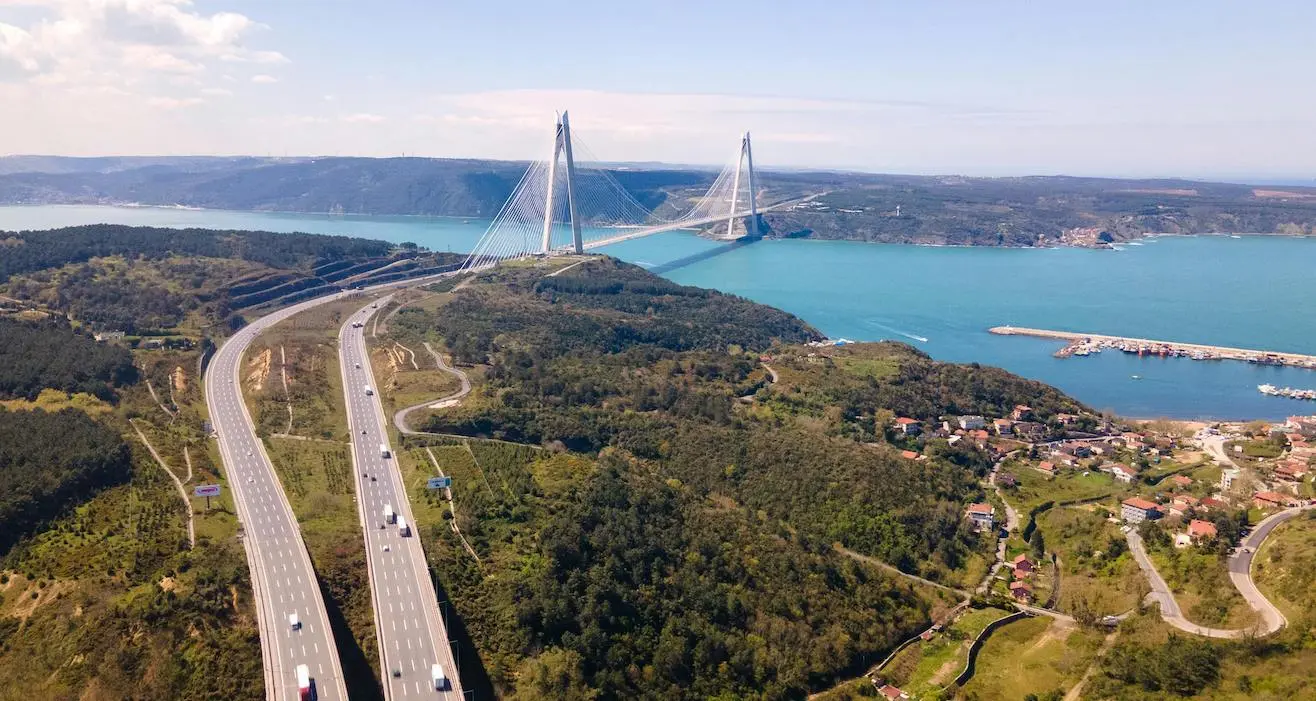
Turkey has secured nearly $2 billion USD in financing from the World Bank for a major rail infrastructure project in Istanbul, marking one of the largest agreements in the institution’s history. The funding forms part of the Istanbul North Rail Crossing (INRAIL) project, a large-scale initiative designed to enhance trade connectivity between Europe and Asia.
Third Largest Project in World Bank History
The agreement was signed during the IMF and World Bank Spring Meetings in Washington by Mehmet Şimşek and World Bank Managing Director of Operations Anna Bjerde. Şimşek described the agreement as the third-largest project ever approved by the World Bank.
He said: “This deal provides financing, strengthens standards and sends a clear signal of confidence to global markets.” The INRAIL project is backed by total financing of approximately $8.1 billion USD, with around 83% funded by international institutions.
Transforming Trade Routes Between Continents
The project involves the construction of a 127-kilometre electrified railway line that will cross the Istanbul Strait via the Yavuz Sultan Selim Bridge. Designed to bypass central Istanbul, the line will increase freight and passenger capacity while reducing congestion within the metropolitan area.
Once completed and operational, the railway is expected to boost annual freight capacity across the strait from 3 million tonnes to 50 million tonnes, creating a major improvement in logistics efficiency.
Boost to Middle Corridor Trade Network
The INRAIL project is also set to strengthen Turkey’s role in the Middle Corridor, a key trade route connecting Asia and Europe. Officials say the corridor enables goods to travel from Beijing to London in approximately 18 days, making it one of the fastest intercontinental trade routes. Şimşek described the project as a critical step in removing bottlenecks along this route, positioning Turkey as a central hub in global trade networks.
Economic Impact and Job Creation
The project is expected to deliver significant economic gains for Turkey. It is projected to create higher-income employment for more than 400,000 people, while supporting growth across sectors including manufacturing, agriculture and services. Anna Bjerde said the project would strengthen Turkey’s connectivity with Europe, Asia and the Middle East, enhancing regional and global trade flows.
Rail Expansion Becomes Strategic Priority
Turkey has invested $355 billion USD in transport infrastructure over the past two decades, with a strong focus on roads and airports. Railways are now emerging as the next major area of expansion, with large-scale projects such as INRAIL expected to play a key role in future development.
With strong international backing, strategic positioning, and significant economic potential, the Istanbul North Rail Crossing project represents a major step in Turkey’s efforts to modernise its transport network and strengthen its role as a global logistics hub.
Cameron Deggin  Founder & CEO, Property Turkey
Cameron Deggin is Founder and CEO of Property Turkey. A former finance professional and FCCA-qualified accountant, he founded the company in 2001 after recognising Turkey’s investment potential. With more than two decades analysing Turkish real estate, Cameron regularly advises international investors and is quoted by media including the Financial Times and BBC.
View full author profile →




 By:
By:

 Istanbul
  1
1  1
1 















 X
X