September 2026 at a Glance
- Annual Inflation: In September inflation rate fell to 29.8%, reaching its lowest level in the past five years. By the end of the year, inflation is expected to stand between 24% and 29%
- Policy Rate: The Central Bank of the Republic of Turkey (CBRT) kept its policy rate unchanged at 37% in September. In the coming months, the Central Bank is expected to cut interest rates in line with the decline in inflation.
- Real Estate Sales: 142,390 residential properties were sold across Turkey in September. Istanbul, Ankara, and Izmir stood out as the cities with the highest numbers of sold units. Compared with the same period last year, sales volume decreased by 9.3%. As a result, total residential property sales across Turkey reached 1.092 million units in the first nine months of the year.
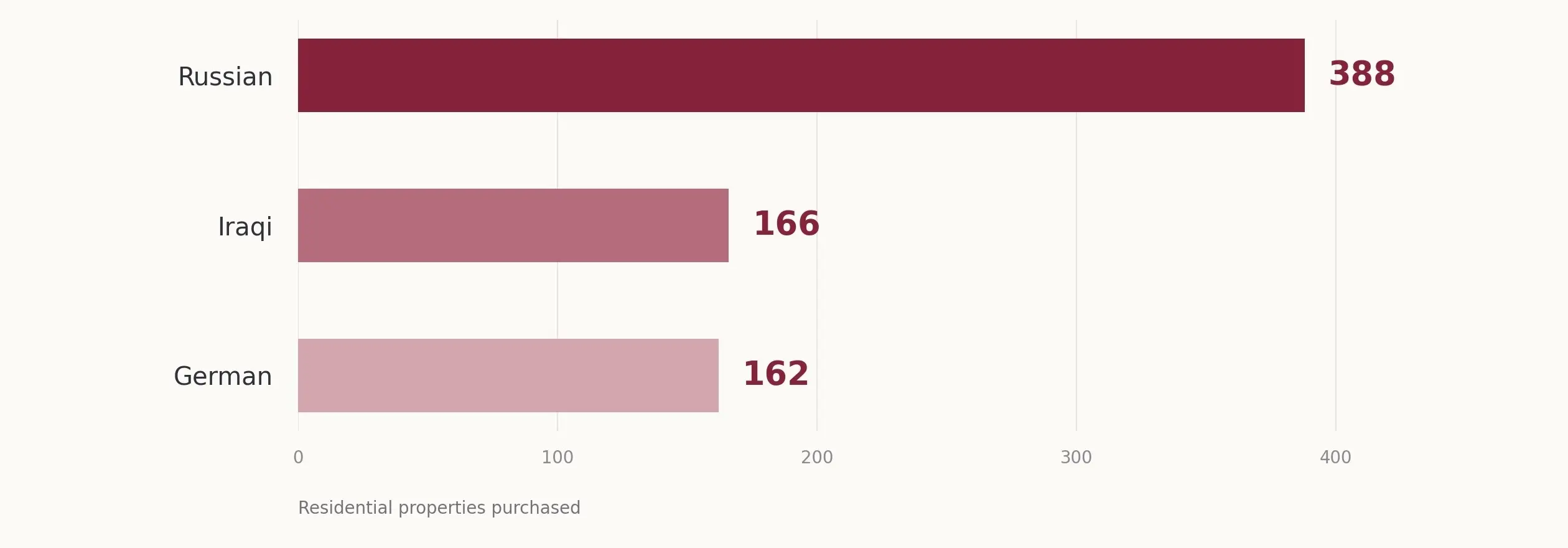
- Foreign Sales: In September, foreign buyers purchased 2,167 residential properties across Turkey. Russians, Iraqis, and Germans were among the top foreign buyers. Compared with September last year (1,972 sold units) foreign investment in residential properties increased by 9.88%, while the nationalities of the top foreign homebuyers remained largely similar.
- Property Price Movements: Izmir recorded the highest monthly increase in housing prices, at 1.21% in USD terms. Istanbul and Ankara were the other cities that experienced the largest increases in residential property prices.
- TRY / USD: The US Dollar exchange rate, which stood at TRY 48.28 at the beginning of the month, rose to TRY 49.03 by the end of September. The Turkish Lira depreciated by 1.54% against the US Dollar monthly.
- Exchange Reserves: In September, the Central Bank of the Republic of Turkey’s (CBRT) foreign exchange reserves fell from $184.25 billion to $171.20 billion. This decline was attributed to falling gold prices and increased foreign currency demand amid the fund crisis.

Turkey’s Economic Performance
In September, the Turkish government announced its Medium-Term Program (2027–2029). The program, which outlines the government’s three-year investment plans, economic projections, and targets, aims to bring inflation down to single digits.
During the same month, the unemployment rate fell to 7.8%, its lowest level in recent years.1 While interest rates remained unchanged, international financial institutions highlighted improvements in price stability. Tourism revenues and visitor numbers also continued to trend upward compared with the previous year. Tourism revenues are expected to exceed $60 billion by the end of the year (Table 1).2
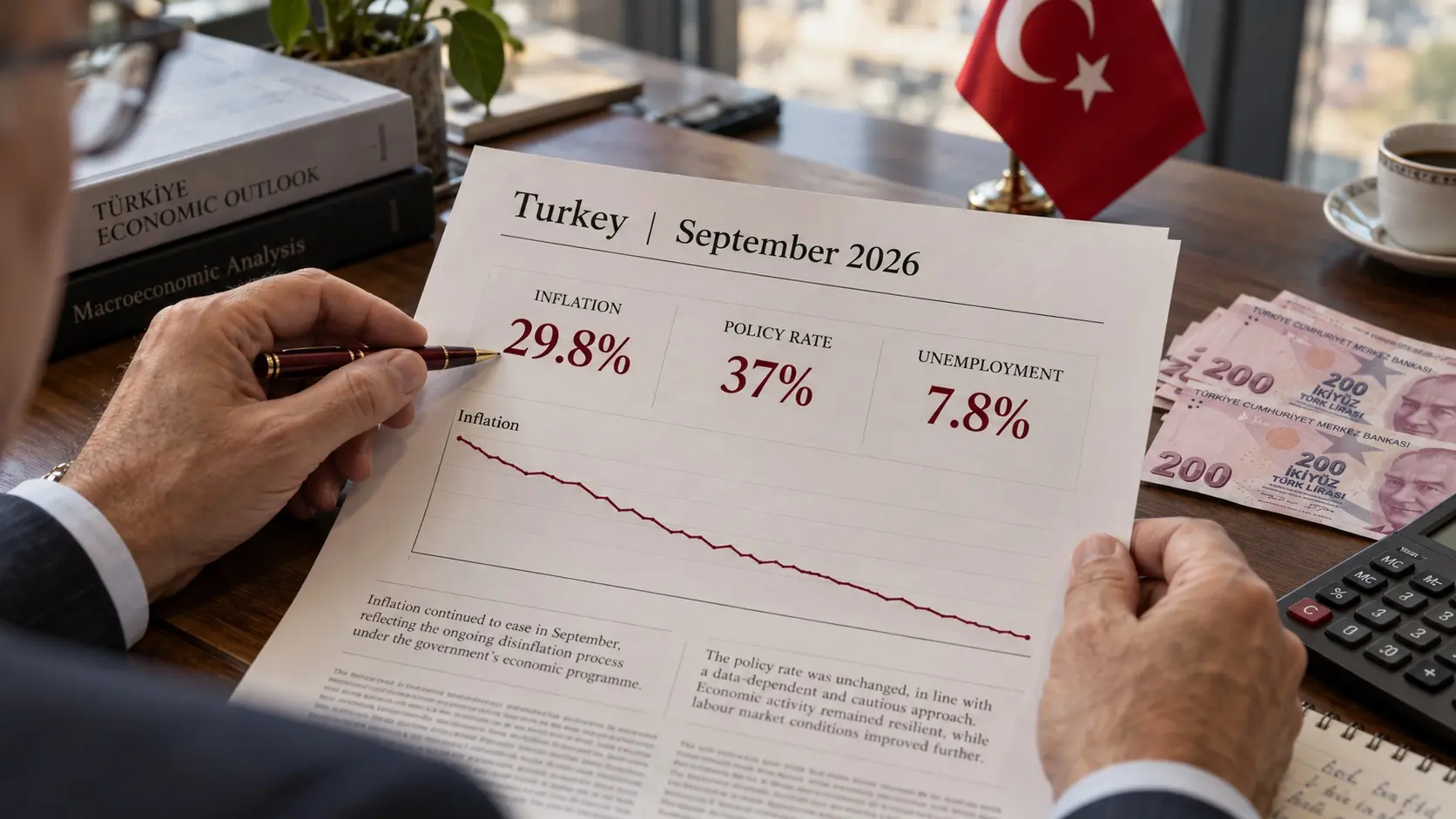
Table 1. Turkey’s Economic Indicators: September vs August 2026
| Indicator |
September |
August |
| Annual GDP Est. (T-$) |
1,820 |
1,640 |
| Annual GDP Growth (%) |
2.3 |
2.3 |
| Inflation (%) |
29.8 |
31.5 |
| CBRT Interest Rate (%) |
37.0 |
37.0 |
| USD/TRY |
49.1 |
47.5 |
| EUR/TRY |
55.2 |
53.8 |
| GBP/TRY |
65.0 |
63.5 |
| Unemployment Rate (%) |
7.8 |
8.1 |
| Current Account (Billion $) |
-43.5 |
-42.1 |
| Credit Rating (S&P) |
BB- |
BB- |
Source: CBRT and IMF

Political Outlook and Election Expectations
Politically, a month marked by growing anticipation of the early elections has come to an end. The general elections are expected to take place around the first quarter of 2028, followed by local elections (March 2029). The upcoming elections are not expected to have a negative impact on economic expectations or inflation.3

Turkey’s Property Market: Sales and Prices
In September, total housing sales reached 142,390 units. The housing market was mostly driven by cash sales (85.5% in cash). Most investors exiting interest-bearing deposits and purchased housing, turning into real estate investors.4 Compared with the same month last year, the share of foreign investors in total residential property sales increased from 1.3% to 1.5%. Accordingly, a total of 15,308 units were purchased by foreign buyers during the first nine months of the year (Table 2).
Table 2. Home Sales to Foreign Buyers: January–September 2026 vs 2025
| Date |
2026 |
2025 |
| Units |
Share of Total (%) |
Units |
Share of Total (%) |
| September |
2,167 |
1.5 |
1,972 |
1.3 |
| August |
1,938 |
1.5 |
1,936 |
1.3 |
| July |
2,120 |
1.7 |
2,081 |
1.3 |
| June |
2,015 |
1.6 |
1,678 |
1.4 |
| May |
1,387 |
1.5 |
1,900 |
1.5 |
| April |
1,516 |
1.2 |
1,533 |
1.2 |
| March |
1,353 |
1.2 |
1,692 |
1.5 |
| February |
1,506 |
1.2 |
1,551 |
1.3 |
| January |
1,306 |
1.2 |
1,649 |
1.4 |
| TOTAL |
15,308 |
1.4 |
15,992 |
1.3 |
Source: TUIK
Graph 1. Top Three Foreign Buyer Nationalities: September 2026
Source: TUIK
While Istanbul became the city where foreigners purchased the most housing monthly, Antalya and Mersin followed the big metropolis. Sales in Istanbul showed a slight decrease compared to the same month of last year. It is estimated that foreign investors invested over $3 billion in the housing sector across Turkey in the first nine months (Table 2 and Graph 1).
Table 3. Home Sales to Foreign Buyers by City: September 2026
| City |
Foreign Sold Units |
Foreign Sales Share (%) |
| Istanbul |
817 |
3.67 |
| Antalya |
664 |
9.90 |
| Mersin |
155 |
3.50 |
Source: ENDEKSA (September 2026)
In September, foreign investors accounted for 9.9% of residential property purchases in Antalya, while this figure stood at 3.67% in Istanbul and 3.5% in Mersin. Over the first nine months of the year, foreign buyers accounted for 1.4% of total residential property sales, representing an increase in their share compared with the same period last year (Table 2 and 3).5
While real estate prices demonstrated an annual growth rate of 1.67% to September 2026, (USD Terms) they registered a relatively limited decrease of -0.56% in September. The country’s three major metropolitan areas Istanbul, Ankara, and Izmir diverged positively from the national average, showcasing an upward trajectory in housing prices compared to the rest of the country (Table 3 and 4).6
Table 4. Property Price Changes in USD by Percentage: September 2026
| |
Turkey |
Istanbul |
Ankara |
Izmir |
| Yearly |
+1.67 |
+5.30 |
+7.83 |
+0.15 |
| Monthly |
-0.56 |
+0.42 |
+0.03 |
+1.21 |
Source: CBRT
Note: All figures represent an increase or decrease in USD.
Key Developments in September
Investment Fund Investigations and Market Impact
The funds involved, with a total volume of approximately $20 billion, were brought under public scrutiny as authorities launched investigations into the financial transactions and management of several investment funds.8 The crisis began with a surge in stock trading volumes, which attracted investors to shares whose prices were rising rapidly. Several stocks that increased in value by more than tenfold were controlled by fund management companies or recommended to investors by them. Similar events have occurred in the United States, Switzerland, and the United Kingdom. In 2020, GAM Investments in Switzerland,9 the Woodford Equity Income Fund in the United Kingdom in 2019,10 and the BlackRock HPS Corporate Lending Fund in the USA in 202611 experienced situations with similarities to Turkey’s fund crisis.
Compared with similar cases around the world, the crisis in Turkey is being intensified by the coordinated actions of political party officials, bureaucrats, and fund managers. However, the government is making changes in key regulatory institutions and implementing a reform plan. Under this reform plan, the Capital Markets Board (CMB), the Banking Regulation and Supervision Agency (BRSA), and the Central Bank of the Republic of Turkey (CBRT) will be reorganised to strengthen regulatory oversight and prevent the emergence of another fund crisis. Many of the individuals who managed or directed the funds have been arrested, while the authorities aim to hold politically connected individuals accountable and pursue legal action where necessary. The $20 billion portion of the funds, which represents approximately 6.07% of Turkey’s total fund assets, is expected to be liquidated,12 is not expected to trigger a broader financial crisis. Instead, the process is anticipated to contribute to structural reforms and strengthen Turkey’s financial regulatory framework.13

Property Valuation Changes for Citizenship Applications
The requirement for GEDAŞ-centred valuation reporting for acquiring Turkish citizenship has been abolished. Property valuation reports required for Turkish citizenship applications can now be prepared by any CMB-approved valuation company selected by the investor. The valuation reports obtained will remain valid for 12 months, providing investors with greater convenience and flexibility throughout the bureaucratic procedures. The market value of the property will be used as the basis for Title Deed transactions. The market value applicable for legal purposes will also be included in the valuation report for informational purposes. This approach will ensure a more accurate assessment of price margins and help facilitate a smoother and more straightforward citizenship application process for investors.14

Property Turkey’s Outlook for Property Buyers
We anticipate a gradual easing of macroeconomic risks and a notable improvement in price stability in the Turkish economy during the October–December period. While we expect the overall volume of foreign property purchases to remain in line with recent trends, we anticipate increased interest in larger-scale, high-value institutional investments. Although political risks are expected to have only a limited impact on economic indicators, we believe that the sustained real growth in housing prices will remain a key factor shaping market dynamics. Accordingly, we expect the momentum in overall housing sales and foreign investor demand observed in September to continue in the coming months.
Overall, our recommendation is to adopt a selective “buy-and-hold” strategy rather than a short-term speculative approach. Investors who identify high-quality properties at competitive prices may benefit from the combination of currency dynamics, declining inflation, expected interest-rate normalisation, and the potential for further real growth in housing prices over the medium term. From our perspective, subdued demand from domestic buyers, and the fact that cash purchases have reached approximately 85.5%, indicate that the current period represents an important and favourable window for investment in the residential property market.

Sources
1. Turkish Statistical Institute (TURKSTAT).
2. “The Middle Term Program (2027-2029)”, The Presidency of Strategy and Budget, September 2026.
3. Rosaleen Carroll, “Turkey’s Erdoğan to Run For Final Third Term in 2028”, AL-MONITOR, September 2026.
4. Turkish Statistical Institute (TURKSTAT).
5. Turkish Statistical Institute (TURKSTAT).
6. “Real Estate Price Index”, TCMB, September 2026.
7. All figures represent an increase or decrease in USD.
8. Mirac Dereli and Canan Sevgili, “How Turkey’s Investment Fund Bubble Brust”, Reuters, 2 October 2026.
9. “GAM to Initiate Orderly Wind Down of GAM Greensill Supply Chain Finance Fund”, GAM Investments, 2 March 2021.
10. “Update on the LF Woodford Equity Income Fund”, Financial Conduct Authority, 08 July 2020.
11. Ateev Bhandari and Isla Binnie, “BlackRock Fund Limits Withdrawals as Redemptions Rattle Private Credit”, Reuters, 6 March 2026.
12. Capital Markets Board (CMB).
13. Uğur Yılmaz and İnci Özbek, “Turkey Wants Fund Investors to Give Back Excessive Profits”, Bloomberg, 1 October 2026.
14. “Turkish Citizenship by Investment Programme”, Property Turkey.

Cameron Deggin  Founder & CEO, Property Turkey
Cameron Deggin is Founder and CEO of Property Turkey. A former finance professional and FCCA-qualified accountant, he founded the company in 2001 after recognising Turkey’s investment potential. With more than two decades analysing Turkish real estate, Cameron regularly advises international investors and is quoted by media including the Financial Times and BBC.
View full author profile →




 By:






 X