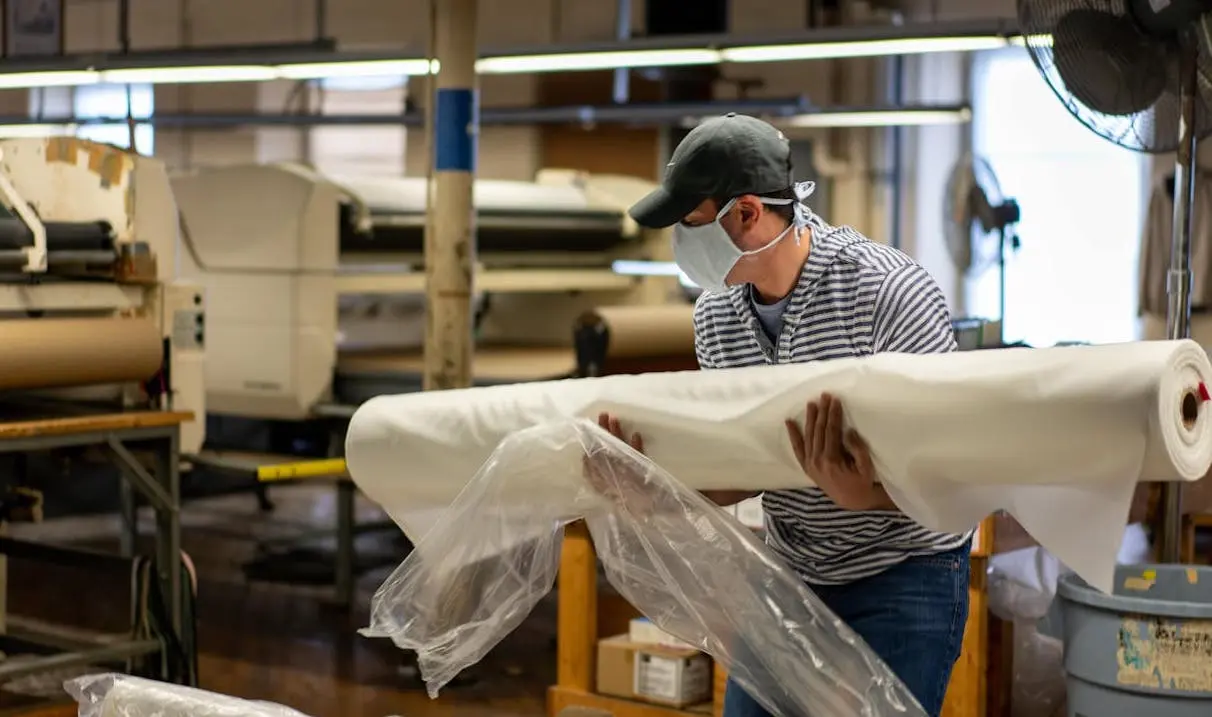
Turkey's industrial sector recorded another year of strong growth in 2025, with the total value of industrial product sales rising 27.7% year-on-year to 24.03 trillion Turkish Lira, around $608 billion USD. The latest figures from the Turkish Statistical Institute (TurkStat) highlight expansion across manufacturing, automotive production, and consumer goods.
Manufacturing Output Continues to Expand
TurkStat reported that industrial product sales increased from 18.82 trillion Turkish Lira in 2024 to 24.03 trillion Turkish Lira during 2025. The figures reflect broad-based growth across multiple manufacturing sectors, supported by rising production and continued industrial investment.
Turkey produced 1.216 million automobiles during the year, alongside 8.329 million household refrigerators and freezers, 334 million tonnes of ready-mixed concrete, 1.266 million combi boilers, 9.557 million tonnes of detergents and washing preparations, and 774,970 motorcycles.
Food manufacturing accounted for the largest share of industrial sales at 15.5%, followed by basic metals with 10.2%, motor vehicles, trailers, and semi-trailers at 9.7%, and fabricated metal products at 6.1%.
Automotive Industry Remains a Major Growth Driver
The automotive sector continued to play a significant role in Turkey's industrial economy during 2025. The five leading automotive manufacturing provinces generated more than 83% of total sales value within the sector.
Kocaeli remained Turkey's largest automotive production centre, accounting for 34% of total sales, followed by Bursa with 29.8%, Sakarya with 11.8%, Aksaray with 3.9%, and Izmir with 3.6% of sales.
The latest figures support Turkey's position as one of Europe's leading automotive manufacturing hubs, with production supporting both domestic demand and export markets across Europe, the Middle East, and beyond.
Industrial Technology and Manufacturing Continue to Develop
TurkStat's data shows that high-technology products represented 3.6% of total manufacturing sales during 2025. Medium-high technology industries accounted for 28.8%, while low and medium-low technology manufacturing continued to represent the largest share of industrial production.
Intermediate goods in Turkey remained the largest industrial category, accounting for 43.8% of total sales, followed by non-durable consumer goods at 23.7% of sales, and capital goods at 21.8%.
Contract manufacturing also remained an important part of Turkey's industrial sector. Clothing products represented 32.3% of contract manufacturing output, ahead of textile products at 17.6% and fabricated metal products at 9.3%, showing the diversity of Turkey's manufacturing economy.
Nezir Can  Operations Manager
Nezir 'Nez' Can is Operations Manager at Property Turkey and a contributor on Turkish culture, lifestyle, and everyday life across the country. Since joining the company, he has helped international readers better understand what it is like to live, work, and settle in Turkey.
View full author profile →




 By:
By:

 Kalkan
  2
2  2
2 
















 X
X