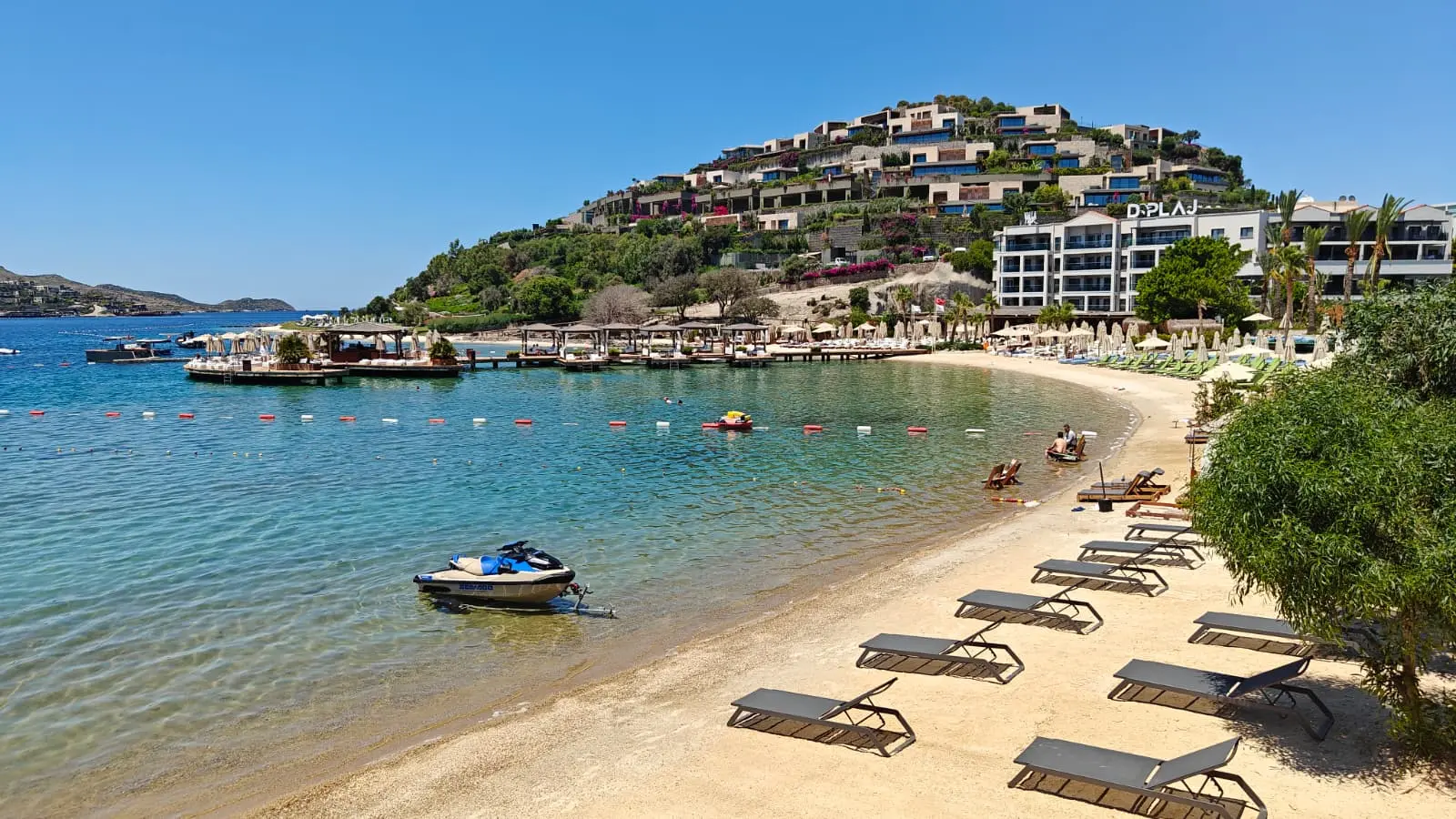
Türkiye scores 0.853 on the UN's Human Development Index (2023 data) and ranks 51st of 193 countries, in the "very high human development" group. Its score is up 42.6% since 1990, and one analysis of UNDP data found Türkiye gained about 29 places between 1990 and 2023, more than any other country. Longer lives, more years in school, and a far bigger economy drove the climb.
What is the Human Development Index (HDI)?
The Human Development Index is the United Nations Development Programme's measure of how well a country's people are doing; not just how big its economy is. It scores every country from 0 to 1 across three dimensions:
- A long and healthy life: Measured by life expectancy at birth.
- Knowledge: Measured by expected years of schooling for children and mean years of schooling for adults.
- A decent standard of living: Measured by gross national income per capita, adjusted for purchasing power.
A score of 0.800 or above places a country in the "very high human development" group, the top of four tiers. Türkiye has stayed in that tier for several reports running.

Turkey's HDI Ranking: How Far has Türkiye Climbed?
Türkiye's HDI has risen in every period UNDP tracks: from 0.598 in 1990 to 0.669 in 2000, 0.750 in 2010 and 0.853 in 2023. That is an average gain of 1.08% a year, two and a half to nearly three times the pace of the countries at the top of the table.
| Country |
HDI 1990 |
HDI 2023 |
Average Yearly Growth, 1990 to 2023 |
| Türkiye |
0.598 |
0.853 |
1.08% |
| Germany |
0.834 |
0.959 |
0.42% |
| Iceland |
0.841 |
0.972 |
0.44% |
| Norway |
0.856 |
0.970 |
0.38% |
On rank, a DataPandas analysis of UNDP data covering 1990 to 2023 found that Türkiye climbed 29 places, from 79th to 50th, the biggest jump of any country in its dataset. Singapore came second with 25 places (37th to 12th). UNDP's own 2025 table puts Turkey 51st on 2023 data and shows it up seven places between 2015 and 2023.

Health: Why People in Türkiye are Living Longer
Life expectancy rose from 72.6 years in 2002 to 77.2 years in 2023, and UNDP counts a gain of 9.3 years since 1990. The step-change followed the Health Transformation Programme, launched in 2003, which extended insurance coverage and expanded hospital capacity.
- Coverage: Health insurance reached roughly 64% of the population in 2002. By 2023, 99% were covered for a core set of services.
- Child and maternal health: Infant mortality fell from 32 to 7 per 1,000 live births between 2002 and 2012, and maternal mortality from 64 to 15 per 100,000.
- Spending: Public health spending per person rose from $114 USD to $435 USD over the same decade.
- Capacity: Hospital beds rose from 2.45 to 3.05 per 1,000 people between 2002 and 2023. In 2024 Turkey had 1,562 hospitals: 941 run by the Ministry of Health, 69 university hospitals, and 552 private.

Education: 12 Years of Schooling and 208 Universities
UNDP records a 10.9-year rise in expected years of schooling and a 4.5-year rise in mean years of schooling in Turkey since 1990. Adults aged 25 and over now average 9.3 years in school, up from 7.3 years in 2011.
- Longer compulsory schooling: A 2012 law extended compulsory education to 12 years (the "4+4+4" system). The secondary schooling rate went from 44% in 2000 to 88% in 2019, according to the Ministry of National Education.
- More universities: Türkiye had 76 higher-education institutions and 1.9 million students in 2002–03. By 2021–22 it had 208 and 8.3 million students.
- Stronger research output: Türkiye ranked 22nd in the world for scientific publications in 2002 and 17th in 2022.
- Literacy: 97.6% of people aged 6 and over could read and write in 2022.

Income: An Economy Nearly Four Times Larger per Head
GDP per person rose from $3,591 USD in 2002 to $13,375 USD in 2023 in current US Dollars, about 3.7 times higher. UNDP's income measure, gross national income per capita adjusted for purchasing power, grew by around 171% between 1990 and 2023 and stood at $34,507 USD in 2023 (in 2021 international Dollars).
Tourism and travel show the same shift. International visitors rose from 13 million in 2002 to 51.4 million in 2022, and airline passengers from 33 million in 2002 to 209 million in 2019.

Türkiye: Then and Now
| Indicator |
Then |
Latest |
| Life expectancy at birth (years) |
72.6 (2002) |
77.2 (2023) |
| Hospital beds per 1,000 people |
2.45 (2002) |
3.05 (2023) |
| Universities |
76 (2002–03) |
208 (2021–22) |
| University students |
1.9 million (2002–03) |
8.3 million (2021–22) |
| Secondary schooling rate |
44% (2000) |
88% (2019) |
| GDP per capita (current US$) |
3,591 (2002) |
13,375 (2023) |
| International visitors |
13 million (2002) |
51.4 million (2022) |

The Top Five Turkish Provinces for Human Development
TurkStat began publishing the HDI for all 81 provinces in March 2025. On 2022 data, Ankara leads, followed by Istanbul, Kocaeli, İzmir, and Muğla. The national figure that year was 0.854.
| Rank |
Province |
HDI (2022) |
What Lifts the Score |
| 1 |
Ankara |
0.891 |
Highest adult schooling in Türkiye (10.7 years in 2023, against 9.3 nationally) and life expectancy of 79.2 years, against 77.3 nationally |
| 2 |
Istanbul |
0.886 |
Longest expected time in education of any province (20.3 years), second-highest adult schooling, and about 30% of national GDP |
| 3 |
Kocaeli |
0.886 |
Highest GDP per capita in Türkiye in 2023 (TRY 516,460) and fourth for adult schooling |
| 4 |
İzmir |
0.870 |
Fifth for adult schooling, among the top five for gender parity in education, and Türkiye's third-largest provincial economy |
| 5 |
Muğla |
0.867 |
The only tourism-led province in the top five, home to Bodrum, Marmaris and Fethiye |
The leaders on each pillar are not always the same places:
| Pillar |
Indicator (Türkiye Average) |
Leaders |
| Health |
Life expectancy, 2021–23, years (77.3) |
Tunceli 80.8, Ankara 79.2, Istanbul 78.6 |
| Education |
Mean years of schooling, age 25+, 2023 (9.3) |
Ankara 10.7, then Istanbul, Eskişehir, Kocaeli, İzmir |
| Education |
Expected years of education, 2022 (18.2) |
Istanbul 20.3, Karabük 20.1, Ankara 19.9, Bayburt 19.6, Rize 19.5 |
| Income |
GDP per capita, 2023, TRY |
Kocaeli 516,460, Istanbul 510,733, Ankara 438,242 |

What this Means for People Buying Property in Turkey
Human development scores are not price forecasts. They do describe what international buyers ask about first: hospitals, schools, universities, and incomes. Several of the places buyers look at most sit near the top of this list, including Istanbul, İzmir, and the Muğla coast around Bodrum, Marmaris, and Fethiye.
- Healthcare: 1,562 hospitals nationwide, 552 of them private, and near-universal insurance coverage.
- Schools and universities: 12 years of compulsory schooling and 208 universities, with Ankara and Istanbul scoring highest for adult schooling.
- Rising incomes and visitors: GDP per head has nearly quadrupled since 2002, and 51.4 million international visitors arrived in 2022.
- Literacy: Antalya recorded the highest literacy rate of any province in 2022, at 99%.
Property Turkey has helped international buyers since 2001. To compare these areas for lifestyle or investment, speak to our team. This article is general information, not investment advice.
What the HDI Does Not Show
- Regional gaps: Ankara scores 0.891, while Ğri, the lowest-scoring province, scores 0.748.
- Inequality: Adjusted for inequality, Türkiye's 2023 score falls from 0.853 to 0.708, a 17% loss.
- Cost of living: Income is measured in purchasing-power Dollars, so the HDI does not capture how Lira weakness or inflation affects households.
- Reading the rank: The 29-place figure comes from a third-party analysis of UNDP data. UNDP recalculates past scores in each report, and its annex table reports rank change only for 2015–2023, so treat the figure as indicative.

FAQs: Turkey and the Human Development Index
Q: What is Turkey's HDI score?
A: Turkey scored 0.853 in 2023, ranking 51st of 193 countries in UNDP's very high human development group.
Q: Which Turkish province has the highest HDI?
A: Ankara, with 0.891 in 2022, followed by Istanbul and Kocaeli at 0.886 each, İzmir at 0.870, and Muğla at 0.867.
Q: What drove Turkey's HDI rise?
A: Progress on all three pillars: life expectancy up from 72.6 to 77.2 years between 2002 and 2023, more years in school and 208 universities, and GDP per head up about 3.7 times in current Dollars.
Q: Is Turkey the fastest-rising country in the HDI?
A: One analysis of UNDP data found Türkiye climbed more places than any other country between 1990 and 2023. UNDP's own table shows it up seven places from 2015 to 2023.

Sources
- UNDP, Türkiye country note, Human Development Report 2025
- UNDP, HDI trends 1990–2023
- DataPandas, Human Development Index by country
- Türkiye Today, TurkStat provincial HDI 2018–2022
- Hürriyet Daily News, average education duration by province, 2023
- Daily Sabah, average education duration, 2023
- Sözcü, TurkStat life tables 2021–2023
- Wikipedia, Turkish provinces by GDP
- Oxford Business Group, Turkey health sector
- Feather, healthcare statistics for Türkiye (citing Ministry of Health data)
- Invest in Türkiye, income, tourism and air travel
Cameron Deggin  Founder & CEO, Property Turkey
Cameron Deggin is Founder and CEO of Property Turkey. A former finance professional and FCCA-qualified accountant, he founded the company in 2001 after recognising Turkey’s investment potential. With more than two decades analysing Turkish real estate, Cameron regularly advises international investors and is quoted by media including the Financial Times and BBC.
View full author profile →




 By:

 Istanbul
 1
 1
















 X