Short Answer: A boutique hotel can suit an experienced owner-operator or an investor with a clear management plan, but occupancy data is not a promise of returns. Istanbul recorded 18,972,699 foreign visitor arrivals in 2025, including arrivals through airports and seaports rather than unique visitors, according to the Istanbul Provincial Directorate of Culture and Tourism. Assess the licence, building, accounts, purchase taxes, and operating costs before making an offer.
A small hotel is not simply a residential building with rooms to let. You are taking on a regulated business, with staffing, guest services, maintenance, and daily revenue management. Treat the seller’s occupancy and income claims as unverified until you have examined the underlying records.
Istanbul combines international visitor demand with several distinct central districts. The Directorate recorded 14,379,176 foreign visitor arrivals from January to September 2026, up 1.56% from the same period of 2025. These are arrivals, not a count of individual travellers.
Tourism-wide indicators and a particular hotel’s performance are not interchangeable. Results depend on location, condition, licence, service, and management, so build a business case from that hotel’s own accounts.
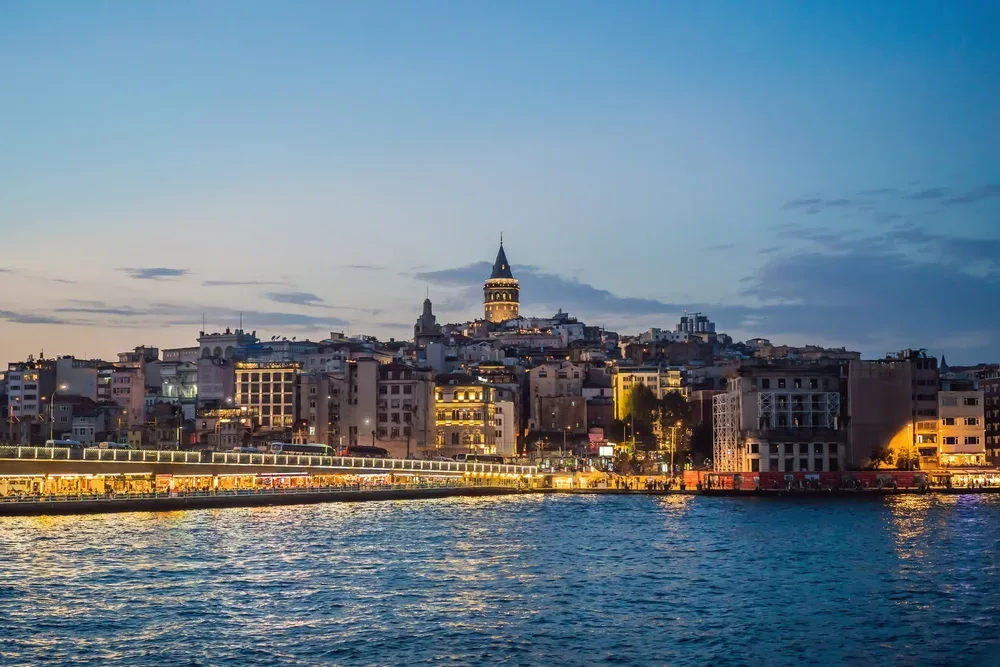
Galataport Istanbul handled 595,000 cruise passengers in 2025, a record reported by SeaNews. Cruise traffic may support demand around the waterfront, but treat it as context, not as a revenue forecast.
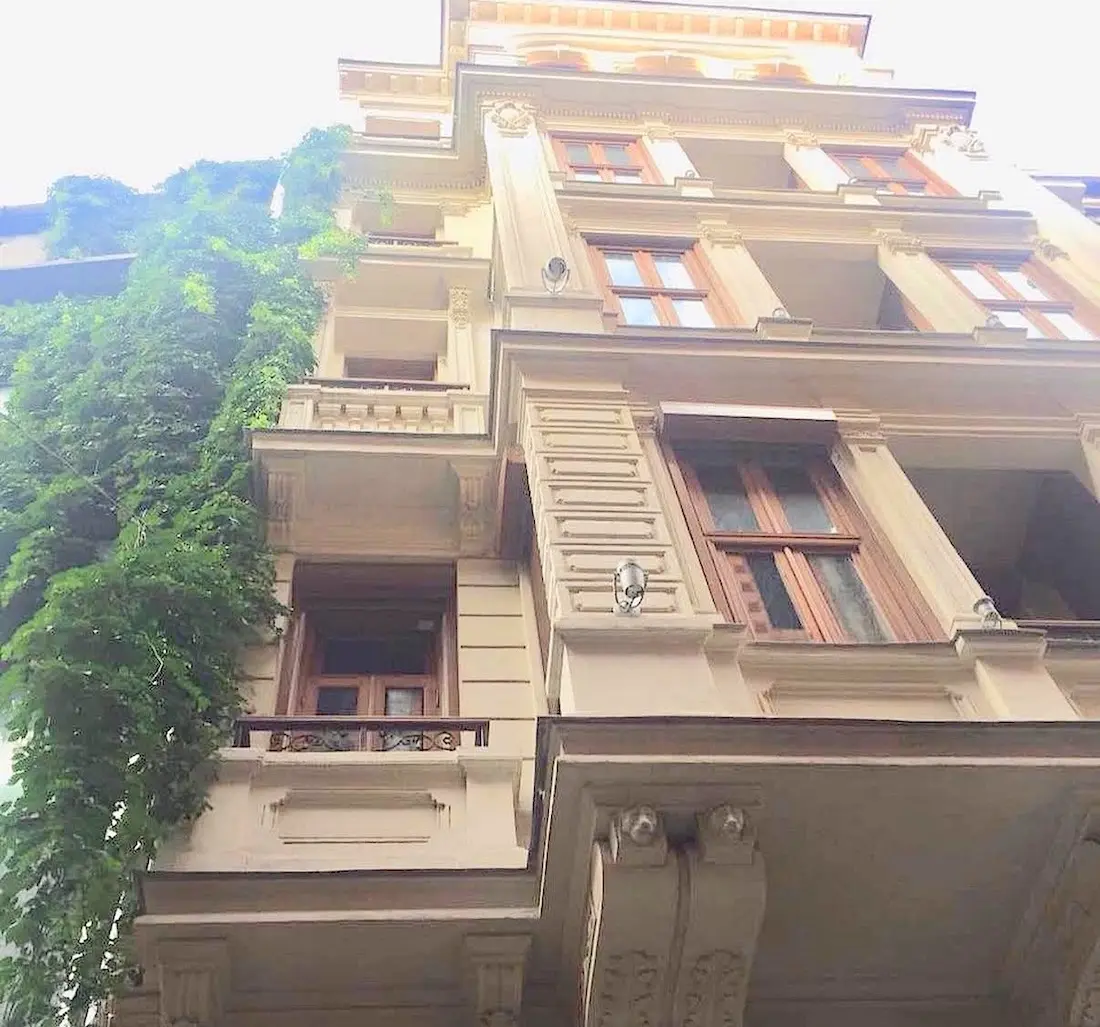
Choose a district in relation to the guest profile and the building you can legally operate. A central address does not confirm hotel use, an operating licence, or a viable refurbishment plan.
- Taksim and Beyoğlu: Suited to plans targeting central-city visitors. Check the specific street, building condition, and authorised use.
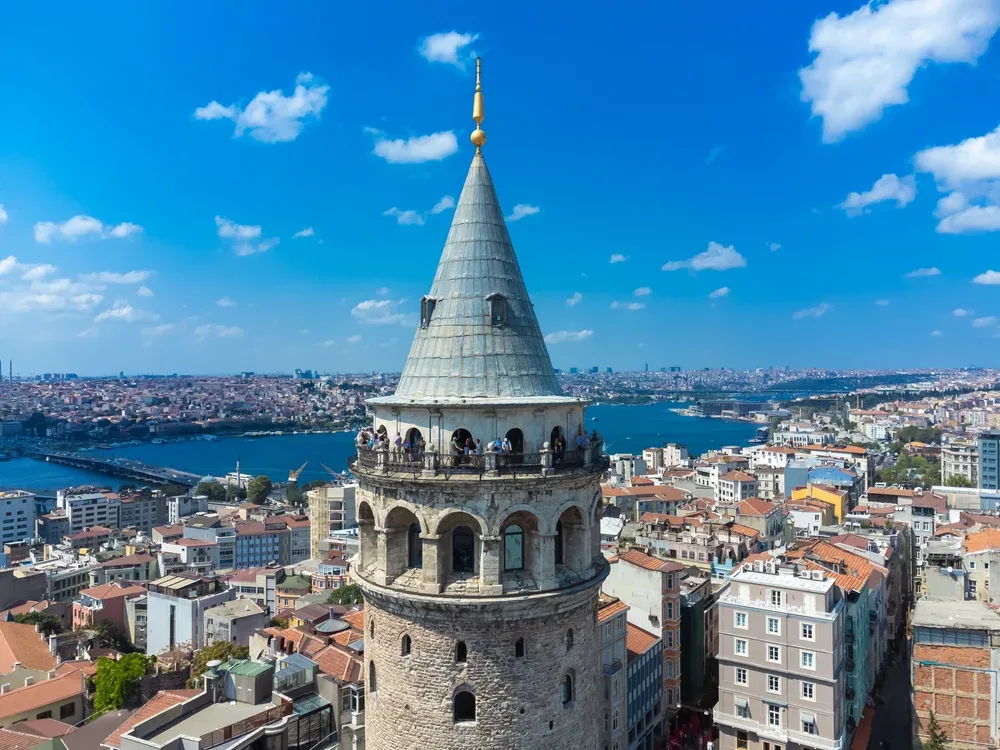
- Galata and Karaköy: Closer to the cruise-port context, but each building still needs its own demand and structural assessment.
- Sultanahmet: Historic-district properties require particular care over permitted use and renovation restrictions.
- Şişli: Compare the property’s actual guest demand and operating record with leisure-focused districts.
Check whether the business holds a Tourism Establishment Certificate (Turizm İşletmesi Belgesi) or another applicable operating licence, and verify its scope and status with the relevant authorities. Do not assume the licence transfers automatically when ownership changes.
Law No. 7464 is a separate regime. In force since 1 January 2024, it regulates residential-property rentals for stays of 100 days or less. The owner needs a tourism-purpose rental permit before letting, and unanimous approval from building owners can be required. Read Law No. 7464 and the Ministry’s 2024/3 circular.
A short-let permit does not turn a home into a hotel and does not replace a hotel’s Tourism Establishment Certificate. Our guide to landlord rules, taxes, and permits provides further context.
The Ministry’s March 2026 inventory listed 20 operating-certified boutique hotels in Istanbul, with 893 rooms and 1,872 beds, alongside 3 investment-certified boutique hotel projects. This is the official inventory, not every business using the boutique label.
What Do Occupancy and Room-Rate Benchmarks Show?
The Directorate reported 52.34% occupancy for Istanbul’s Ministry-certified boutique hotels across 2025, comprising 43.53% foreign guests and 8.81% domestic guests. In March 2026, monthly boutique-hotel occupancy was 44.04%. These are not a forecast for a particular 10- to 30-room property.
Two other hotel-industry series give context for January to August 2026, but they are different samples and should not be mixed. TÜROB’s member survey reported occupancy of 67.01% and an average daily rate (ADR) of EUR 97.50, compared with 64.41% and EUR 103.68 in January to August 2025.
Separately, STR-CoStar reported Istanbul occupancy of 65.12% and ADR of EUR 129.89 for January to August 2026, versus 65.30% and EUR 129.20 in 2025. The results differ because the samples differ. Do not combine one series’ occupancy with the other’s ADR.
Benchmark
Jan–Aug 2025
Jan–Aug 2026
TÜROB member survey: occupancy / ADR
64.41% / EUR 103.68
67.01% / EUR 97.50
STR-CoStar: occupancy / ADR
65.30% / EUR 129.20
65.12% / EUR 129.89
For context, TÜROB reported August 2026 occupancy of 76.56% and ADR of EUR 103.82; August 2025 was 73.39% and EUR 94.91. Request the target hotel’s own records and test assumptions rather than projecting these benchmarks onto the purchase.
What Are the Purchase Costs and Hotel Taxes?
Budget for transaction charges as well as the purchase price. The buyer’s Title Deed fee is 2% of the declared sale price, with a further 2% payable by the seller. The combined fee is 4%; the declared value must be at least the property’s tax value, and the parties may agree that one side pays both shares.
The Land Registry revolving fund fee for a typical single-property sale in 2026 is a base of TRY 2,227 multiplied by the local office coefficient, under the tariff effective from 1 January 2026. See our pages on getting a Turkish Title Deed and tax and Turkish real estate.
VAT on a hotel-building sale needs transaction-specific advice. The standard rate is 20% in 2026 and generally applies where the seller is a VAT-registered business and the transfer is taxable. The result depends on the seller, acquisition date, and any available exemption.
The general exemption for companies selling property held for two years was removed for property acquired from 15 July 2023, subject to transitional rules for older holdings, under the VAT Law. Ask a Turkish tax adviser to confirm the VAT treatment before signing.
Hotel accommodation services are subject to VAT at 10% in 2026. Accommodation tax is separate: it is temporarily 1% of the room charge through 31 December 2026 and returns to 2% from 1 January 2027 unless changed, following Presidential Decision No. 11263 of 1 May 2026. Check the Revenue Administration notice and the current VAT rates.
Ordinary Turkish companies pay corporate tax of 25% on taxable profits for the 2026 accounting period. It applies to profit, not the purchase price. Our overview of 2026 investor reforms is additional reading, not a substitute for advice.
What Should Your Due Diligence Cover?
Have your legal and technical advisers check the building and the business independently. Under Law 6306, a risky-building assessment is not generally compulsory before a sale. It must be carried out by a Ministry-licensed organisation and is requested by an owner.
If a building is finally declared risky, owners have 15 days to object and authorities set a demolition period of at least 60 days. Check the Title Deed record for a risky-building notation and make engineering due diligence a condition of the deal. See the Ministry’s risky-building process.
- Title and Use: Confirm ownership, encumbrances, authorised use, and whether hotel operation is permitted.
- Licence: Obtain the actual certificate and verify its scope, status, and transfer requirements.
- Structure: Commission an engineer to assess earthquake and structural risks. Renovation and strengthening costs must be quoted for the specific building; there is no reliable general figure.
- Trading: Review accounts, occupancy, ADR, expenses, staffing, and any operating or lease agreements.
- Tax: Have a Turkish tax adviser confirm VAT, accommodation tax, and corporate-tax implications.
Build your own model from verified property-level data and cost quotations. The VAT exemption guide can help you prepare questions for your adviser.
Can a Hotel Purchase Qualify for Citizenship?
In 2026, the real-estate threshold for Turkish Citizenship by Investment is $400,000 USD, with a three-year no-sale commitment. The property may be residential or commercial, new or resale, and several properties can be combined. Confirm the property, valuation, and documentation against the programme rules before relying on it.
Is Affordable City Centre Istanbul Residential a Better Fit?
Our view is that hotels suit larger budgets, experienced owner-operators, or investors with a credible management plan. For a smaller budget, affordable city centre Istanbul residential property may be a more straightforward alternative, avoiding staffing and licence requirements.
In August 2026, the CBRT house price index showed a 26.3% nominal annual rise in Istanbul; nationally, prices rose 23% nominally while the real-terms national change was a fall of 6.5%. Nominal growth should not be confused with inflation-adjusted performance.
TurkStat recorded 2,167 house sales to foreigners across Turkey in September 2026. This national figure does not predict resale liquidity for a particular property. See the CBRT house price index and our discussion of the Istanbul cash-buyer advantage.
For citizenship investors, our practical preference is usually residential at the qualifying budget level: smaller commercial purchases can be the wrong asset if resale demand is limited. A hotel may still be right if you want to operate it and have the resources.
What Are the Risks?
- Demand Risk: City and industry-wide statistics do not guarantee a particular hotel’s occupancy, ADR, or profits.
- Licence Risk: A residential short-let permit is not a hotel licence.
- Building Risk: Structural defects, earthquake exposure, or a risky-building designation may affect use and costs.
- Tax Risk: VAT treatment depends on the transaction facts, and rates may change.
- Exit Risk: A hotel is a specialist asset. Consider who might buy it later, particularly for a citizenship application.
Discuss Your Istanbul Investment Plans With Us
Property Turkey has helped international buyers invest in Turkey since 2001, from property search and legal checks to management and resale. We can help you assess a hotel’s licence, building, and trading records, or compare it with affordable city centre Istanbul residential property. Contact us to discuss your next steps.
FAQs: Buying a Boutique Hotel in Istanbul
Q: What occupancy should I assume for a boutique hotel?
A: The Directorate reported 52.34% occupancy for Ministry-certified boutique hotels in 2025 and 44.04% in March 2026. Neither figure is a forecast for an individual hotel.
Q: Are TÜROB and STR-CoStar hotel benchmarks interchangeable?
A: No. They are separate samples. Keep each series’ occupancy and ADR together.
Q: Does a short-let permit allow me to operate a hotel?
A: No. Law No. 7464 covers residential rentals for stays of 100 days or less; it does not replace a hotel’s Tourism Establishment Certificate.
Q: What is the accommodation tax rate?
A: It is 1% through 31 December 2026 and is scheduled to return to 2% from 1 January 2027 unless changed. It is separate from accommodation VAT.
Q: Is VAT always charged when buying a hotel building?
A: No. The 20% standard rate generally applies when a VAT-registered seller makes a taxable sale, but the outcome depends on the transaction. Ask a Turkish tax adviser.
Q: Can buying a hotel qualify me for Turkish citizenship?
A: Commercial property can qualify if it meets the $400,000 USD threshold and other programme requirements, including the three-year no-sale commitment.
NOTE: This article is for information only and is not legal, tax, or investment advice. Figures are as of November 2026.
Nezir Can Operations Manager
Nezir 'Nez' Can is Operations Manager at Property Turkey and a contributor on Turkish culture, lifestyle, and everyday life across the country. Since joining the company, he has helped international readers better understand what it is like to live, work, and settle in Turkey.




 By:



 Operations Manager
 Istanbul
 17
 17



 X