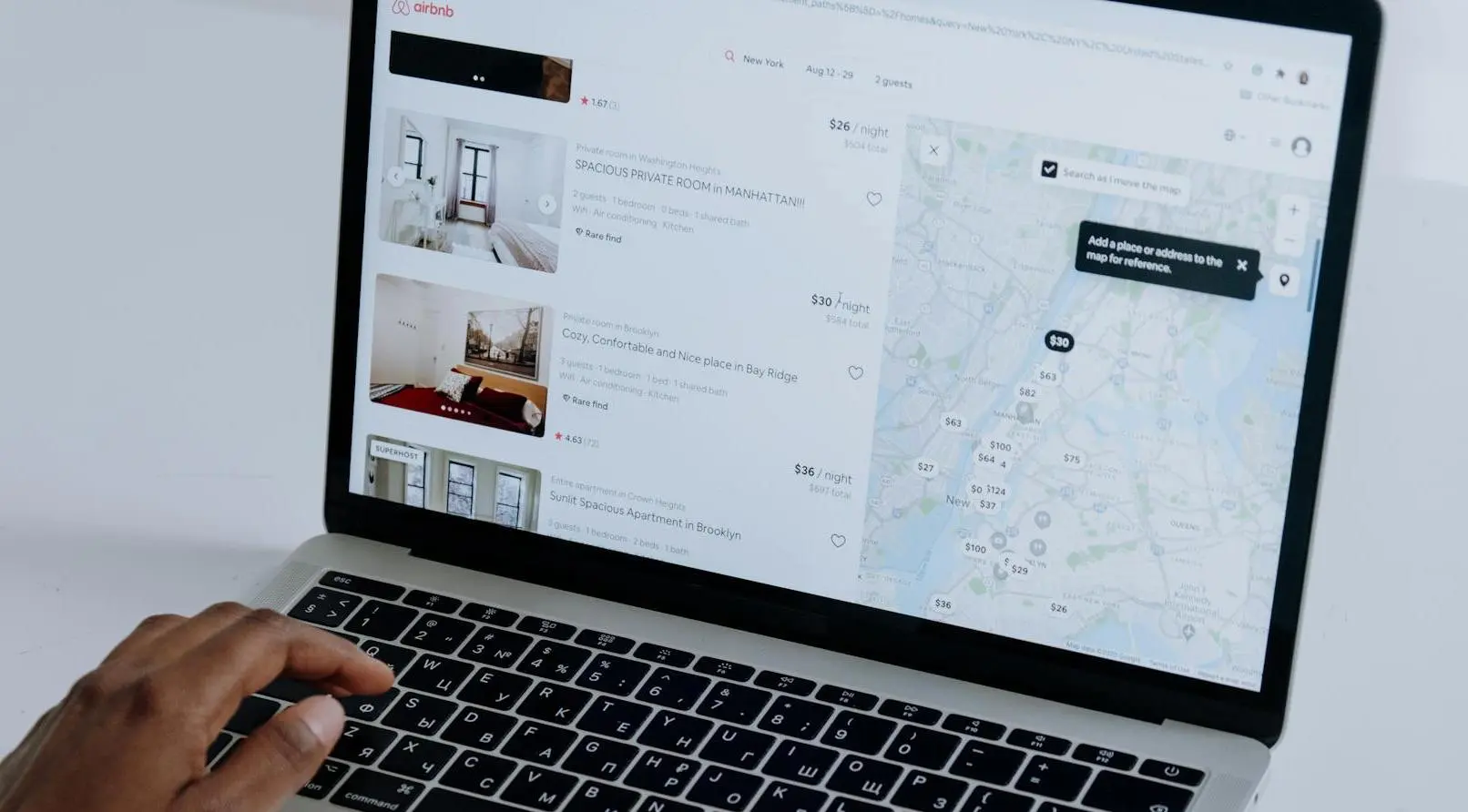
For investors in Turkey’s real estate market, December 2025 marked one of the most important legal turning points for short-term rentals in recent years. Turkey’s highest administrative court, Danıştay (Council of State), suspended the Turkish Revenue Administration’s practice of automatically classifying Airbnb income as commercial business income.
For individual property owners, the ruling directly affects payable tax, compliance burden, and raises net rental yields. In simple terms: a permit to rent short-term no longer automatically turns you into a hotel operator in the eyes of the Turkish tax authority.
The Legal Background: Short-Term Rental Framework
Turkey’s approach to short-term rentals has evolved rapidly over the past few years. As platforms such as Airbnb, Booking, and Vrbo expanded, Turkish authorities sought to regulate the sector more tightly, especially in major cities like Istanbul.
Law No. 7464 – Tourism-Purpose Residential Rentals: Law No. 7464 was published in the Official Gazette on 2 November 2023 and came into force on 1 January 2024. It introduced a national licensing system for residential properties rented for tourism purposes.
The Key Rule is Straightforward: Any residential property rented for 100 days or less must obtain a Tourism Purpose Rental Permit (Turizm Amaçlı Kiralama İzin Belgesi).
Applications are processed through the Ministry of Culture and Tourism, typically via e-Devlet, and the permit must be displayed in listings and in the property. This remains non-negotiable. The Danıştay ruling does not remove or weaken the permit requirement. Operating without a permit still carries heavy fines and potential closure.
Why Airbnb Income Was Treated as a Business
In January 2025, the Turkish Revenue Administration (Gelir İdaresi Başkanlığı – GİB) circulated a general letter (no. 7877) to local tax offices across the country. The letter introduced a sweeping interpretation:
1. Long-term residential rentals without a tourism permit = ordinary rental income.
2. Short-term rentals with a tourism permit = commercial activity by default.
The Ministry argued that short-term rentals involved continuity, organisation, and income generation similar to hospitality businesses. Based on this reasoning, tax offices began treating individual Airbnb hosts as if they were running hotels. This interpretation had immediate consequences for thousands of homeowners.
How Airbnb Income Was Taxed Before the Danıştay Ruling
Under the Revenue Administration’s approach, individual Airbnb hosts faced a commercial taxation regime, even if they owned just one apartment and provided no additional services.
1. Mandatory Commercial Registration
Homeowners were required to: Open a commercial taxpayer file, register with the tax office as a business, appoint an accountant, and keep formal books and records. For overseas investors, this created complexity and recurring costs.
2. Multiple Layers of Tax
Once classified as commercial, Airbnb income became subject to:
- Income Tax on Commercial Profits: Progressive, up to 40%.
- Provisional Tax: Advance income tax payments, typically 25%.
- Value Added Tax (VAT): 20% on gross rental income, regardless of profitability.
3. Backdated Assessments and Penalties
In some cases, tax offices applied this interpretation retroactively, demanding: backdated VAT, late payment interest, and administrative penalties. Even compliant homeowners who had obtained tourism permits in good faith were affected.
Real-World Example: Airbnb Taxation Before the Ruling
Consider a typical investor scenario: An apartment purchased for 5,000,000TL that is rented out via Airbnb and generates a gross yield of 350,000TL – around 7%.
One affected taxpayer challenged the Revenue Administration’s approach in court. The case reached Danıştay’s 3rd Chamber, Turkey’s highest authority for administrative disputes. The Finance Ministry argued that its general letter was merely an internal guideline and could not be challenged. Danıştay disagreed.
Danıştay’s Reasoning: Permit Does Not Equal Commercial Activity
In its decision, Danıştay ruled that the general letter had direct and binding legal consequences for taxpayers and was therefore subject to judicial review. More importantly, the court rejected the substance of the Ministry’s interpretation.
Danıştay drew a legal distinction between simple rental activity, and organised hospitality operations. The court stated that rental income can only be considered commercial if it is carried out within a structure similar to a: hotel, apartment-hotel, or boarding house. And if it includes services such as: breakfast or meals, daily cleaning, laundry or ironing, concierge, and reception services.
Renting out a furnished apartment on a daily, weekly, or monthly basis without these services does not change the legal nature of the income. For this reason, Danıştay suspended the enforcement of the Revenue Administration’s practice.
How Turkish Airbnb Income Is Taxed Now
For individual homeowners who hold a tourism rental permit and do not provide hotel-style services, Airbnb income is once again treated as regular rental income, not commercial profit. This simplifies compliance, particularly for foreign investors.
Regular Rental Income Tax Position:
- Taxed under Turkish personal income tax rules.
- No Valued Added Tax (VAT) to be paid.
- No provisional advance income tax to be paid.
- No company or business registration required.
Income Tax Rates on Rental Income in Turkey
Rental income is taxed progressively. While exact brackets change periodically, effective rates for most individual investors normally fall between 15% and 25%, depending on total income. Investors may also choose between:
- Lump-sum expense deduction – currently 15% of rental income, or
- Actual expense deduction – maintenance, management, depreciation.
Real-World Example: Airbnb Taxation After the Ruling
Using the same apartment in the real-world example above: An apartment purchased for 5,000,000TL that is rented out via Airbnb and generates a gross yield of 350,000TL – around 7%.
Under Rental Income Treatment:
- Lump-sum expense deduction (15%): 52,500TL.
- Taxable income: 297,500TL.
- Income tax (assume 20% effective): 59,500TL.
- Net income: 290,500TL.
- Net yield: 5.8%.
Why This Matters for Istanbul City Centre Apartments
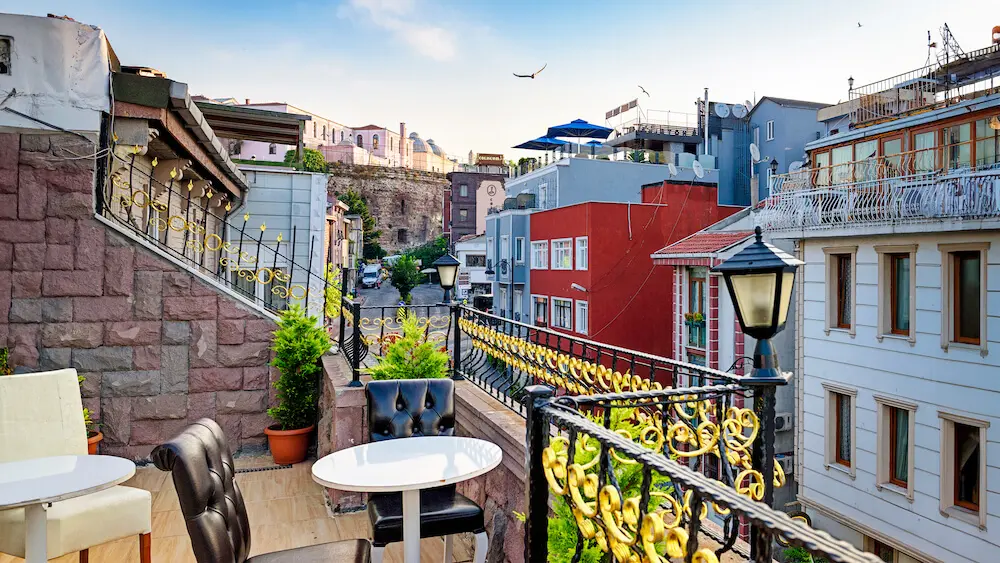
The Danıştay ruling is significant for Istanbul city centre apartments, because these properties sit at the meeting point of affordability, liquidity, and short-term rental demand. Most central Istanbul Airbnb investments are single-unit, privately owned flats – exactly the type of property the court recognised as rental activity rather than commercial hospitality.
The ruling reinforces the investment case for smaller, more affordable units, where margins matter most. A 1+1 or compact 2+1 apartment priced correctly in a central neighbourhood can see its net yield change dramatically depending on whether VAT and commercial taxes apply. By restoring rental income treatment, Danıştay protects the appeal of these investments.
High Demand Istanbul Neighbourhoods
- Şişli: One of Istanbul’s most resilient rental markets, driven by hospitals, clinics, offices, and shopping centres. Short stays from medical tourism and corporate visitors dominate demand.
- Kağıthane: A fast-regenerating district close to Levent and Maslak, offering better entry prices while still benefiting from central-business-district popularity amongst visitors and guests.
- Beşiktaş: Popular with city professionals, international students, and short-term corporate tenants, supported by universities and excellent transportation links.
- Beyoğlu: Strong tourism-driven demand close to Taksim, Galata, and Karaköy, particularly for well-renovated apartments within managed buildings.
- Kadıköy: Increasingly favoured by longer-stay digital nomads and creatives, offering stable occupancy rates and slightly longer average stays for investors.
Airbnb Is Back on the Table for Istanbul Investors
For Property Turkey clients, this decision restores balance and predictability. Permits remain mandatory. Professional hospitality businesses remain taxable as such. But individual investors renting a single apartment are once again treated as landlords, not hotels.
For those considering affordable, high-demand city centre apartments in Istanbul, the numbers now make sense again. For more information, contact Property Turkey to identify compliant, high-yield Airbnb opportunities and understand how this ruling positively affects your investment strategy.
FAQs About Airbnb Income in Turkey
Q: Is Airbnb legal in Turkey?
A: Yes, Airbnb and other short-term rentals are legal in Turkey provided the property has a valid Tourism Purpose Rental Permit issued under Law No. 7464.
Q: Does the Danıştay ruling remove the need for a tourism rental permit?
A: No. The ruling does not change the permit requirement. It affects how income is taxed. Property owners must still obtain and maintain a valid tourism rental licence.
Q: Is Airbnb income tax-free in Turkey?
A: No. Airbnb income is still taxable. However, for homeowners who do not provide hotel-style services, income is now treated as regular rental income, not commercial profit.
Q: Do I need to set up a company to rent my apartment on Airbnb in Turkey?
A: In most cases, no company is required following the Danıştay ruling. Individual landlords renting without hotel-style services can operate as private persons.
Q: Can the Turkish Finance Ministry appeal this decision?
A: Yes. The ruling is a suspension of enforcement, and the Finance Ministry is expected to appeal. Until a final decision is issued, the commercial tax treatment cannot be applied.
Q: Does the ruling apply to past tax penalties?
A: The ruling suspends enforcement going forward. Some taxpayers may challenge past penalties, but outcomes depend on individual cases and timing.
Cameron Deggin Founder & CEO, Property Turkey
Cameron Deggin is Founder and CEO of Property Turkey. A former finance professional and FCCA-qualified accountant, he founded the company in 2001 after recognising Turkey’s investment potential. With more than two decades analysing Turkish real estate, Cameron regularly advises international investors and is quoted by media including the Financial Times and BBC.




 By:
By:







 Founder & CEO, Property Turkey
 Bodrum
  4
4  4
4 

















 X
X