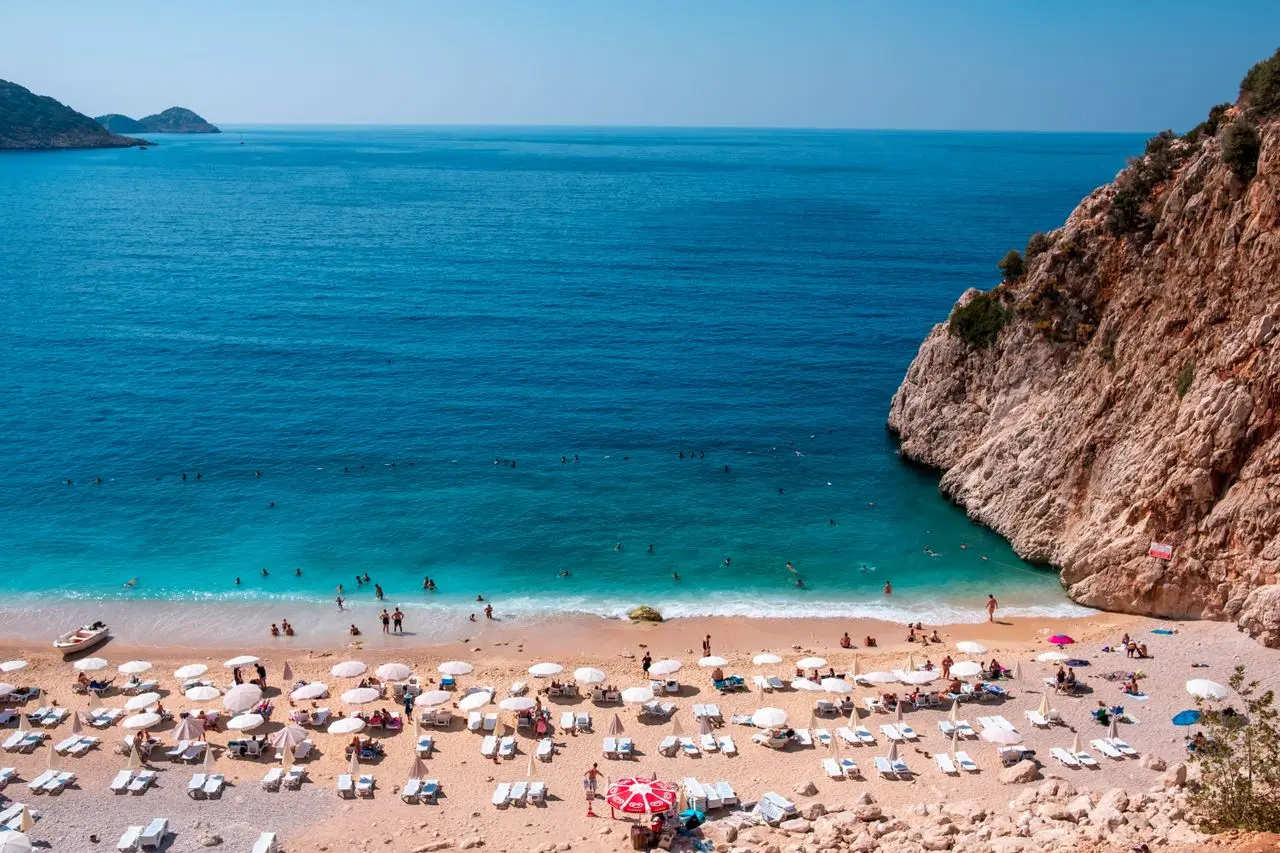
Turkey generated almost $25.75 billion USD in tourism revenue during the first six months of 2026, with President Recep Tayyip Erdoğan reaffirming the country's target of reaching $65 billion USD by year-end. Higher spending per visitor helped revenues remain stable despite a decline in visitor numbers.
Turkey Targets $65 Billion USD in Tourism Revenue
Marking World Tourism Day, Erdoğan described tourism as Turkey's "chimney-free industry" and highlighted its contribution to the economy. Official figures put tourism income at $25.746 billion USD during January through June, only marginally below the level recorded during the same period of 2025.
Erdoğan said: "We generated $25.746 billion USD in tourism revenue in the first six months of this year. By the end of 2026, God willing, we will reach the level of $65 billion USD in line with our targets."
Reaching that target would require Turkey to generate $39.25 billion USD during the second half of the year. The July-to-September period traditionally includes the country's busiest tourism months, particularly across major Mediterranean and Aegean destinations such as Antalya, Muğla, and İzmir.
Higher Tourist Spending Offsets Fewer Visitors
TurkStat figures show that Turkey welcomed 24.84 million visitors during the first half of 2026, representing a 2.7% decline compared with the previous year. However, average expenditure per visitor increased 2.5% to $1,020 USD.
Second-quarter tourism revenue reached $15.87 billion USD, down 2.6% year-on-year, while the number of departing visitors decreased 5.1% to 15.58 million. Average spending per night increased 2.8% to $113 USD, indicating stronger expenditure among those who travelled to Turkey.
Accommodation spending increased 11.7% annually during the second quarter, while food and beverage expenditure rose 5.2%. Package-tour spending declined 5.5%, and international transportation expenditure fell 6.1% compared with the April-to-June period of 2025.
Tourism Sector Looks Beyond Summer Season
Turkey's tourism industry has also been working to broaden demand beyond traditional summer beach holidays. Cultural, gastronomic, health, and conference tourism are among the segments being developed to attract visitors throughout more of the year and diversify revenue sources.
Russia, Germany, and the UK remain Turkey's most important international source markets. Industry representatives have pointed to the sector's resilience during 2026 despite geopolitical uncertainty across the surrounding region, with Turkey continuing to attract high international visitor numbers through the summer.
Cameron Deggin  Founder & CEO, Property Turkey
Cameron Deggin is Founder and CEO of Property Turkey. A former finance professional and FCCA-qualified accountant, he founded the company in 2001 after recognising Turkey’s investment potential. With more than two decades analysing Turkish real estate, Cameron regularly advises international investors and is quoted by media including the Financial Times and BBC.
View full author profile →




 By:

 Bodrum
 4
 4














 X